What Happens If a Patient Needs Oxygen During a Flight?
Why oxygen may be needed
Not all patients can maintain safe oxygen levels at cruising altitude.
Cabin pressure in commercial aircraft equals an altitude of 1,800 to 2,400 meters, which can significantly reduce oxygen levels. Patients with chronic respiratory illnesses, recent pneumonia, COVID-19 complications, heart failure, or severe anemia may experience dangerous desaturation during a flight. Supplemental oxygen ensures stable saturation and prevents medical deterioration.
Common conditions requiring in-flight oxygen
- Chronic obstructive pulmonary disease (COPD)
- Severe asthma or recent exacerbations
- Interstitial lung disease
- Heart failure or cardiac insufficiency
- Post-surgery respiratory weakness
- Patients dependent on home oxygen systems

How oxygen is provided in flight
Different systems are used depending on the aircraft and medical condition.
Main oxygen support types
Portable Oxygen Concentrators (POCs)
Battery-operated and approved for many commercial flights.
Cylinder-based oxygen
Used by air ambulances and sometimes airlines; offers high-flow oxygen.
ICU-grade oxygen systems
Found in air ambulances for ventilated or critical patients.
High-flow oxygen therapy
Available only on specialized medical aircraft.
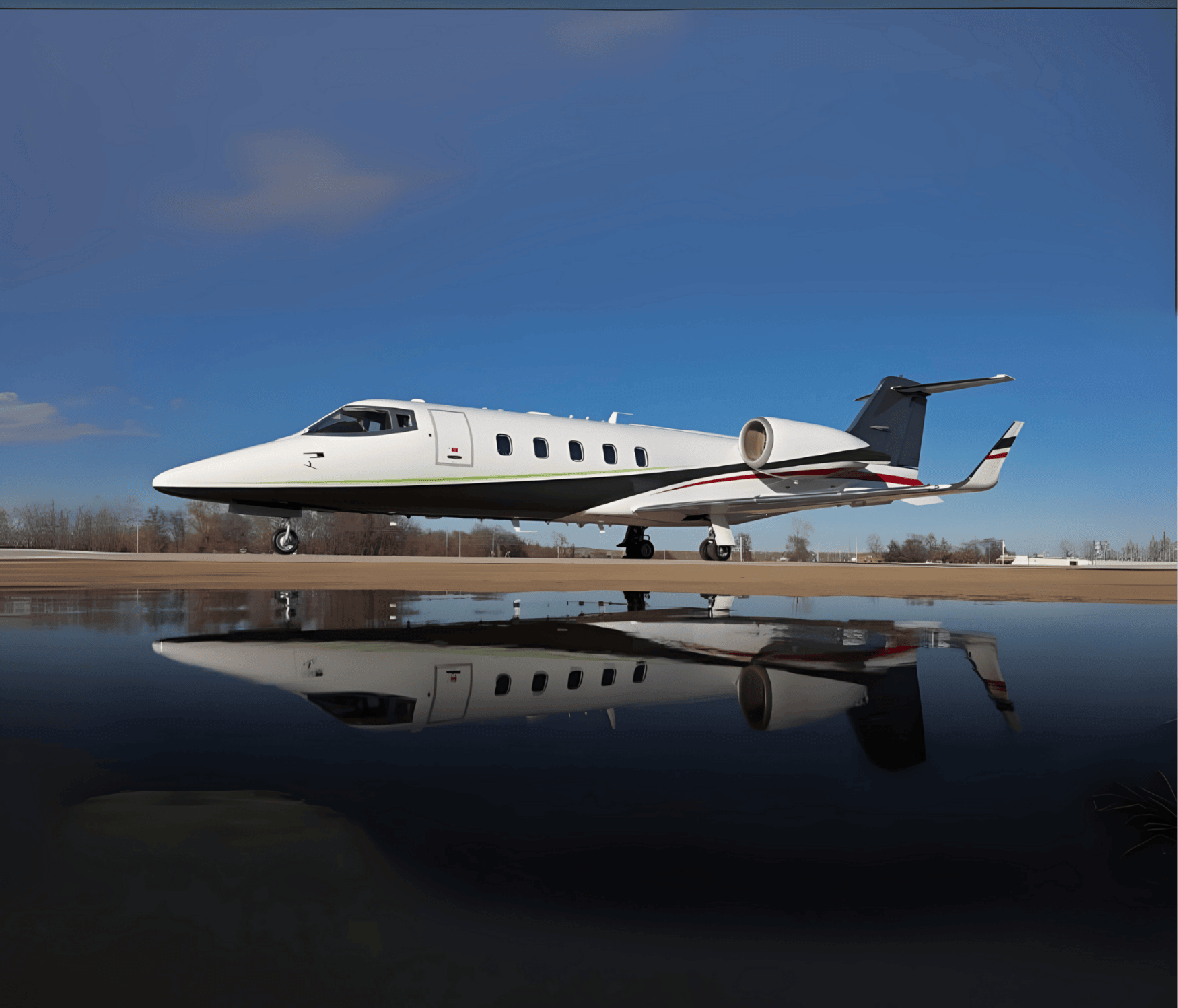
Air ambulance capabilities
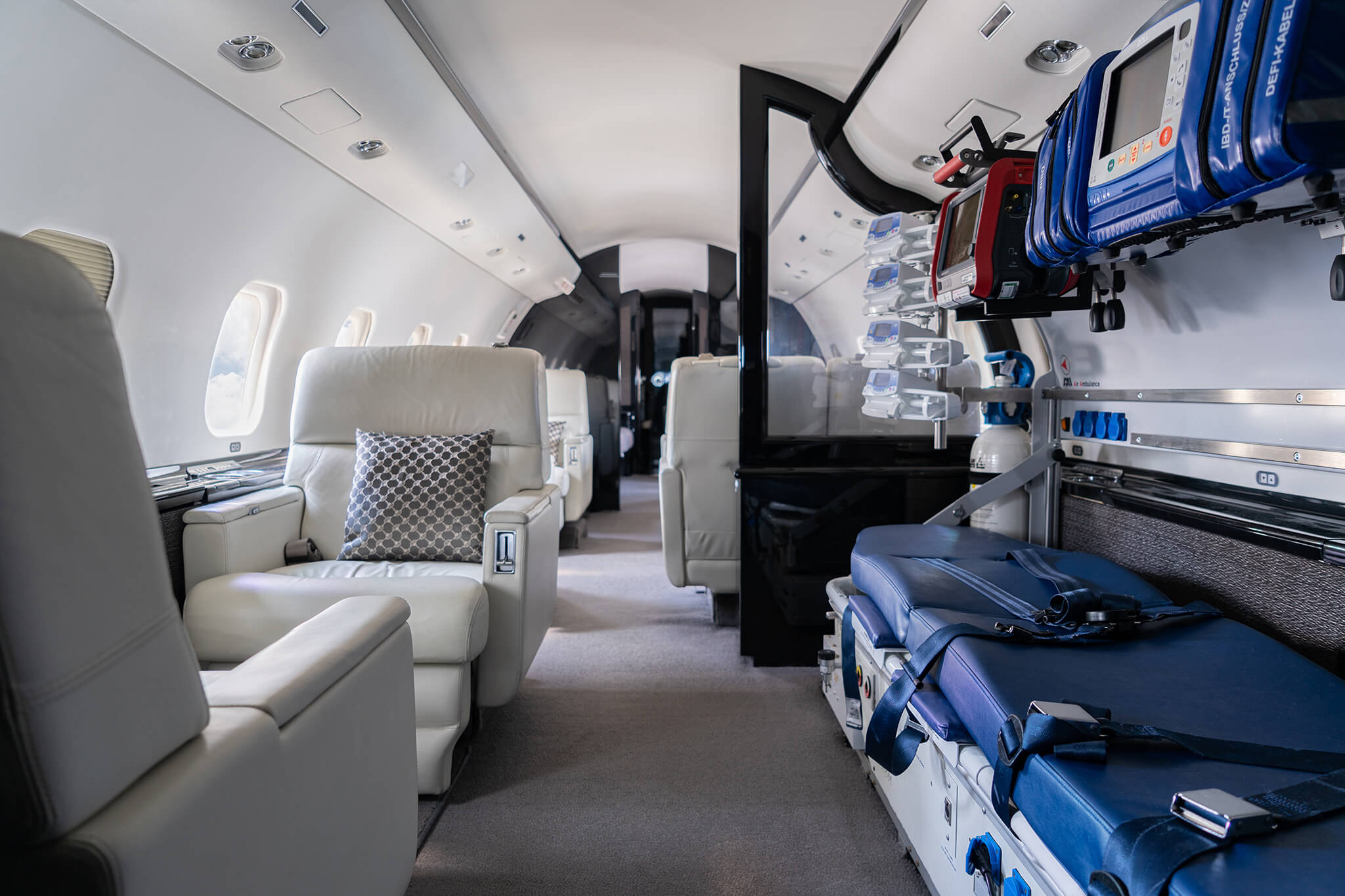
Air ambulances carry advanced oxygen systems for all levels of care.
Air ambulances are equipped with advanced oxygen systems that support continuous flow, pulse dosing, ventilators, CPAP, BiPAP, and high-flow settings. They also carry backup cylinders for long-haul missions, ensuring uninterrupted supply even on intercontinental flights.
Critical patients, such as those with ARDS or those requiring mechanical ventilation, can be flown safely under the supervision of an experienced medical team.
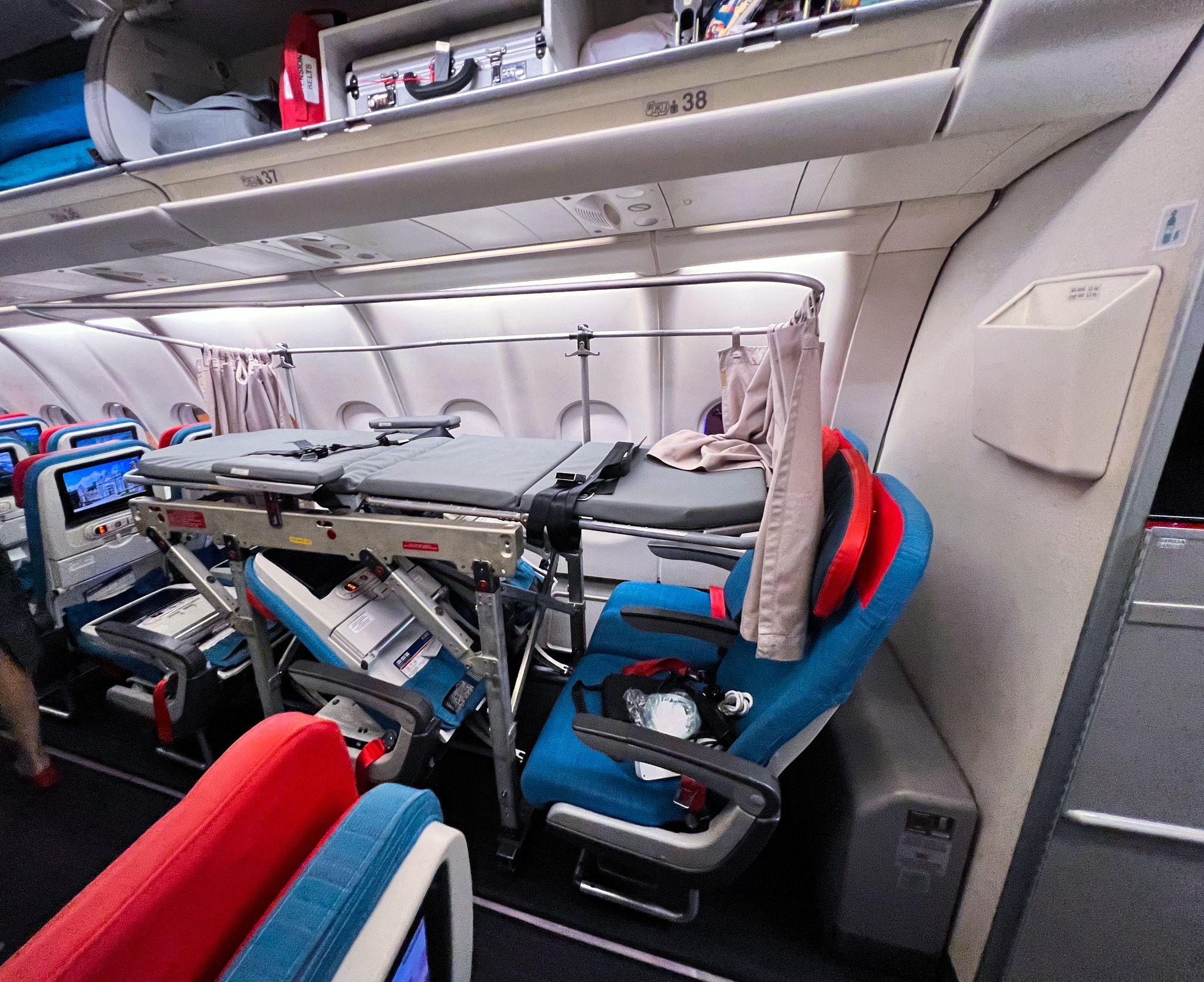
Commercial airline restrictions
Airlines have strict guidelines for travelling with oxygen due to safety regulations.
Airline rules typically include
- No personal oxygen cylinders permitted due to fire risk
- POCs must be FAA/IATA approved
- Medical clearance forms are required
- Battery capacity must cover 150% of flight time
- Some airlines provide onboard oxygen, but this must be pre-booked
How oxygen planning works
Accurate planning ensures patients never run out of oxygen during a mission.
Oxygen planning checklist
Flow rate calculation
Based on medical assessment and required liters per minute.
Flight duration estimate
Including taxi time, layovers, and potential delays.
Backup supply included
Air ambulances carry extra cylinders to prevent shortages.
Equipment compatibility
Ensuring systems are approved for the chosen aircraft.
Monitoring during flight
Medical crew tracks saturation continuously.