How Soon After Surgery Can a Patient Fly Home?

Many patients wonder how soon they can fly home after surgery. The answer depends on the type of procedure, medical stability, airline restrictions, and whether medical supervision is required. This page provides clear guidance on postoperative flying, when medical transport is needed, and how EMS-Ambulance can support safe repatriation.

When flying is allowed after surgery

Each type of surgery has its own recommended waiting period before flying.

The safe timeframe for flying after surgery depends on healing, pain levels, risk of complications, and cabin pressure changes. Airlines often require a 'fit-to-fly' certificate for postoperative patients.

Typical waiting times

  • Orthopedic surgery (hip/knee): 7–14 days, depending on mobility and swelling
  • Abdominal surgery: 10–14 days for minor procedures, 2–6 weeks for major operations
  • Cardiac surgery: 10–14 days for minor interventions, 3–6 weeks after open-heart surgery
  • Neurological surgery: 2–6 weeks, depending on intracranial pressure and mobility
  • Laparoscopic procedures: usually 24–72 hours once gas has resolved

Important

Only a treating physician can declare a patient fit to fly. EMS-Ambulance uses medical reports to determine which transport option is safe.
Air ambulance aircraft on runway
Flying too early after surgery can increase medical risks.

Risks of flying too soon

Flying too early after surgery can cause avoidable complications.

Common medical risks

  • Deep vein thrombosis (blood clots)
  • Increased pain from pressure changes
  • Wound dehiscence or bleeding
  • Infection due to limited mobility
  • Respiratory instability after anesthesia
  • Brain-pressure changes after neurological procedures
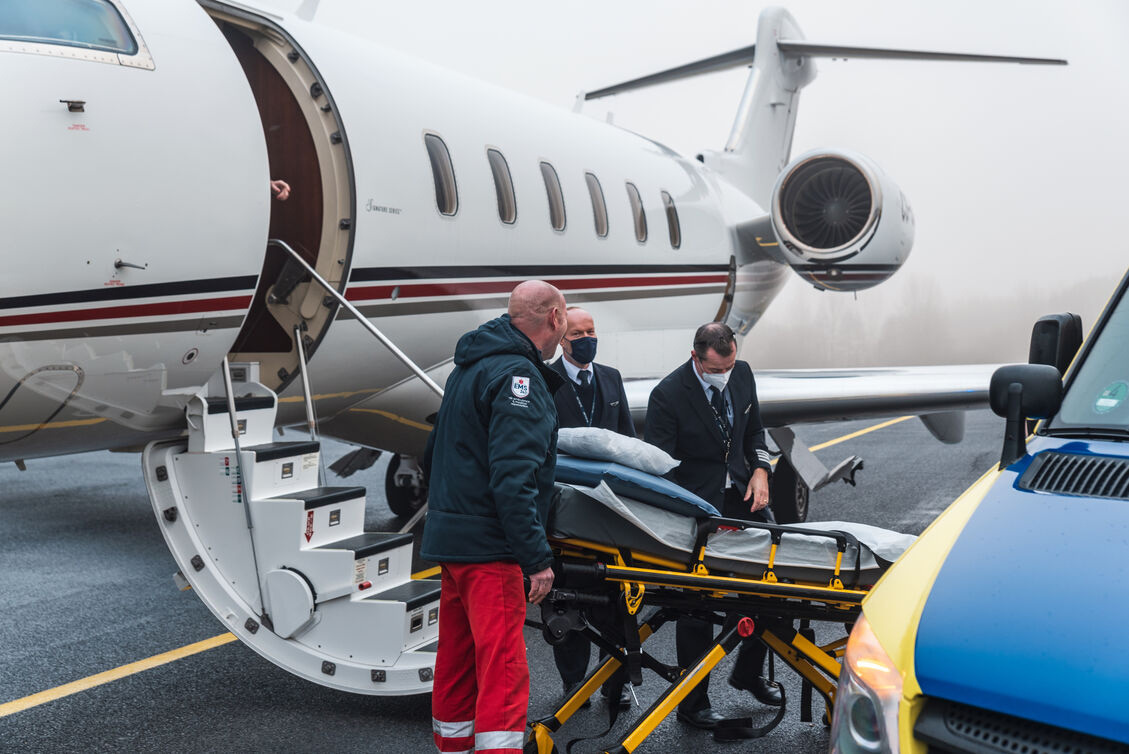
Medical team assisting patient transport
Medical risks increase with long distances or cabin pressure changes.

Medical transport options after surgery

Depending on stability and mobility, different transport levels may be appropriate.

Patients with limited mobility or high-risk postoperative conditions

Air ambulance

A fully equipped aircraft with doctor and nurse on board.
Vorteile
  • Highest safety level
  • Lying-down transport
  • Suitable for major cardiac, abdominal, orthopedic or neuro surgeries
Nachteile
  • Higher cost
Stable postoperative patients who can sit upright

Medical escort on commercial flight

Medical supervision during a regular airline flight.
Vorteile
  • More affordable
  • Suitable for mild to moderate surgery recovery
Nachteile
  • Limited space and position options
Patients unable to sit for long periods but stable enough for commercial travel

Stretcher on commercial flight

Dedicated stretcher area installed inside the aircraft cabin.
Vorteile
  • Cheaper than an air ambulance
  • Continuous monitoring
Nachteile
  • Not available on all airlines
  • Longer preparation time

How EMS-Ambulance organises repatriation

A structured approach ensures safe and efficient medical transport.

How it works

1

Medical intake

We collect surgical details, reports, and stability indicators.

2

Assessment

Doctors determine which transport is medically safe.

3

Planning

We arrange aircraft, escorts, ground ambulances, and documents.

4

Transport

The patient is medically supervised throughout the journey.

5

Handover

Arrival at the receiving hospital or home care team.
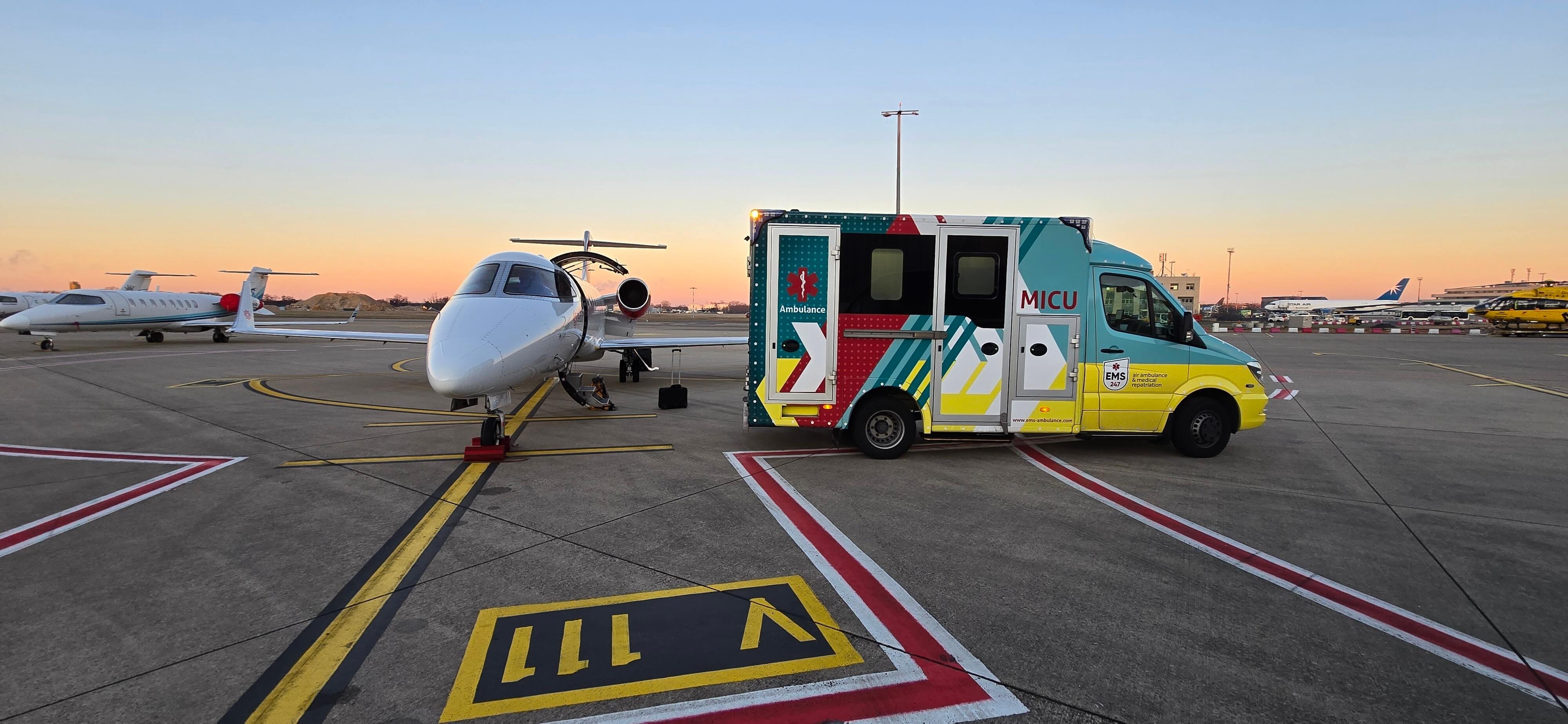
Patient being boarded onto an air ambulance
EMS-Ambulance coordinates every step of the repatriation.

What to prepare before flying after surgery

Proper documentation ensures airline and medical approval without delay.

Checklist

1

Surgery report

Including procedure details and recent updates.

2

Medication list

Including anticoagulants, pain relief, and allergies.

3

Fit-to-fly certificate

Issued by the treating physician when applicable.

4

Mobility assessment

Needed to determine seating or stretcher needs.

5

Insurance details

For potential coverage of repatriation costs.
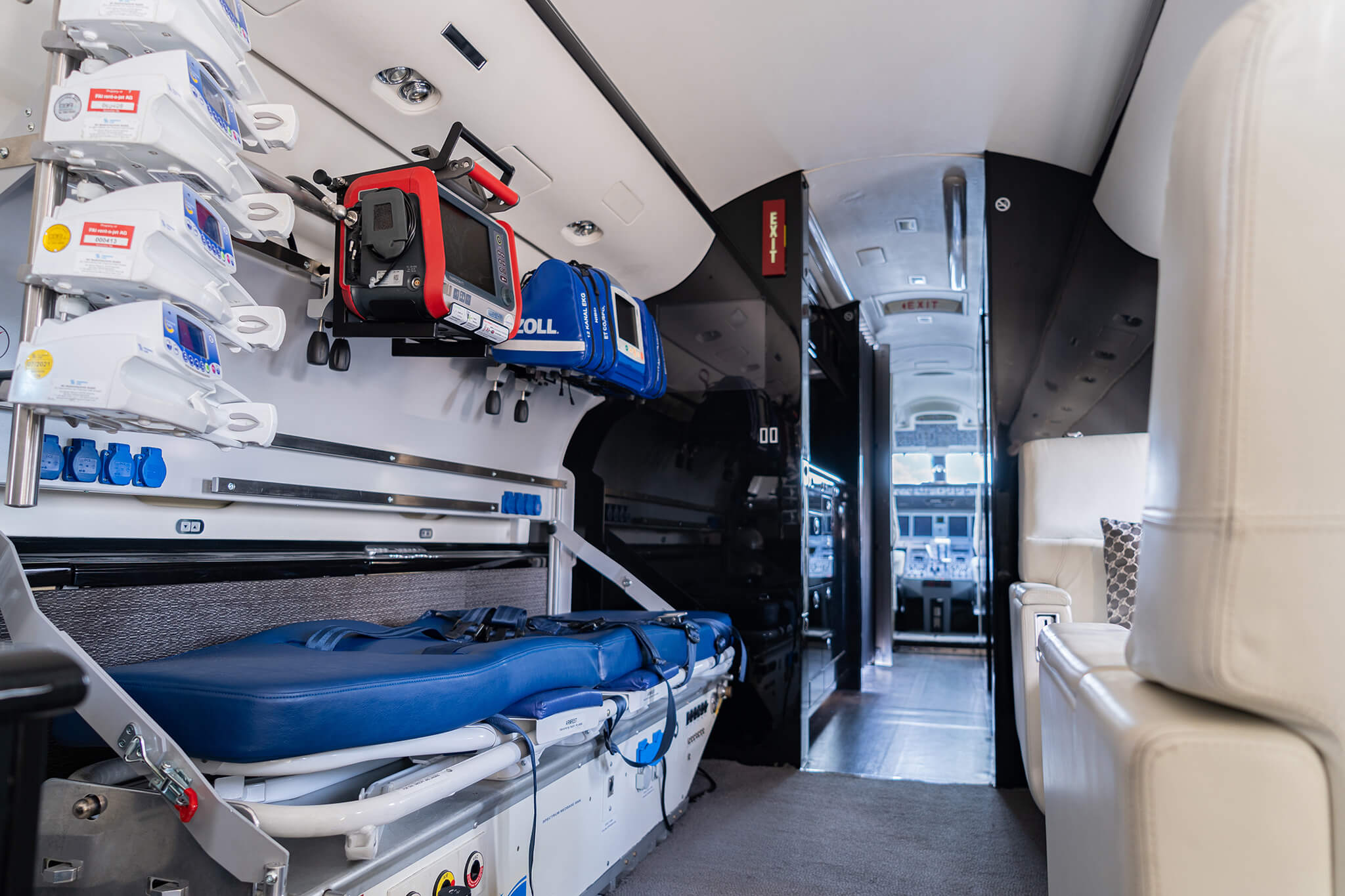
Medical equipment inside an air ambulance
Good preparation speeds up medical approval.

Häufig gestellte Fragen

It depends on the type of surgery. Minor laparoscopic procedures may allow flying after 24–72 hours, while major abdominal, cardiac, orthopedic, or neurological surgeries often require 2–6 weeks.
Cabin pressure, immobility, dehydration, and reduced oxygen levels can increase risks such as blood clots, internal bleeding, and wound complications.
Yes. Most airlines require a medical certificate or MEDIF form for postoperative passengers.
Yes, usually after 7–14 days, depending on swelling, mobility, and risk of blood clots. Some cases require a medical escort.
Wait at least 10–14 days for minor surgery and up to 6 weeks for major procedures to avoid internal pressure issues or wound complications.
Minor cardiac procedures often allow flying after 10–14 days. Open-heart surgery typically requires 3–6 weeks before travel is safe.
Only after intracranial pressure has stabilised. Flying often requires waiting 2–6 weeks depending on the surgery and recovery.
Yes. Air ambulances always have a specialised doctor and critical-care nurse.
Yes, depending on aircraft space and medical safety conditions.
Some policies cover medically necessary repatriation. Coverage depends on the insurer, policy type, and documentation.
EMS-Ambulance can arrange either an air ambulance or a stretcher-equipped commercial flight if medically appropriate.