How Soon After Surgery Can a Patient Fly Home?
When flying is allowed after surgery
Each type of surgery has its own recommended waiting period before flying.
The safe timeframe for flying after surgery depends on healing, pain levels, risk of complications, and cabin pressure changes. Airlines often require a 'fit-to-fly' certificate for postoperative patients.
Typical waiting times
- Orthopedic surgery (hip/knee): 7–14 days, depending on mobility and swelling
- Abdominal surgery: 10–14 days for minor procedures, 2–6 weeks for major operations
- Cardiac surgery: 10–14 days for minor interventions, 3–6 weeks after open-heart surgery
- Neurological surgery: 2–6 weeks, depending on intracranial pressure and mobility
- Laparoscopic procedures: usually 24–72 hours once gas has resolved
Important

Risks of flying too soon
Flying too early after surgery can cause avoidable complications.
Common medical risks
- Deep vein thrombosis (blood clots)
- Increased pain from pressure changes
- Wound dehiscence or bleeding
- Infection due to limited mobility
- Respiratory instability after anesthesia
- Brain-pressure changes after neurological procedures
Medical transport options after surgery
Depending on stability and mobility, different transport levels may be appropriate.
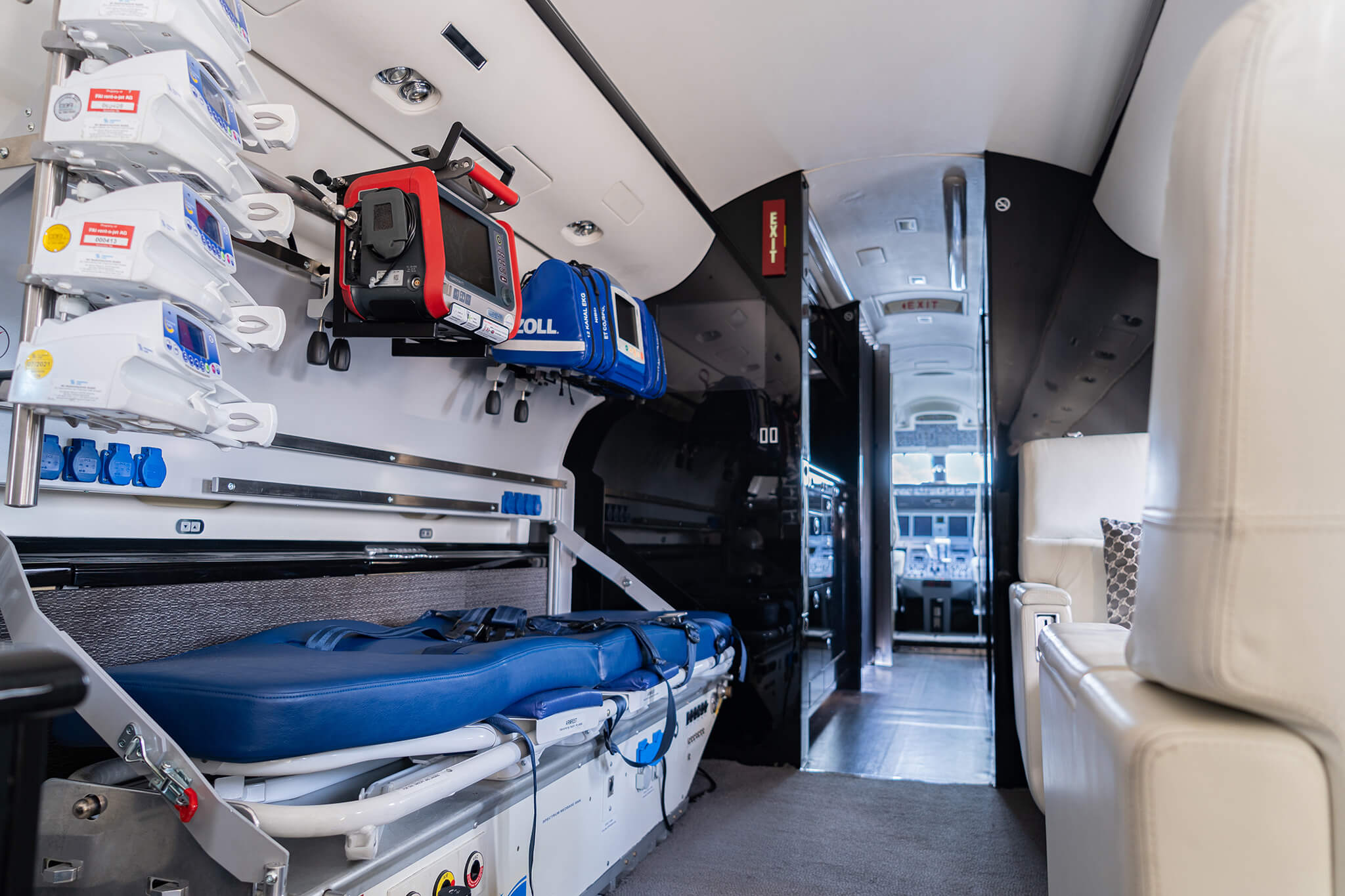
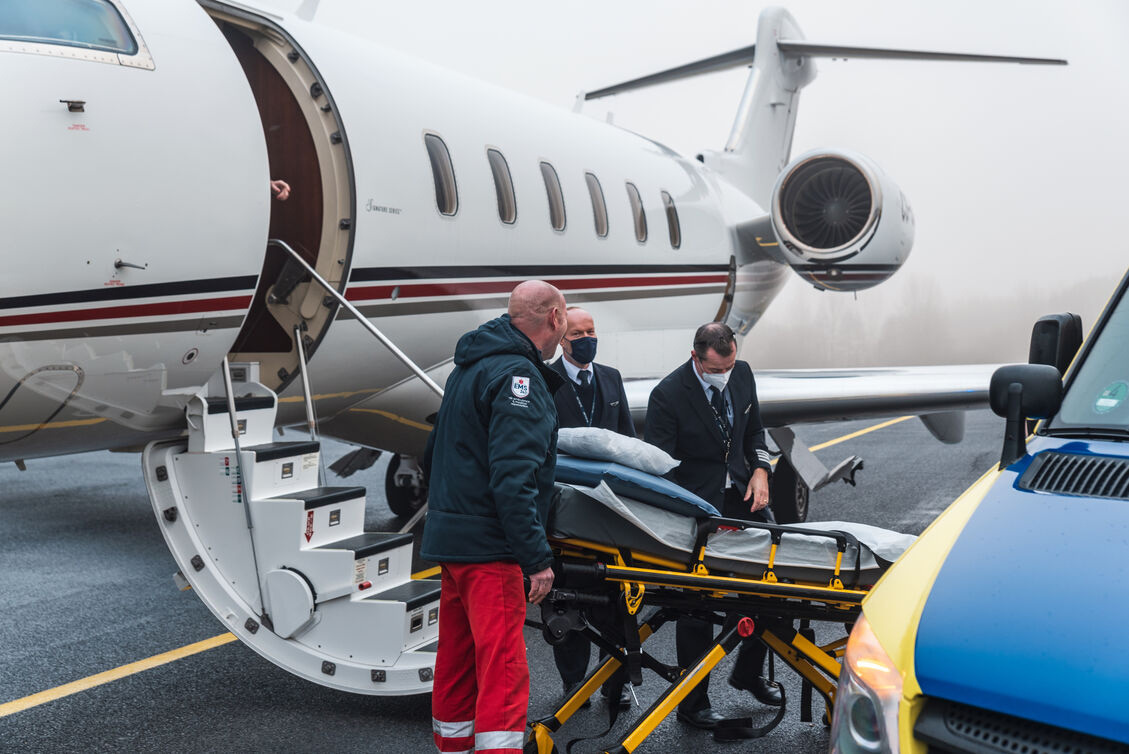
Air ambulance
- Highest safety level
- Lying-down transport
- Suitable for major cardiac, abdominal, orthopedic or neuro surgeries
- Higher cost
Medical escort on commercial flight
- More affordable
- Suitable for mild to moderate surgery recovery
- Limited space and position options
Stretcher on commercial flight
- Cheaper than an air ambulance
- Continuous monitoring
- Not available on all airlines
- Longer preparation time
How EMS-Ambulance organises repatriation
A structured approach ensures safe and efficient medical transport.
How it works
Medical intake
We collect surgical details, reports, and stability indicators.
Assessment
Doctors determine which transport is medically safe.
Planning
We arrange aircraft, escorts, ground ambulances, and documents.
Transport
The patient is medically supervised throughout the journey.
Handover
Arrival at the receiving hospital or home care team.

What to prepare before flying after surgery
Proper documentation ensures airline and medical approval without delay.
Checklist
Surgery report
Including procedure details and recent updates.
Medication list
Including anticoagulants, pain relief, and allergies.
Fit-to-fly certificate
Issued by the treating physician when applicable.
Mobility assessment
Needed to determine seating or stretcher needs.
Insurance details
For potential coverage of repatriation costs.