
medical repatriation
Medical repatriation: bringing someone home when they cannot travel alone
Last reviewed
Un devis gratuit en 3 étapes
Vous pouvez être assuré que notre prix est basé sur le marché et qu'il nous permet de fournir les meilleurs soins possibles.

Ambulance aérienne

Escorte médicale

Ambulance routière
Getting someone home: the ground ambulance meets the aircraft directly, so the patient is not moved more than necessary.
- First response
- Usually within the hour
- Formats
- Air ambulance, escort, road
- Insurers
- We deal with them directly
- Available
- 24/7, worldwide
The first hours: what actually matters
Families often start by looking for an aircraft. That is rarely the right first move. Three things determine whether a repatriation is possible, and none of them is the aircraft.
- Is the patient fit to travel? Only the treating physician can say so. A patient who is still deteriorating is not moved, however much the family wants it.
- Is there a bed waiting? A hospital at home must formally accept the patient. Without that acceptance there is nowhere to land.
- Who is paying? Insurer, employer or privately. This decides which format is realistic, and it is better settled on day one than on day three.
Which format fits which patient
Repatriation is not one service. The clinical picture chooses the format, and the format largely sets the price.
Medical escort on a scheduled flight
The most common solution, and for a stable patient just as safe as anything else. A flight nurse or doctor collects the patient at the hospital, travels with them on a normal airline flight, and hands over at the receiving hospital. Suitable when the patient can sit, or can lie on a stretcher installed over several seats.
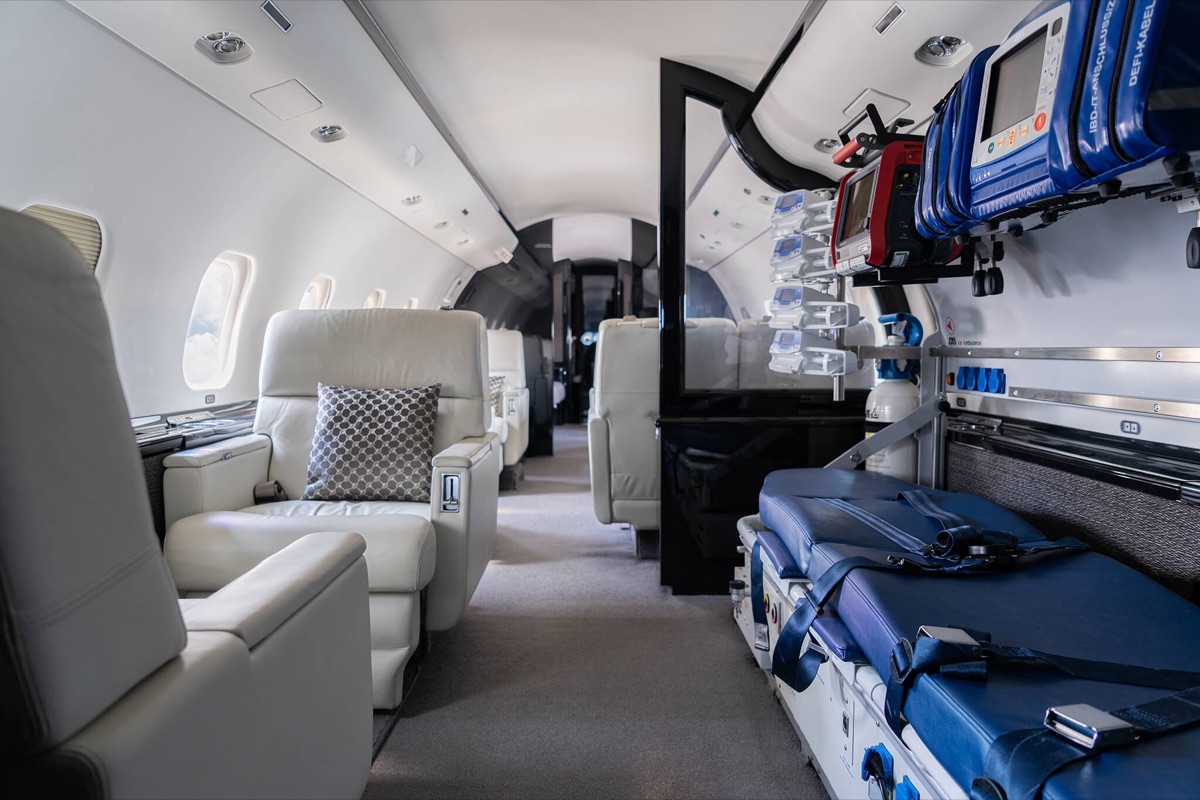
Air ambulance
A dedicated aircraft configured as an intensive care unit. Necessary when the patient is ventilated, unstable, or cannot wait for a commercial connection. See air ambulance for what is on board.
Road ambulance
Within Europe a long-distance road ambulance is frequently faster door to door than flying, and considerably cheaper. From southern Spain to the Netherlands is a long drive, but there is no airport handling, no slots and no transfer between vehicles.
Dealing with the insurer
Most travel and health policies cover medically necessary repatriation. The claims that fail usually fail for one of two reasons, and both are avoidable.
The transfer was arranged before the insurer was told. Almost every policy requires prior authorisation. Call the insurer, or let us call them, before anything is booked.
The transfer was not medically indicated. Wanting to be home is understandable but is not a medical indication. If the local hospital can treat the condition adequately, the insurer will say so. We will tell you honestly when we think that is how it will go.
We speak to insurers and assistance companies every day and are happy to take that conversation off your hands. If there is no insurance, say so at the start: it changes what we recommend.
What repatriation costs
Price follows the format, and the format follows the patient's condition. In order of cost, from lowest to highest:
| Format | Relative cost |
|---|---|
| Road ambulance within Europe | Lowest |
| Medical escort, scheduled flight | Low |
| Air ambulance within a continent | High |
| Air ambulance intercontinental | Highest |
The gap between an escorted flight and a dedicated aircraft is the widest on that list, which is exactly why the medical assessment comes first. See what drives the cost for the detail.
How it works
Get in touch
Where the patient is, where they need to go, and what happened. Partial information is fine.
We contact the hospital
Our medical team speaks to the treating physician about the condition and fitness to travel.
Plan, format and fixed price
Normally within the hour, including which format is medically appropriate and why.
Insurer and receiving hospital
We handle the authorisation and confirm the receiving bed before anything is booked.
The journey home
Collected at the bedside, accompanied throughout, handed over at the bedside at home.
Questions fréquemment posées
Getting someone home starts with one message
Tell us where the patient is and what happened. Our medical team calls the hospital and comes back with a realistic plan and a fixed price.