What Medical Equipment Is Onboard an ICU Air Ambulance
ICU air ambulance essentials
An ICU air ambulance is a specialised aircraft providing hospital‑level intensive care in the air.
ICU air ambulances are deployed for critically ill or unstable patients requiring continuous monitoring and advanced life support during international medical transport. The aircraft are configured with specialised stretchers, power systems, and mounting points to safely operate hospital‑grade devices during flight.
A dedicated medical team — typically an intensive care physician and a critical care flight nurse — monitors the patient throughout the journey and adjusts therapy as needed.
When an ICU air ambulance is required
- Mechanical ventilation is needed
- Continuous vital‑sign monitoring required
- Infusion pumps or syringe pumps necessary
- Risk of rapid deterioration
- Need for time‑critical or long‑distance transport
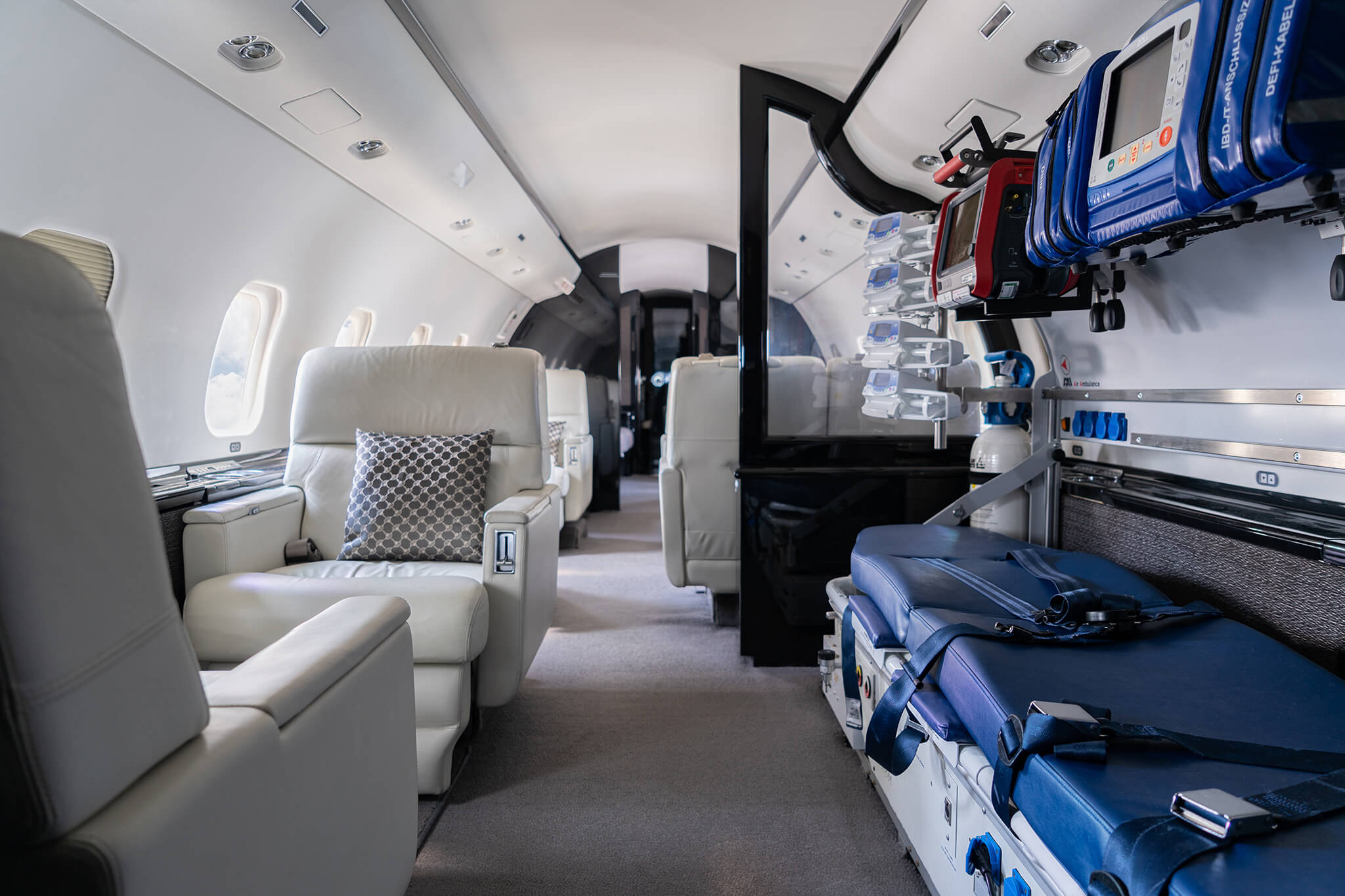
Core life‑support equipment
ICU air ambulances carry a full suite of certified medical systems to stabilise and treat critical patients.
Typical onboard equipment
- Ventilators with pressure and volume control modes
- Multi‑parameter monitors (ECG, SpO₂, NIBP, IBP, EtCO₂)
- Syringe and infusion pumps for continuous medication delivery
- Portable suction systems
- Defibrillators with manual and AED modes
- Neonatal and paediatric incubators when required
- Portable oxygen cylinders and onboard oxygen systems
- Advanced airway management tools
ICU‑level capabilities
How the ICU setup works during flight
The medical team provides uninterrupted intensive care throughout the entire mission.
How critical care is delivered in the air
Stabilisation
The patient is stabilised on the ground before departure.
Monitoring
Vital signs are tracked using aviation‑certified ICU monitors.
Ventilation and support
Ventilators and pumps operate continuously, managed by the medical team.
In‑flight adjustments
Medication, oxygen and ventilation settings are updated when needed.
Handover
The patient is transferred directly to an ICU at the receiving hospital.
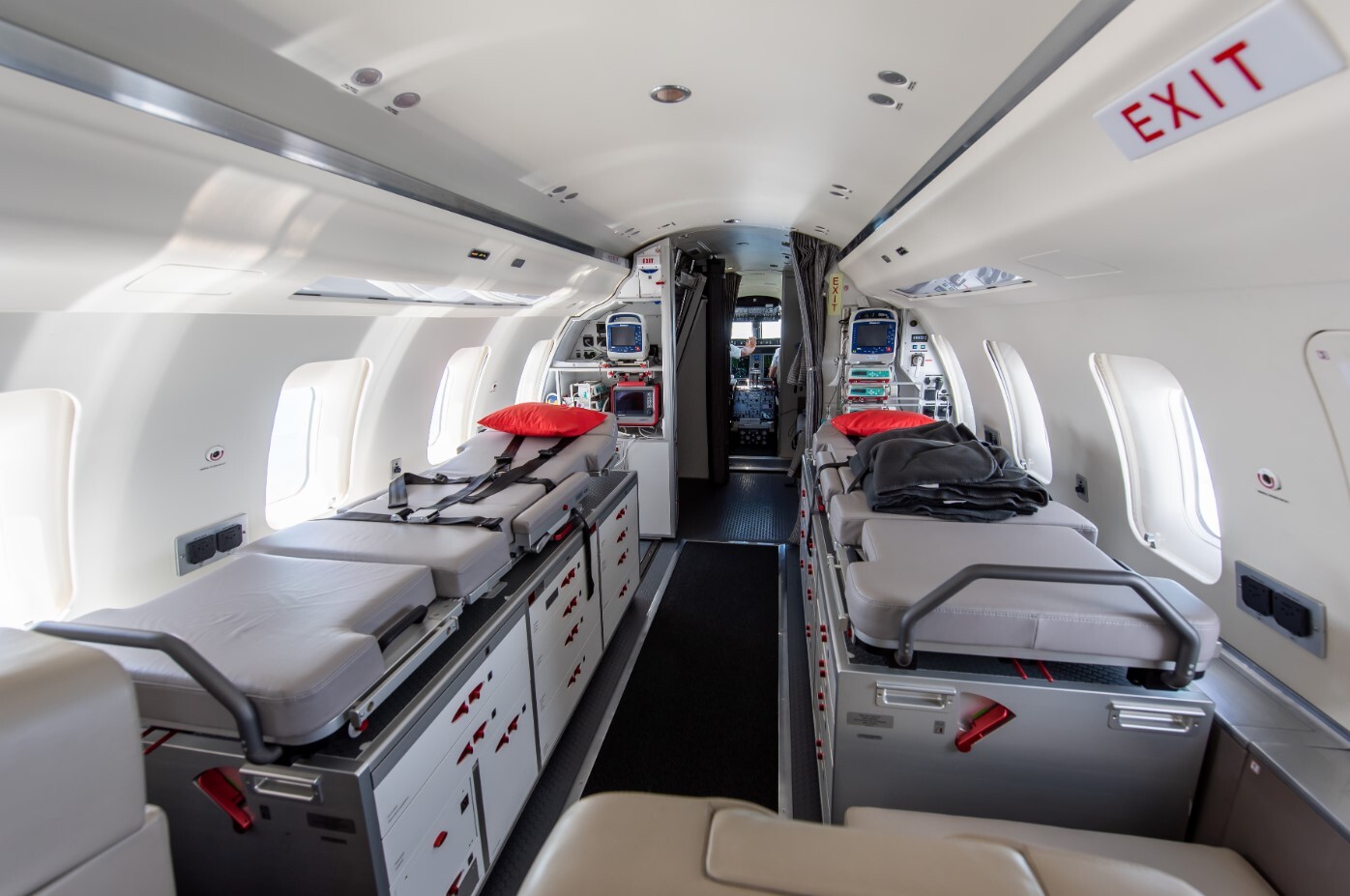
Safety standards and certifications
All onboard devices comply with international aviation and medical regulations.
ICU air ambulances must meet stringent European and international requirements, including EASA aircraft approvals and medical device certifications such as CE marking and ISO 13485 standards. All equipment is tested for electromagnetic compatibility, vibration resistance and in‑flight power stability.
What is certified
- Ventilators approved for use in pressurised cabins
- Monitors with aviation‑compatible power systems
- Medical mounts and stretchers tested for turbulence
- Backup power units
- Medication storage compliant with temperature guidelines
What patients should prepare
Good documentation ensures accurate medical planning before departure.
Checklist for ICU air ambulance transport
Medical reports
Diagnosis, recent imaging, ICU notes and treatment plans.
Medication overview
Complete list with dosages and infusion requirements.
Doctor contacts
For clinical handover before and after the flight.
Travel documentation
Passports, insurance details and hospital information.