Medical emergency flights united: what you need to know when every minute counts
Medical emergency flights united are fully coordinated, medically supervised air transports for patients with life-threatening illnesses or injuries who need rapid transfer to a hospital or home country. When a health crisis strikes far from home, these flights are often the only realistic path to appropriate care. EMS operates across 136+ countries, with certified medical teams on board every flight.
What medical emergency flights in the United States actually involve
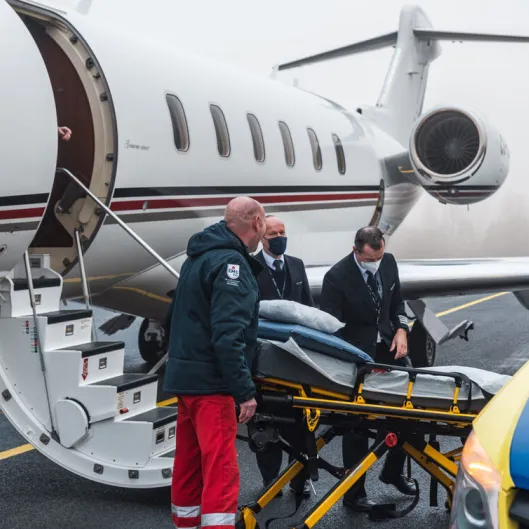
Medical emergency flights united are fully coordinated, bed-to-bed medical operations that cover every stage of the journey, from the patient's hospital bed to the receiving facility. Each flight is staffed by certified medical professionals, equipped with clinical-grade life support, and planned around the patient's specific condition.
Two main configurations are used in practice. A dedicated air ambulance is a specially fitted aircraft carrying the patient and a full medical team, used when the patient is critical or unstable. A medical escort places a qualified medical professional alongside a stable patient on a commercial airline. The right choice depends on the patient's medical status, destination, and urgency.
- Air ambulance: Full ICU-level care in flight, for critical or high-dependency patients who cannot travel commercially
- Medical escort: A certified nurse or paramedic accompanies a stable patient on a scheduled commercial flight
- Private medical jet: A private aircraft configured for medical transport, combining speed with clinical capacity
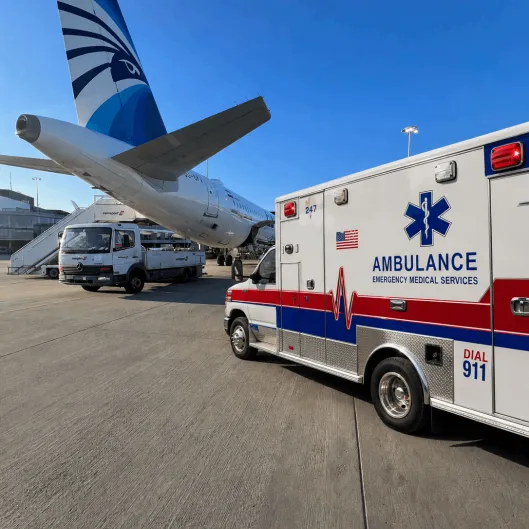
- Road ambulance coordination: Ground transport at both the departure and arrival ends of the journey, ensuring true bed-to-bed transfer
EMS handles all logistics across these services, including coordination with hospitals, flight authorities, and receiving facilities, so families do not have to manage multiple parties during an already stressful situation.
When do you need a medical emergency flight from or to the United States?
Medical emergency flights united are necessary when a patient cannot safely travel by commercial means due to their medical condition, or when rapid repatriation to their home country is medically urgent. Common scenarios include tourists hospitalized in the US facing daily ICU costs of $10,000 to $15,000, US citizens requiring repatriation from abroad, and patients needing specialist treatment unavailable at their current location.
The most common scenario EMS handles is a European or South American traveller hospitalised in the US, facing intensive care bills of $10,000 to $15,000 per day, who needs to return home as quickly as their condition allows. Delays in arranging transport can extend hospital stays by days, adding tens of thousands in avoidable costs.
One important nuance: not every patient who wants to fly home is medically cleared to do so. A recent cardiac event, acute respiratory failure, or post-surgical instability can make commercial travel dangerous without specialised support. That is where a properly staffed medical emergency flight becomes not just preferable, but necessary.
- Stroke or cardiac arrest requiring stabilisation before transport
- Serious trauma from accidents, including spinal injuries
- Post-surgical patients who need monitoring during transfer
- Patients with complex conditions such as organ failure or sepsis
- Elderly patients who cannot manage commercial travel independently
- Children with acute medical needs, where paediatric specialists travel on board
For more detail on how the repatriation process works from start to finish, our guide on medical repatriation: what it is, how it works, and what it costs covers the full picture.
How EMS organises medical emergency flights to and from the United States
EMS provides a free quotation within 30 minutes of first contact and coordinates departure within 12 to 24 hours for stable patients. In a medical crisis, families need clarity fast, not a 48-hour wait for a callback. Once confirmed, a team of 50+ certified medical professionals designs the transport plan around the patient's clinical file, current condition, and the requirements of the receiving hospital.
The coordination process includes direct communication with the treating hospital, arrangement of ground ambulances at both ends, filing of medical and customs clearances, and briefing of the onboard medical team. For transatlantic flights, this typically means a physician or intensive care nurse travels with the patient throughout the journey. EMS holds TUV ISO 9001 certification, meaning its protocols meet independently audited quality standards.
Pricing for medical emergency flights united varies based on distance, aircraft type, and the level of medical support required. A transatlantic air ambulance from the US to Europe typically ranges from $50,000 to $150,000, depending on configuration. Medical escort services on commercial flights often cost between $3,000 and $10,000 when the patient's condition permits. EMS pricing is all-inclusive with no hidden fees.
To understand what accompanies a medically stable patient on a scheduled flight, read our detailed explanation of what a medical escort is, who needs it, and how it works.
Choosing the right provider for medical emergency flights united
Not all medical transport providers are equal, and the difference matters considerably when a patient's life is at stake. These are the factors that separate reliable operators from under-resourced ones.
| Factor | What to look for | EMS standard |
|---|---|---|
| Medical staffing | Certified physicians or ICU nurses on board | 50+ certified professionals |
| Response speed | Quote within hours, departure within 24 hours | Quote in under 30 minutes |
| Geographic reach | Operations in the destination country | 136+ countries covered |
| Certification | Internationally recognised quality standard | TUV ISO 9001 certified |
| Pricing transparency | All-inclusive quote with no add-ons | Market-based, all-inclusive |
| Family rating | Verified reviews from real families | 4.5-star global rating |
No matter where your loved one is, EMS will safely transport them home. That is the operational commitment behind every flight organised. For context on how air ambulance logistics work in another major English-speaking market, our article on air ambulance services in the United Kingdom explains key considerations that apply across international borders.
Frequently asked questions about medical emergency flights united
How quickly can a medical emergency flight from the United States be arranged?
EMS provides a full quotation within 30 minutes of initial contact and arranges departure within 12 to 24 hours for medically stable patients. Actual departure times depend on the patient's clinical stability, aircraft availability, and the receiving hospital's readiness. For urgent cases where the patient is stable enough to travel, this 12 to 24-hour window is commonly achievable. Critical cases requiring aircraft-based ICU setup may take slightly longer to configure safely.
Does travel insurance cover medical emergency flights in the United States?
Many travel insurance policies include medical evacuation or repatriation cover, though coverage varies between providers. Approximately 60-70% of comprehensive travel policies fund medical escort services; fewer cover full air ambulance transport. Contact your insurer immediately after hospitalisation and specify whether you need air ambulance or medical escort coverage. EMS works directly with insurers to handle claims and documentation, reducing the administrative burden on families at the worst possible time.
Can a critically ill patient safely travel on a medical emergency flight?
Yes, medical emergency flights united are specifically designed for critically ill patients who cannot travel commercially. A dedicated air ambulance carries clinical-grade ventilators, cardiac monitors, IV infusion pumps, and defibrillators. The onboard medical team—typically a physician or intensive care nurse—assesses fitness to fly before departure and monitors the patient continuously throughout the journey. This level of support makes safe transport possible even for patients requiring ICU-level care.
What is the difference between a medical emergency flight and a medevac?
A medevac, short for medical evacuation, typically refers to emergency extraction from a remote or dangerous location, often associated with military or disaster response, and is usually unplanned. A medical emergency flight united is a planned or semi-urgent transport of a hospitalised patient to a better-equipped facility or their home country, coordinated in advance with receiving hospitals. Both involve air transport with medical support, but medevac focuses on rescue from difficult terrain or conflict zones, while medical emergency flights focus on clinical transport between hospitals.
What happens after the medical emergency flight lands?
EMS provides genuine bed-to-bed service: a road ambulance meets the aircraft on arrival and transfers the patient directly to the receiving hospital or care facility without delay. The team coordinates the handover with receiving medical staff, ensures all clinical documentation and medical records travel with the patient, and stays in contact with families until the patient is settled and stable in their new location. This continuity of care prevents gaps in medical information that could compromise safety.
Bringing your loved one home safely from the United States
Medical emergency flights united address one of the most urgent situations a family can face. The right transport, staffed by certified professionals and coordinated from end to end, can mean the difference between a safe return home and a prolonged, costly hospitalisation far from family. Whether that means a dedicated air ambulance across the Atlantic or a medical escort on the next available commercial flight, EMS provides a free quotation in under 30 minutes. Contact us and we will take care of the rest.
Need medical transport?
Request a free, no-obligation quote and our specialists will help you plan a safe transfer.
Related blogs