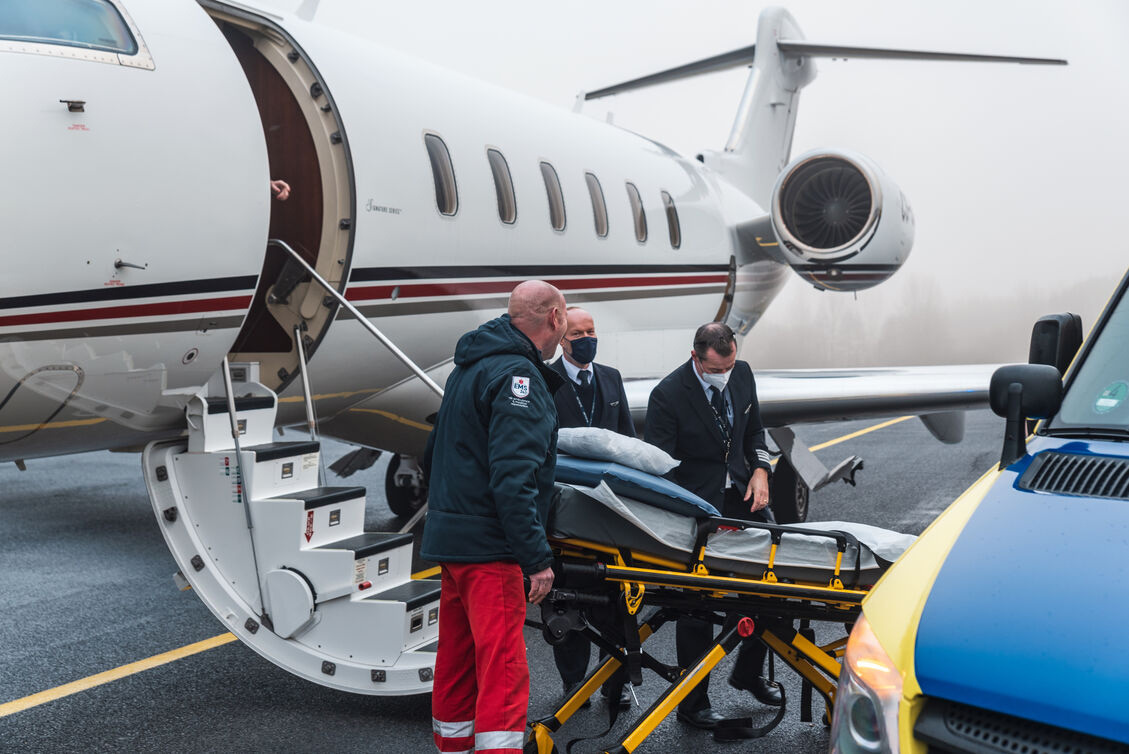
Can Ventilated Patients Travel on an Air Ambulance?
When ventilated air transport is possible
Most ventilated patients can travel safely if their condition is stable and suitable equipment is available.
A patient on a ventilator can usually be transported by air ambulance if the ventilation requirements can be met with the onboard ICU systems. Before transport, a critical care physician reviews the medical condition, recent clinical changes, and oxygen demands.
Safety and stability remain the leading criteria. Flights are often possible even for intensive‑care patients, including those requiring invasive ventilation, sedation, vasopressors, or continuous monitoring.
Typical conditions eligible for ventilated air transport
- Patients requiring invasive or non-invasive ventilation
- Post‑surgery ICU patients needing long-distance transfer
- Severe respiratory conditions (ARDS, pneumonia, COPD exacerbation)
- Neurological patients unable to breathe independently
- Trauma patients requiring advanced airway management
Important

ICU equipment on board
Air ambulances are equipped like mobile intensive care units.
Modern air ambulances carry ventilators that support pressure, volume, and advanced modes, matching hospital‑grade performance. Oxygen systems include high‑capacity cylinders or on‑board oxygen generation. Continuous monitoring of ECG, blood pressure, oxygen saturation, and end‑tidal CO₂ is standard.
Typical equipment on board
- ICU‑grade ventilator compatible with aviation conditions
- High‑flow oxygen supply systems
- Advanced monitoring: ECG, SpO₂, EtCO₂, NIBP/IBP
- Medication pumps for continuous sedation or vasopressors
- Emergency airway equipment and backup ventilators

How long‑distance flights work
Long‑range medical jets allow safe repatriation, even between continents.
How a long-distance ventilated transfer works
Assessment
ICU doctors evaluate the patient's stability and ventilation needs.
Flight planning
Fuel stops, oxygen supply, and crew requirements are calculated.
Pre‑flight stabilisation
Sedation, ventilation settings, and medications are optimised.
In‑flight care
Critical care paramedics and flight nurses monitor the patient continuously.
Arrival and handover
The patient is transferred to an ICU team at the receiving hospital.

What to arrange in advance
Accurate information ensures safe planning.
Checklist before booking
Recent medical report
ICU summary, ventilation mode, oxygen needs, and vitals.
Medication overview
Infusions, sedation, and current dosages.
Hospital contact details
Both the sending and receiving physician contacts.
Travel documents
Passport, insurance details, and any authorisation forms.