Too ill to fly commercially: safe medical transport options to get you home
Why someone may not be allowed to fly commercially
Airlines follow strict medical safety requirements. If there is any risk of deterioration during flight, boarding may be denied.
Airlines have strict medical rules because cabin pressure, limited mobility, and lack of medical infrastructure on board can pose significant risks. If a condition is unstable or requires continuous monitoring, commercial flying becomes unsafe.
Common reasons airlines refuse medical boarding
- Recent surgery or open wounds
- Unstable vital signs or dependence on medical monitoring
- Need for continuous oxygen or equipment not allowed on board
- Risk of blood clots, stroke, or cardiac complications
- Infectious diseases that could affect other passengers
- Inability to sit upright during take-off and landing
Important to know
Safe alternatives to commercial flights
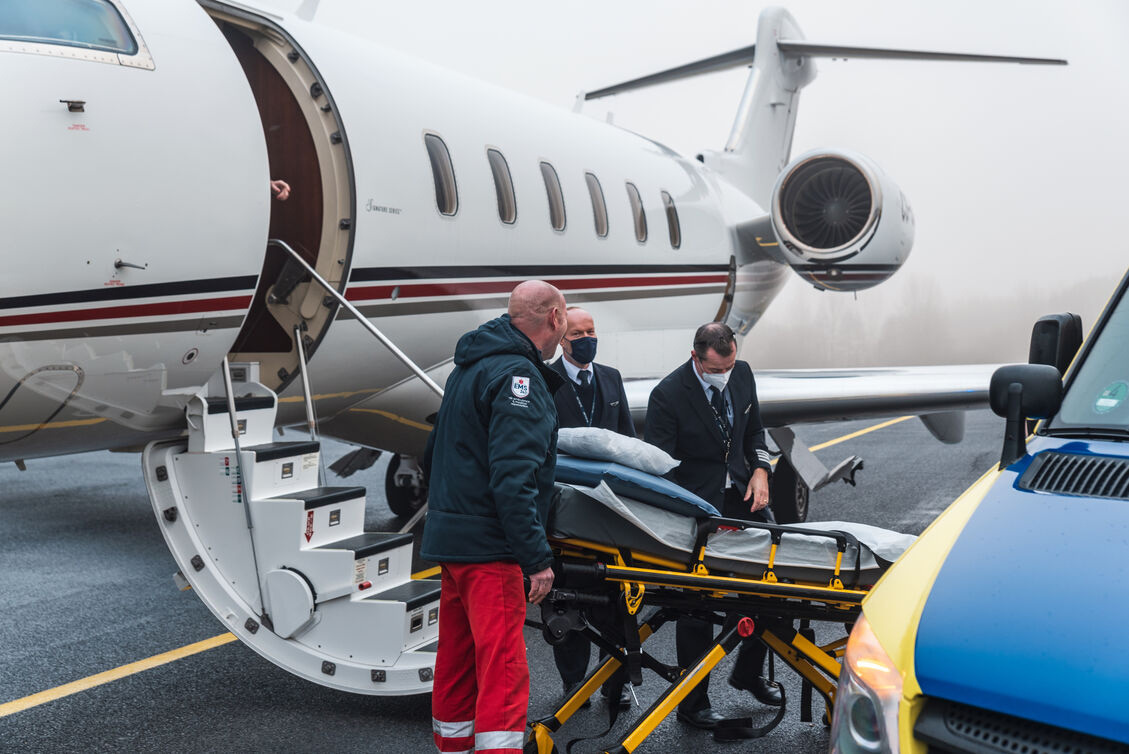
When commercial flying is not an option, EMS Air Ambulance offers medically supervised solutions adapted to each patient’s condition.
Air ambulance (medical jet)
- Intensive-care level equipment
- Fast, direct routes with minimal transfers
- Suitable for serious or complex medical conditions
- Higher operational cost
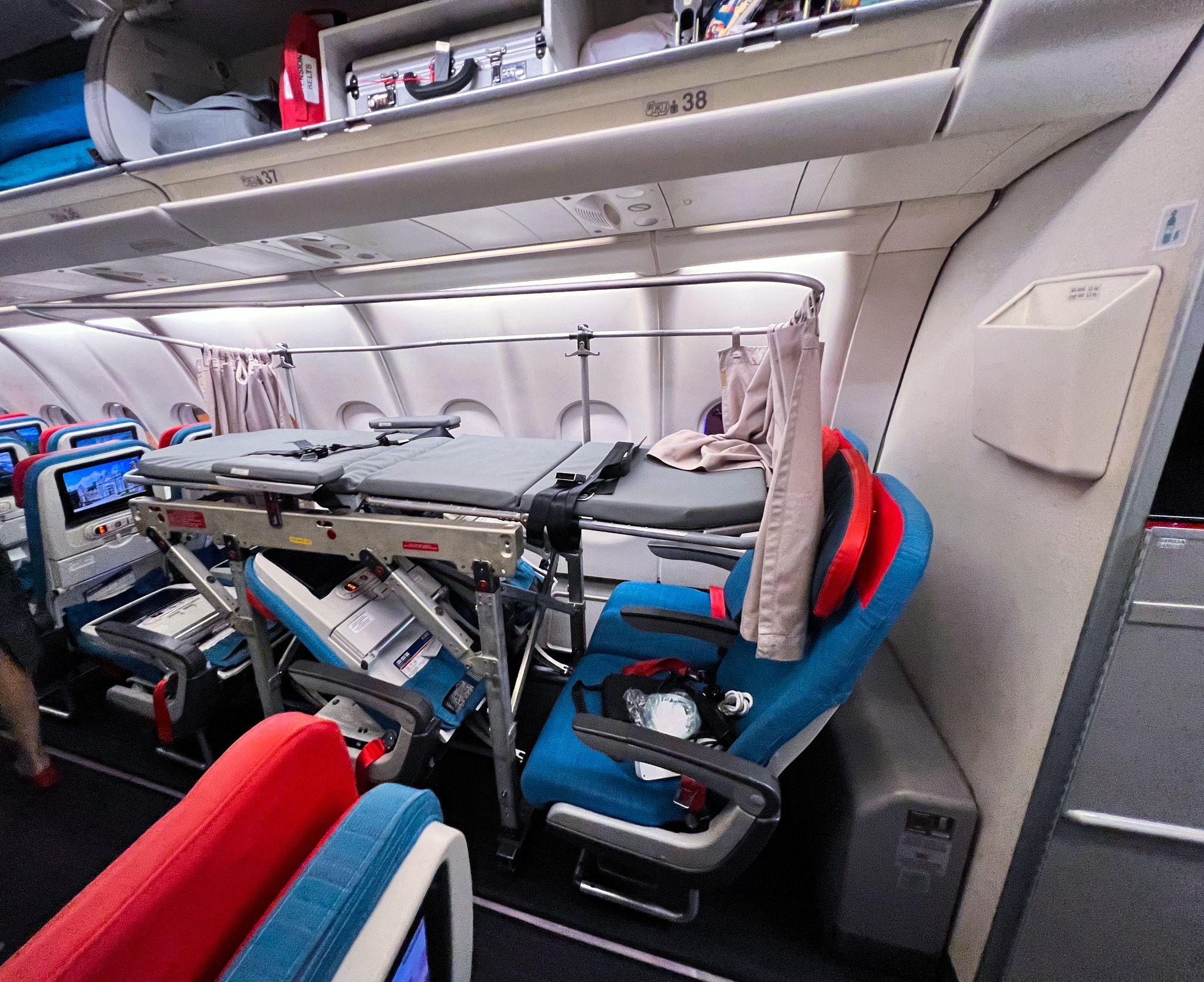
Medical escort on a commercial flight
- More affordable than an air ambulance
- Suitable for stable patients needing support
- Subject to strict airline approval
Long-distance ground ambulance
- No pressure changes or flight restrictions
- Comfortable, continuous medical monitoring
- Travel time can be longer
How EMS arranges medical repatriation
EMS Air Ambulance coordinates every aspect of the journey, ensuring safety from bedside to bedside.
The steps of arranging medical repatriation
Medical intake
EMS reviews the patient’s condition, stability, and location.
Medical approval
A medical director assesses which transport type is safe.
Planning and logistics
Aircraft, medical crew, equipment, routes, and ground ambulances are arranged.
Transport
The patient is transferred with continuous medical monitoring.
Handover
EMS delivers a full medical handover to the receiving hospital or care team.

Costs and insurance
Medical repatriation costs vary, but EMS Air Ambulance explains them transparently.
The cost depends mainly on distance, the type of aircraft, the medical team required, and the urgency of the flight. EMS Air Ambulance does not collaborate directly with insurance companies, but patients can often claim expenses afterward depending on their policy and documentation.
Main factors influencing the price
- Flight distance and aircraft type
- Medical team level (nurse, doctor, specialist)
- Equipment needed during the flight
- Ground ambulances at departure and arrival
- Urgency and availability
What you need to prepare
Having the right information ready speeds up the medical assessment and flight planning.
Checklist for families and hospitals
Recent medical report
Including diagnosis, stability, and treatment.
Medication list
Including allergies and dosage information.
Contact details of treating physician
For coordination and handover.
Travel documents
Passport, ID, and insurance details if available.