Too ill to fly commercially: your safe options to get home
Why commercial flying may be unsafe
If a doctor declares you unfit to fly commercially, it means the cabin environment or lack of medical support could endanger your health.
Commercial airlines cannot provide continuous medical supervision or advanced equipment. Certain medical conditions may worsen at altitude, such as heart problems, severe infections, respiratory issues, recent surgery, or reduced mobility.
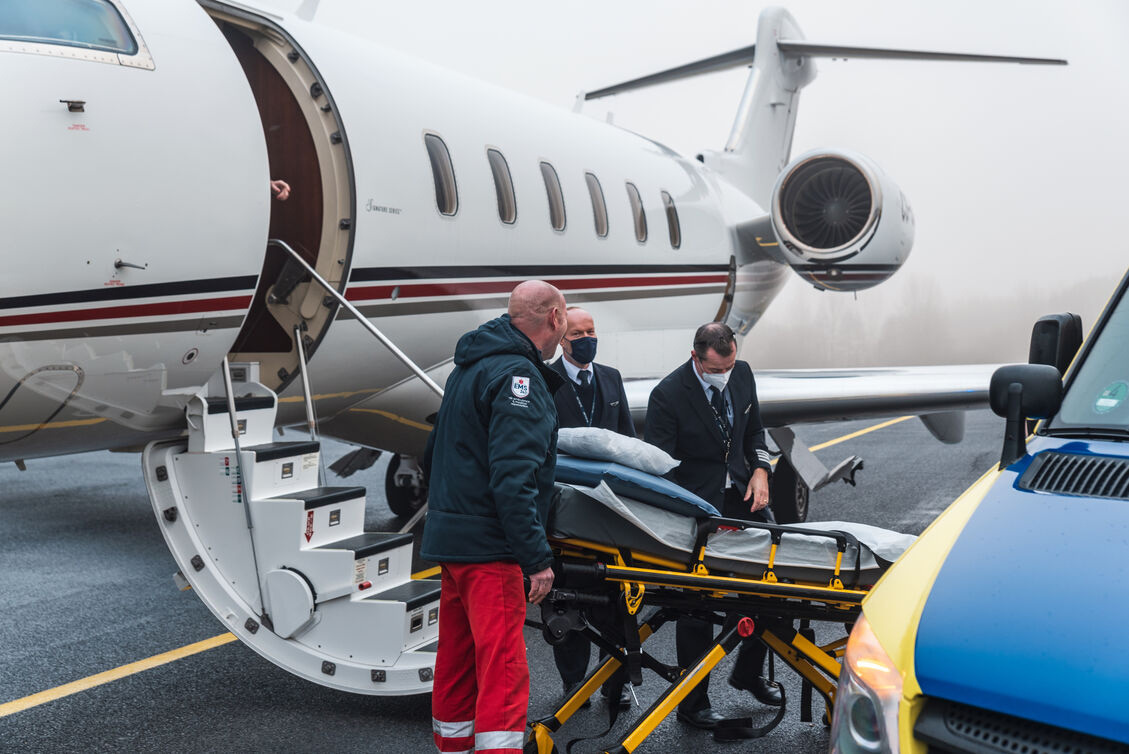
When travel in a regular cabin poses a risk, medical repatriation is the safe alternative. EMS Air Ambulance provides dedicated medical aircraft and specialist teams to transport patients worldwide.
Common reasons commercial flying is not allowed
- Recent surgery, fractures, or immobilisation
- Severe respiratory or cardiac conditions
- Need for oxygen or monitoring during travel
- Risk of clinical deterioration
- Infectious diseases restricted by airlines
- Inability to sit upright for take-off and landing
Good to know
Your medical transport options
EMS Air Ambulance offers three types of medically supervised transport. The patient’s condition determines which is safest.
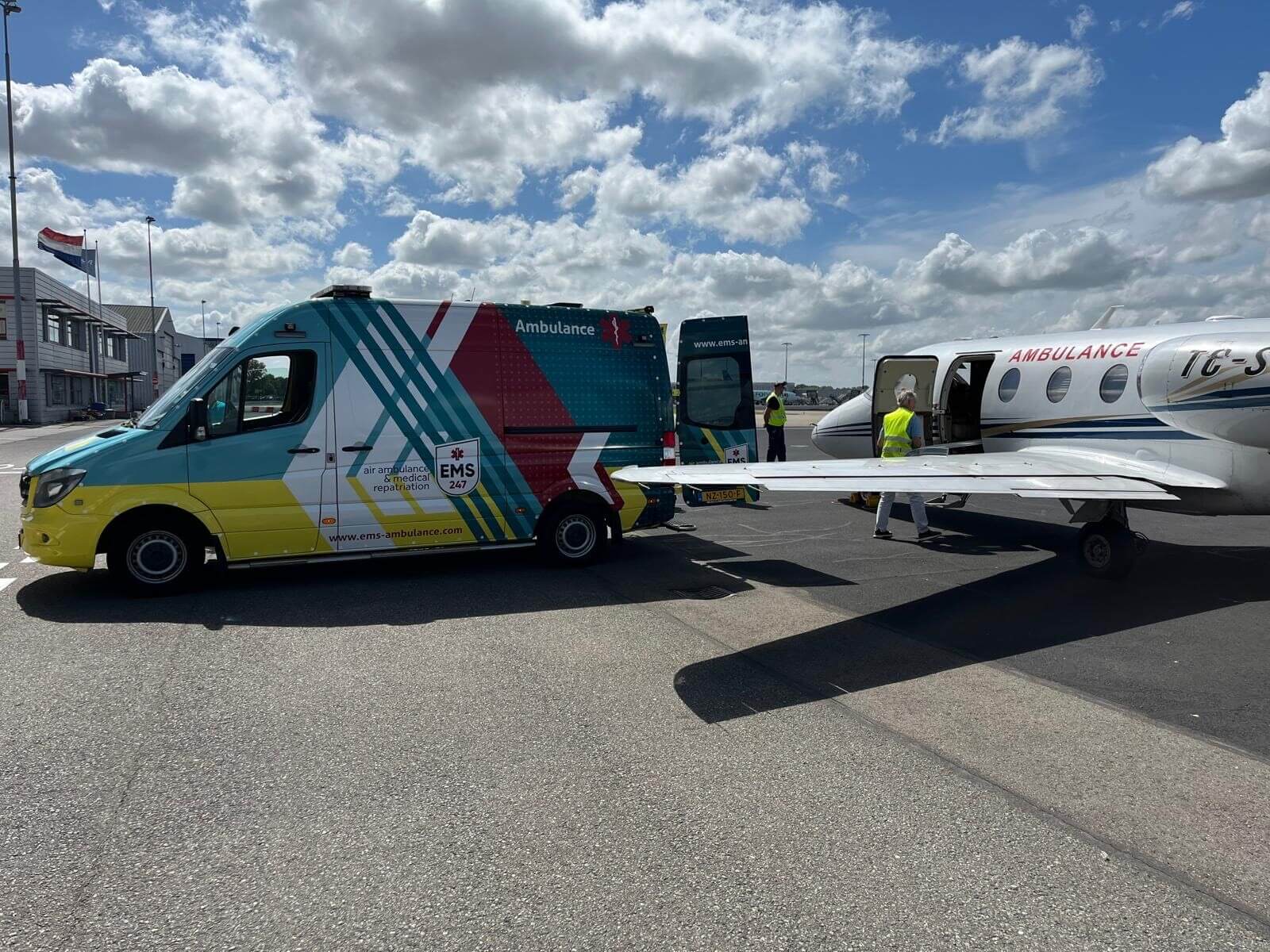
Air ambulance flight
- Most advanced medical support
- Direct flights with full medical team
- Suitable for unstable or complex cases
- Higher cost compared to commercial alternatives
Medical escort on a commercial flight
- Cost-effective solution
- Suitable for stable patients cleared to fly with support
- Dependent on airline medical clearance
- Not suitable for lying-flat or ICU patients
Ground ambulance transport
- Flexible planning
- No cabin pressure changes
- Travel time can be long for distant destinations
How EMS Air Ambulance arranges your return home
The transport process is structured, fast, and designed to ensure patient safety at every step.
What the process looks like
Medical intake
EMS reviews the patient’s condition, location, and urgency.
Assessment by EMS medical director
Decides which transport type is medically safe and required.
Planning and logistics
Aircraft, medical crew, equipment, and ground ambulances are arranged.
Transport home
The patient receives continuous care throughout the journey.
Handover at destination
The EMS team transfers the patient safely to the receiving hospital or home care team.

Costs and insurance
Medical repatriation costs vary widely, but they can be explained clearly.
The cost depends on distance, aircraft type, required medical team, and urgency. Air ambulances are more expensive than commercial-flight options due to the medical equipment and dedicated crew.
Insurance coverage depends on your policy and whether the repatriation is medically necessary. EMS Air Ambulance can provide the documentation insurers require.
Main cost factors
- Flight distance and aircraft type
- Urgency: same-day vs. planned
- Required medical staff (nurse, doctor, specialist)
- Medical equipment such as ventilators or monitors
- Ground ambulances at departure and arrival
What to prepare
Having complete information helps EMS arrange your transport quickly and safely.
Checklist
Medical summary
Recent reports, diagnosis, condition, and clinical notes.
Medication overview
Including allergies, dosages, and current treatment.
Contact details of treating physician
For coordination and transfer of care.
Travel documents and insurance
Passport details and policy numbers.