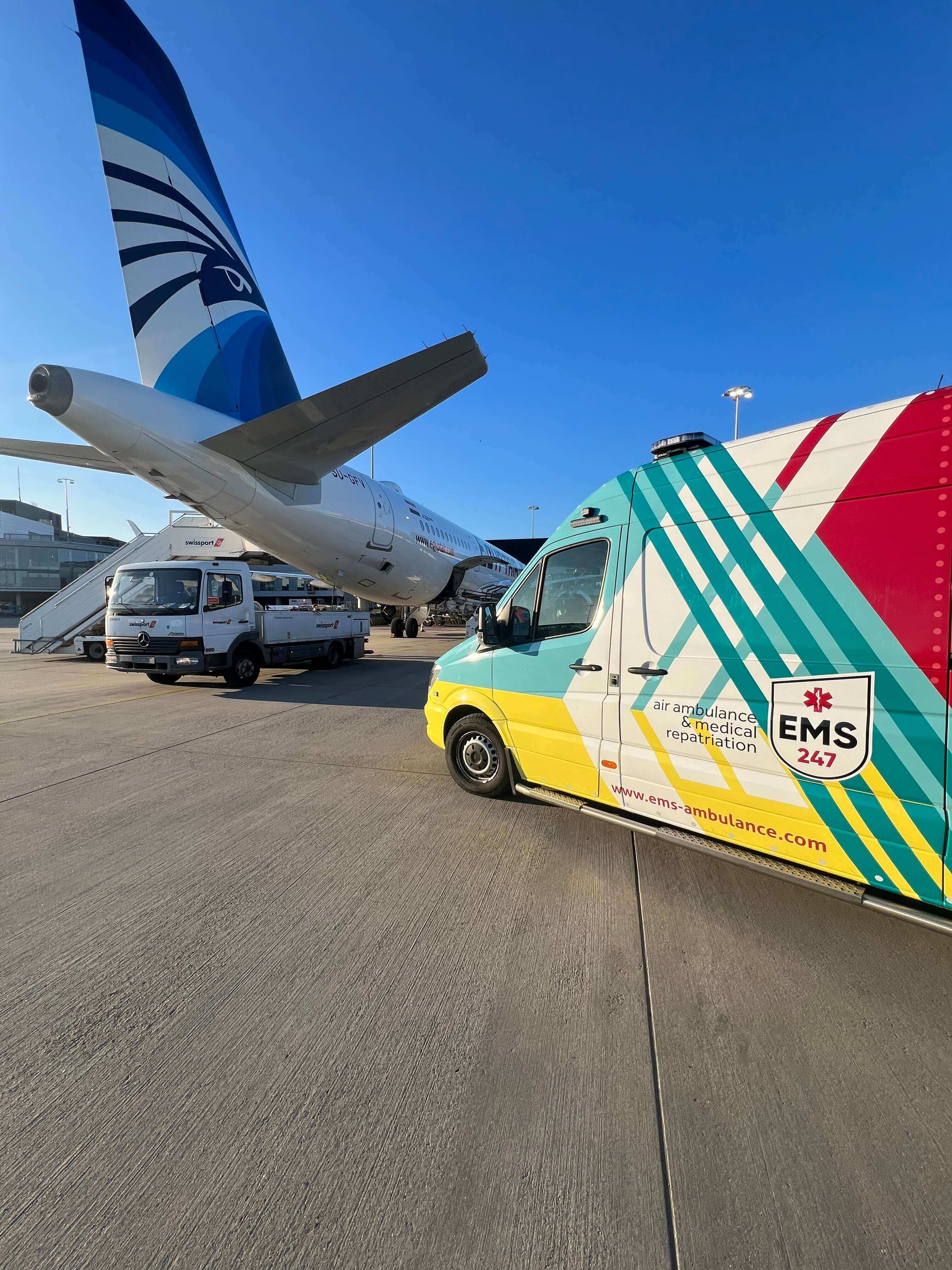
What is the safest way to transport a patient internationally?
What is the safest way to transport a patient internationally?
The safest transport method depends on the patient’s medical condition, and EMS Air Ambulance determines this through a professional medical assessment.
Why families choose EMS Air Ambulance
- ICU‑equipped aircraft for critical patients
- Critical care doctors and paramedics on board
- Real‑time monitoring during the entire transport
- Tailored medical plan based on patient condition
- Worldwide operations with fast mobilization
- Free quote within 30 minutes, 24/7
The safest way to transport a patient internationally is the one that matches their medical stability, risk level, and required level of care. EMS Air Ambulance & Medical Repatriation Ltd. performs a complete medical assessment to determine whether an air ambulance, medical escort, or stretcher flight is medically appropriate.
Safety always comes first — not convenience or cost.

Transport options and when they are safest
EMS offers several international medical transport options. Each is selected only if it is medically safe for the patient.
Air Ambulance
- Fastest and safest option for critical cases
- Direct routing without layovers
- Full ICU equipment: ventilator, monitors, oxygen, medications
- Highest cost due to dedicated aircraft
Medical Escort on Commercial Flight
- Cost‑effective
- Safe for stable patients
- Dependent on airline approval
- Limited options for lying‑down transport
Stretcher Flight on Commercial Aircraft
- More affordable than an air ambulance
- Constant monitoring by medical staff
- Only available on select airlines
- Longer preparation time
How EMS ensures maximum patient safety
Every transport is medically planned from start to finish.
Core safety measures
- Critical‑care doctors and paramedics on every mission
- ICU‑level equipment, identical to hospital ICU standards
- Continuous real‑time monitoring
- Direct hospital‑to‑hospital coordination
- Strict medical protocols for high‑risk patients
- Specialized equipment for ventilated and immobilized patients
Even critically ill patients can be transported safely when the right equipment, team, and aircraft are used. EMS provides medical capabilities equivalent to hospital ICU care, ensuring patient stability during every phase of transport.

Step‑by‑step process
Clear procedures guarantee safe and smooth international transport.
How EMS handles international medical transport
Medical intake
Collect medical reports and assess the patient’s condition.
Medical decision
Determine the safest transport type.
Operational planning
Organize aircraft, medical crew, ground ambulances, and permits.
Transport execution
Continuous monitoring and treatment during the journey.
Hospital handover
Safe transfer to the receiving medical team.

Costs and reimbursement
Costs vary by distance, aircraft type, and medical needs.
Air ambulance transport is more expensive than commercial flight options due to the dedicated aircraft and full ICU setup. EMS provides transparent quotes and explains all cost factors clearly.
EMS does not work directly with insurance companies, but many clients receive partial or full reimbursement afterward, depending on their policy and medical necessity.
Key cost factors
- Distance and routing
- Required medical team and equipment
- Aircraft type
- Urgency of departure
- Ground ambulances at both locations
What to prepare in advance
Complete information helps EMS assess the case quickly.
Preparation checklist
Recent medical report
Diagnosis, treatment, and current status.
Medication list
Including dosages and allergies.
Passport copies
For patient and accompanying relatives.
Receiving hospital details
For coordination and handover.