Medical Repatriation After a Road Traffic Accident Abroad
Understanding medical repatriation
A road traffic accident abroad can result in injuries that make regular travel impossible.
Medical repatriation is the organised return of a patient from abroad to their home country when their condition does not allow safe travel without assistance. After a traffic accident, injuries such as fractures, spinal trauma, head injuries, and internal damage often require stabilisation and specialised monitoring.
The goal of medical repatriation is to ensure continuous medical care and safe transportation, whether by air ambulance, medical escort, or specialised ground ambulance.
Common injuries after a road traffic accident
- Fractures (legs, arms, ribs, pelvis)
- Spinal injuries, herniations, or vertebral fractures
- Head trauma or concussion
- Internal bleeding or organ damage
- Severe soft‑tissue injuries and wounds
- Respiratory complications
Important to know

Transport options after a traffic accident
The correct transport method depends on injury severity, stability, distance, and urgency.
Air ambulance
- Fast and direct return
- ICU‑level equipment available
- Safe for unstable patients
- Higher operational cost
Medical escort on a commercial flight
- Cost‑effective
- Suitable for moderate injuries
- Dependent on airline approval
Ground ambulance
- Flexible routes
- Continuous monitoring
- Longer travel time
How the repatriation process works
Repatriation follows a structured process to ensure safety and efficiency.
Repatriation in 5 steps
Initial intake
Collect details about the accident, injuries, and location.
Medical assessment
Doctors determine if the patient is stable enough to travel and which transport type is safe.
Logistical planning
Organising aircraft, ground ambulance, medical staff, and hospital coordination.
Transport phase
Continuous monitoring and treatment during the journey.
Handover at destination
Safe transfer to a hospital or rehabilitation clinic in the home country.
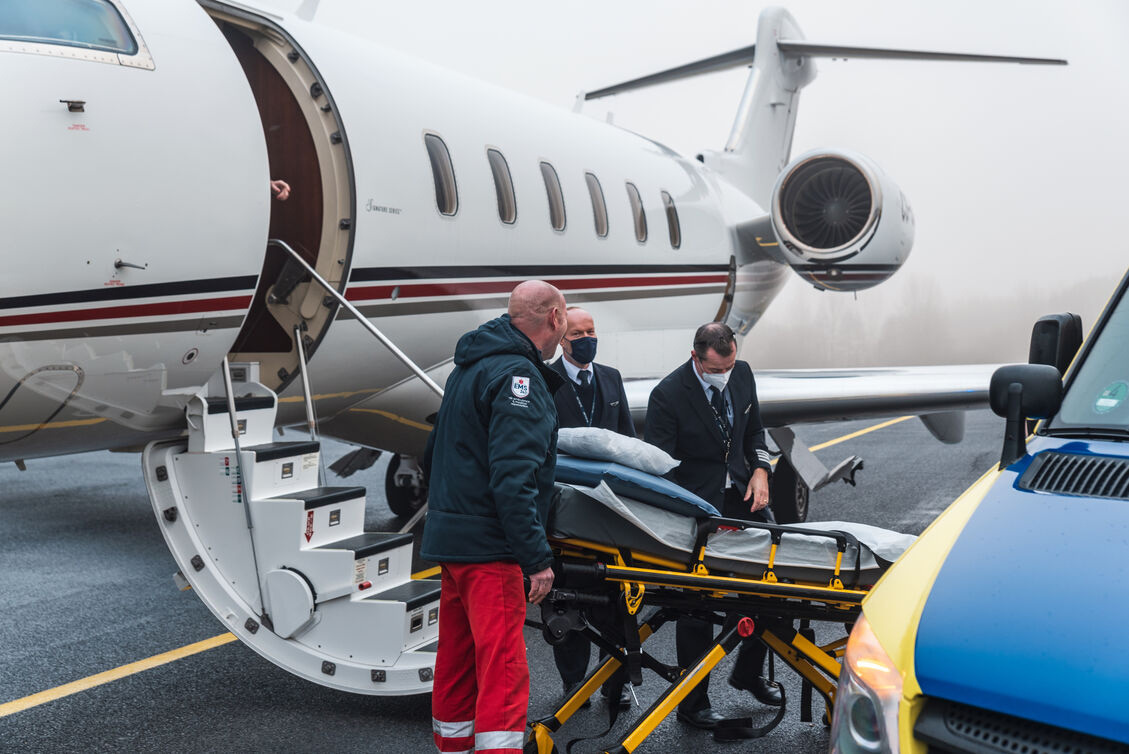
Costs and insurance coverage
Several factors influence the cost of repatriation after an accident.
The total cost depends on the type of transport, medical team, distance, necessary equipment, and urgency. Air ambulances are typically the most expensive due to aircraft operation, medical crew, and rapid mobilisation.
Insurance policies vary. Some travel insurance policies cover full repatriation if it is medically necessary and pre-approved. Others may cover only part of the cost. Documentation from the treating hospital is essential.
What affects the cost
- Transport type (air ambulance vs. commercial escort)
- Distance to home country
- Urgency and immediate availability
- Medical equipment and staff level required
- Local ground ambulance transfers
Preparation checklist
Providing accurate information helps speed up the repatriation process.
Checklist before transport
Updated medical report
Including diagnosis, treatments, and latest status.
Imaging results
X-rays, CT, MRI if available.
Medication list
Including allergies and current dosages.
Hospital contact details
For coordination between doctors.
Insurance information
Policy number and emergency line.
Travel documents
Passport or ID for the patient and accompanying persons.