What happens if a patient’s condition worsens mid-flight?
Why families trust EMS Air Ambulance
- ICU-level equipment on every medical flight
- Highly experienced doctors and critical care flight nurses
- Continuous monitoring from takeoff to landing
- Ability to stabilize or adjust treatment mid‑flight
- Emergency landings arranged when medically required
- Full coordination from bed to bed, worldwide
- 24/7 availability with free quotes within 30 minutes
How in-flight deterioration is handled
Our team is trained to act immediately if a patient’s condition becomes unstable during the flight.
If a patient shows signs of deterioration mid‑flight—such as a sudden drop in blood pressure, breathing difficulty, or arrhythmia—the medical crew initiates advanced care protocols immediately. Our doctors and flight nurses are trained in emergency medicine, intensive care, and aeromedical procedures. They can adjust medication, provide respiratory support, manage pain, or initiate emergency interventions.
If required, the captain can divert the aircraft for an urgent landing so the patient can be transferred to the nearest capable hospital. Patient stability and safety always come first.

Our ICU-level medical capabilities on board
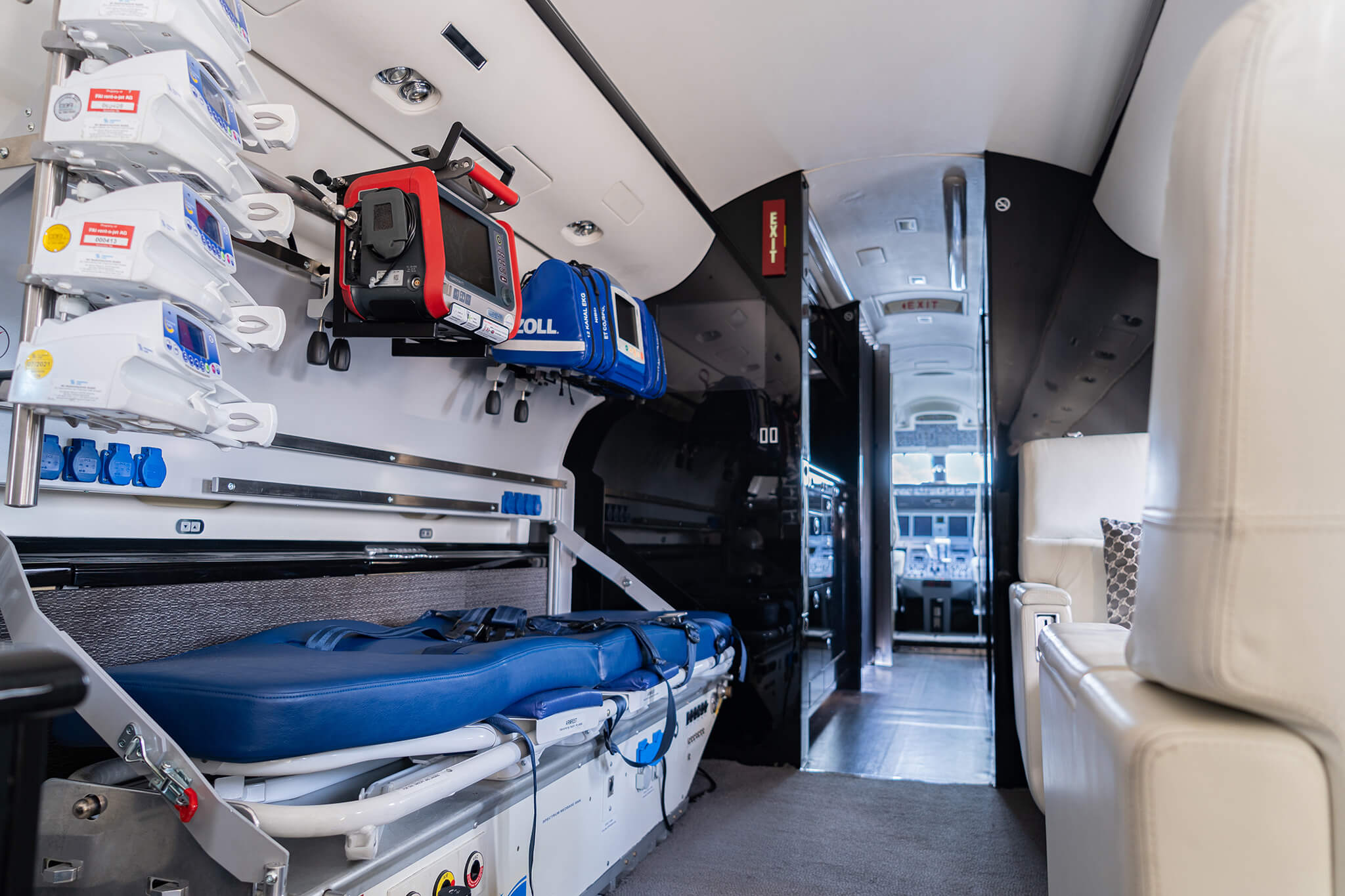
Each aircraft operates as a flying intensive care unit.
Equipment available on every EMS air ambulance
- Advanced cardiac monitoring
- Ventilators suitable for flight conditions
- Defibrillators and emergency medication
- Infusion pumps and syringe drivers
- Oxygen systems with high-flow capability
- Portable laboratory diagnostics
- Specialized equipment for trauma, stroke, and cardiac care
Pre-flight safety measures
Risk prevention starts long before takeoff.
Before every mission, our medical team carries out a detailed assessment based on medical records, physician reports, and direct communication with the treating hospital. This determines the safest transport method, required equipment, and level of medical staffing. Strict safety protocols are followed at every stage to minimize mid-flight risks.
Fully coordinated medical repatriation
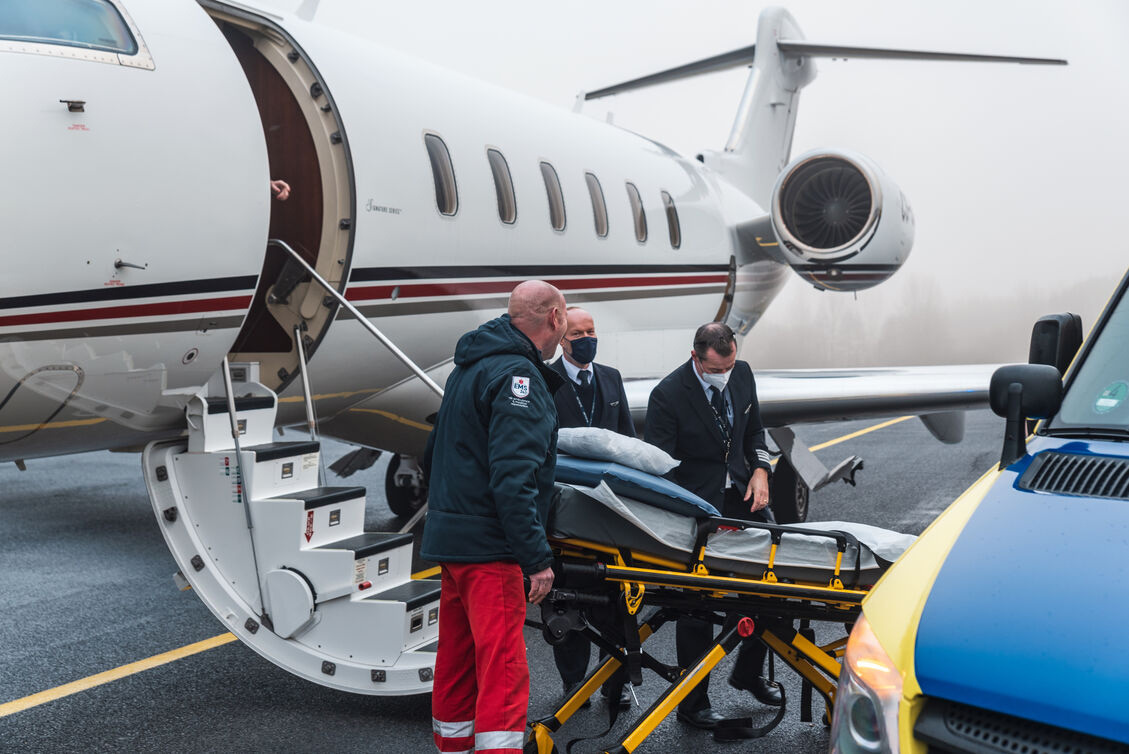
From the first call to safe handover at the destination, EMS manages everything for you.
How the process works
Initial call
We assess urgency and collect essential details.
Medical review
Our doctors determine flight safety and required care level.
Mission planning
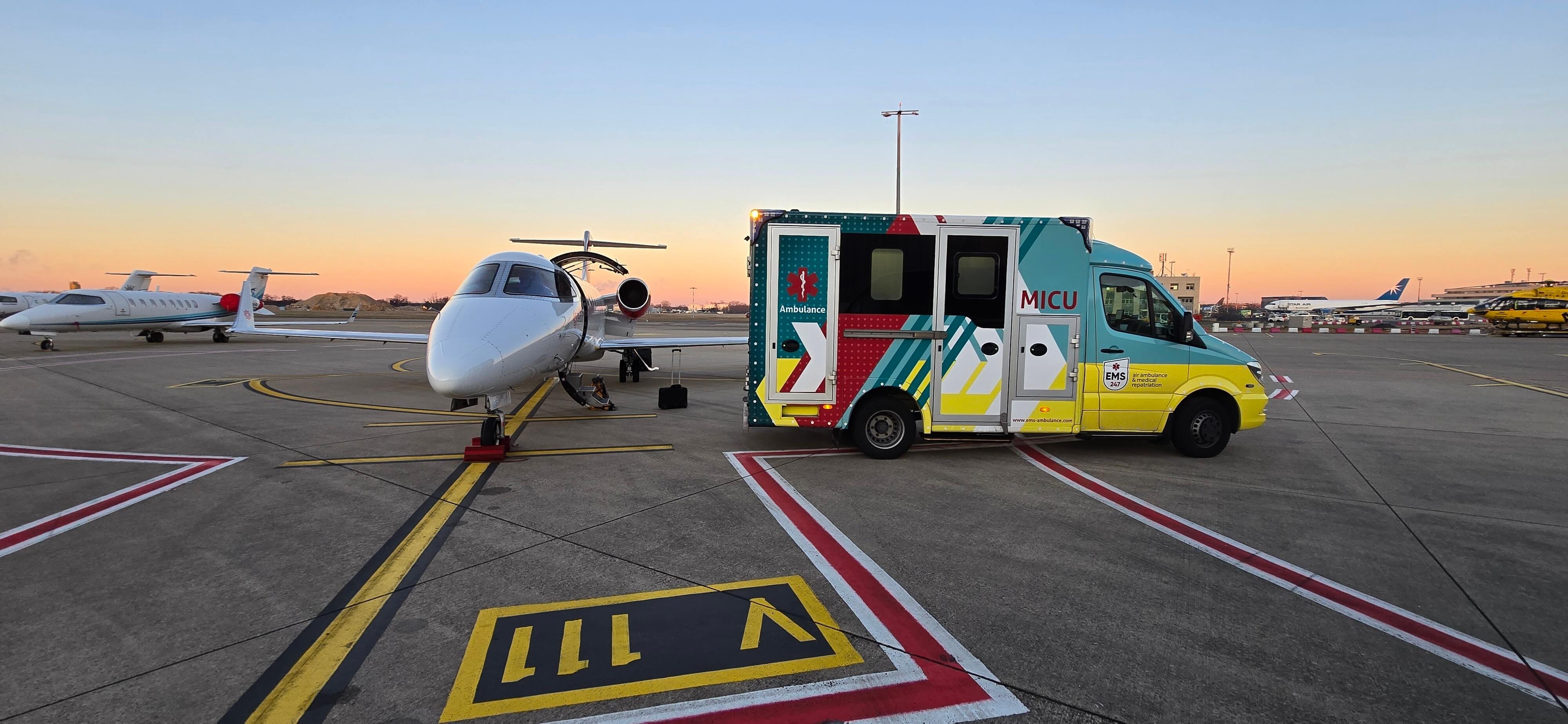
We arrange aircraft, crew, equipment, and ground ambulances.
The flight
Continuous monitoring and advanced care throughout the journey.
Arrival and handover
Safe transfer to the receiving medical team.
Insurance and reimbursement
Clear information so families know what to expect.
EMS Air Ambulance & Medical Repatriation Ltd. does not work directly with insurance companies. However, many clients can request partial or full reimbursement after the transport, depending on their policy and medical necessity. We provide all required documentation to support reimbursement claims.
What determines the cost
- Flight distance and aircraft type
- Medical team composition
- Required equipment and level of care
- Ground ambulance transfers at both locations
- Urgency and planning timeframe


