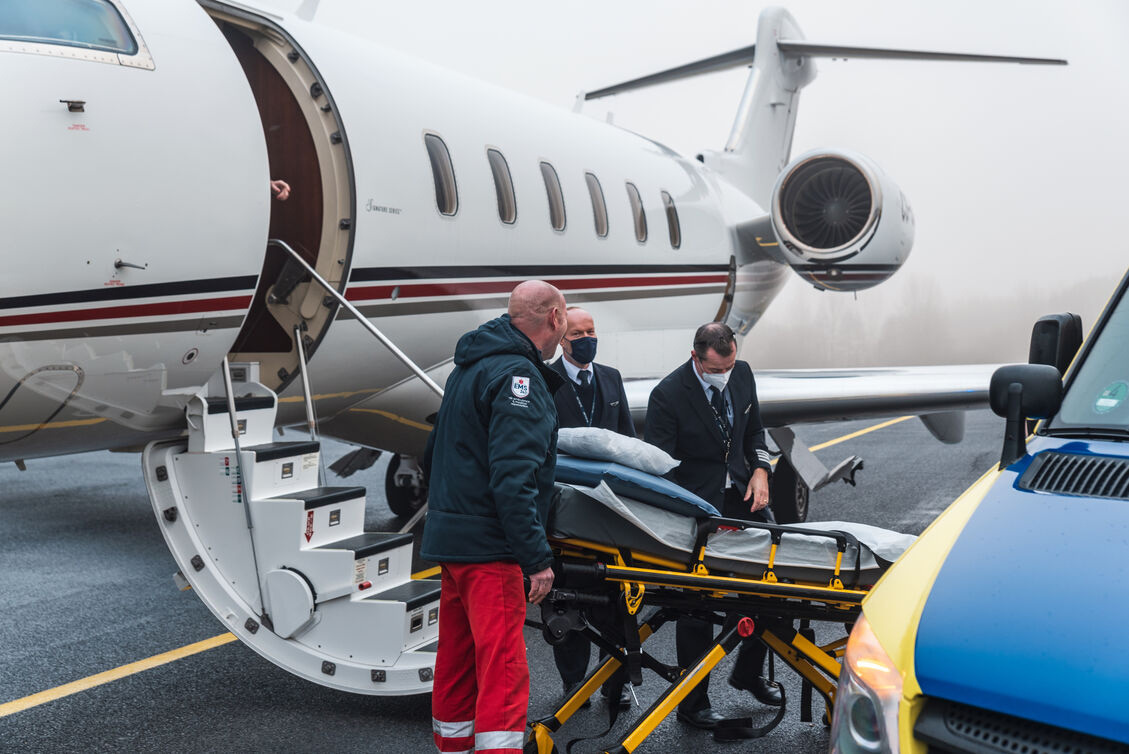
Medical Repatriation from the Caribbean: Fast, Safe and International
When medical repatriation is needed
Island locations often lack specialised medical capacity, making repatriation essential in many cases.
If local medical facilities cannot provide the required treatment, repatriation ensures patients receive proper care in their home country or in a specialised centre. Caribbean islands often have limited intensive care capacity, long distances between hospitals, and logistical challenges that make evacuation necessary.
Repatriation can be urgent or planned, depending on the patient’s condition and the availability of a safe transport option.
Common reasons for repatriation
- Need for specialised treatment unavailable on the island
- Limited ICU capacity or diagnostic services
- Serious trauma or cardiac conditions
- Long-term hospitalisation requiring transfer closer to home
- Complications during holidays or business travel
Important

Transport options from the Caribbean
Depending on the medical condition and location, several transport methods are possible.
Air ambulance
- Fastest option for remote islands
- Intensive care equipment available
- Direct flights to the nearest specialist hospital
- Higher operational costs
Medical escort on a commercial flight
- More affordable
- Suitable for non-urgent situations
- Dependent on airline approval and available flights
Ground ambulance (within major islands)
- Accessible on larger islands
- Flexible scheduling
- Limited to major islands with proper road networks
How repatriation is arranged
Clear steps ensure safe and fast coordination between islands, airports, and international hospitals.
Steps in the repatriation process
Initial intake
Collect medical details, location, and urgency.
Medical evaluation
A doctor decides the safest transport option.
Logistics planning
Aircraft, crew, permits, ground ambulances, and hospital coordination are arranged.
Flight or transfer
The medical team supports the patient throughout the journey.
Arrival and handover
The receiving medical team takes over upon landing.

Costs and coverage
Transport from island regions varies in price due to long distances and aircraft availability.
The cost of repatriation depends heavily on the distance from Caribbean islands to destinations such as the USA, Canada, the UK, or mainland Europe. Emergency evacuations may require larger aircraft with extended range. Insurance coverage depends on the policy and whether the transport is medically necessary.
Main factors influencing cost
- Distance to destination (USA and Europe are common routes)
- Urgency and required response time
- Aircraft type and medical equipment
- Airport accessibility on the island
- Required ground ambulances and medical crew
Preparation for repatriation
Complete information speeds up the assessment and departure planning.
Checklist
Medical summary
Latest reports and diagnosis.
Medication and allergies
Full list including dosages.
Contact details of treating physician
Important for medical coordination.
Travel documents
Passport, insurance information, and patient ID.