Can Dialysis Patients Travel on an Air Ambulance?
Can dialysis patients fly on an air ambulance?
Yes. Dialysis patients can travel safely on an air ambulance when care is properly planned.
Air ambulances are frequently used to transport dialysis patients who cannot travel safely on commercial flights. These missions are medically coordinated, ensuring that the patient’s dialysis schedule, oxygen needs, fluid balance, and stability are fully assessed.
Most patients can travel soon after dialysis, while some may require treatment immediately upon arrival. Air ambulances help bridge this gap through continuous monitoring and specialist care on board.
Key factors assessed before flying
- Recent dialysis treatment and timing of the next session
- Fluid balance and blood pressure stability
- Need for supplemental oxygen
- Comorbidities such as heart failure or diabetes
- Travel distance and urgency
Good to know

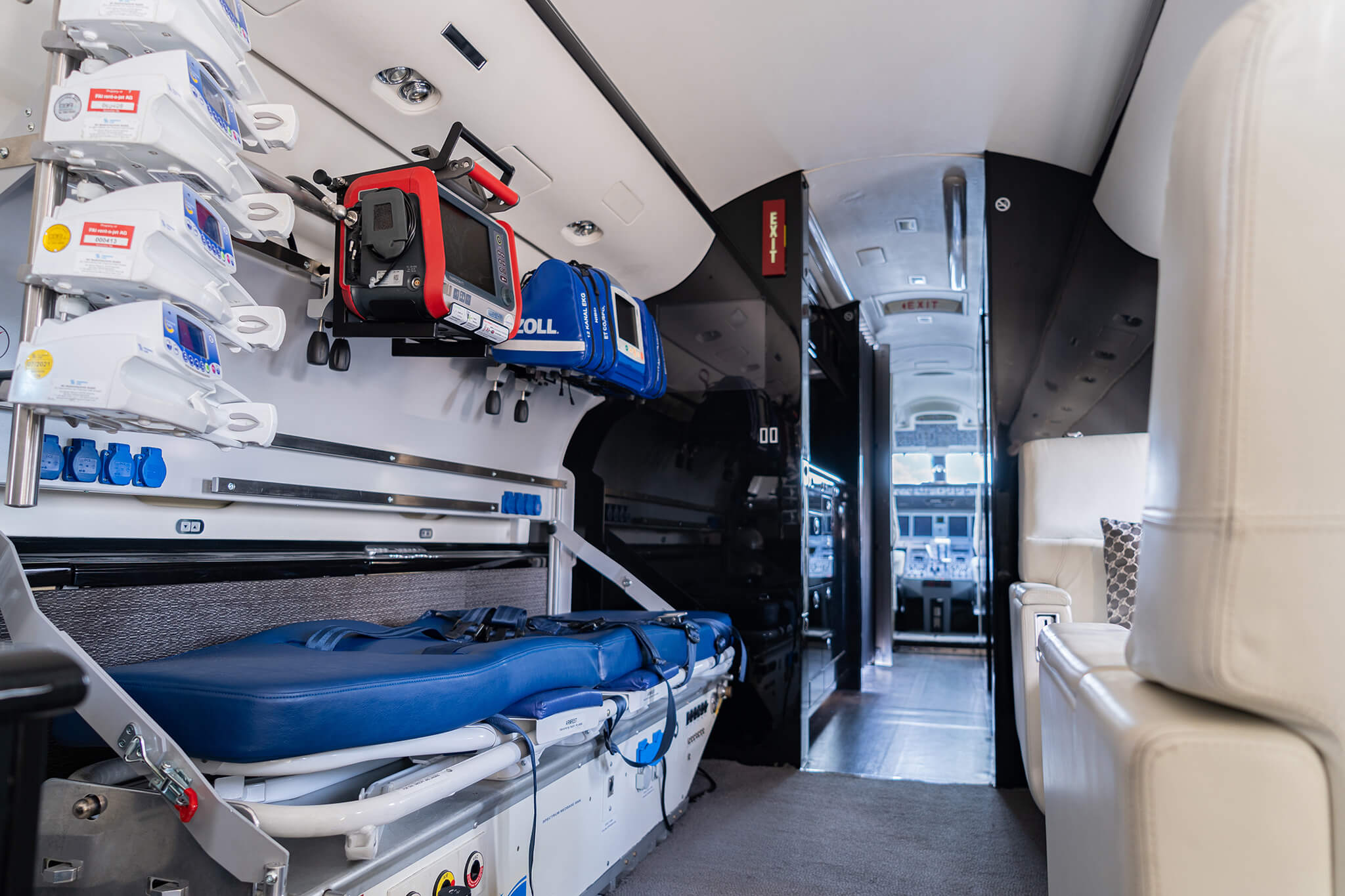
Medical support on board
Air ambulances carry specialised teams trained in managing chronic kidney patients during flight.
Standard onboard capabilities
- Continuous ECG and blood pressure monitoring
- Oxygen therapy and airway support
- IV access and fluid management
- Specialised kidney-disease-trained medical staff
- Bed-to-bed service coordination
The onboard medical team monitors electrolyte balance indicators, manages blood pressure fluctuations, and ensures patient stability. Although dialysis machines are not used in flight, the team prepares the patient for safe arrival at a dialysis-ready facility.
Long-distance flights for dialysis patients
Many dialysis patients require international repatriation or cross-border medical flights.
What long-distance planning includes
Dialysis timing
Flights are planned shortly after a dialysis session to ensure stability.
Medical clearance
A medical team confirms the patient’s capacity for long-distance flight.
Oxygen preparation
Supplemental oxygen is prepared based on the patient’s respiratory and cardiac profile.
In-flight monitoring
Vital signs are monitored continuously throughout the journey.
Arrival coordination
A dialysis appointment is pre-booked near the destination hospital.

Coordination with dialysis clinics and hospitals
Successful medical repatriation for dialysis patients depends on seamless coordination.
What coordination includes
Medical documentation
Recent dialysis records, lab results, and the patient’s treatment plan.
Receiving clinic confirmation
A dialysis slot is arranged before takeoff.
Hospital-to-airport handovers
Bed-to-bed logistics ensure continuity of care.
Arrival safety check
Receiving medical staff are briefed with a full medical handover.

Costs and insurance
The cost of transporting dialysis patients varies depending on distance, aircraft type, and medical needs.
Air ambulance costs depend on distance, medical staffing, oxygen needs, and ground transportation arrangements. Insurance may cover all or part of the cost when the transport is medically necessary and documented by a physician.
Cost-determining factors
- Distance and flight hours
- Medical staffing level
- Oxygen and specialized monitoring needs
- Ground ambulance transfers
- Urgency of the mission


