Air Ambulance Transport: A Clear Step-by-Step Explanation
What an air ambulance is
An air ambulance is a medically equipped aircraft with a dedicated medical team on board.
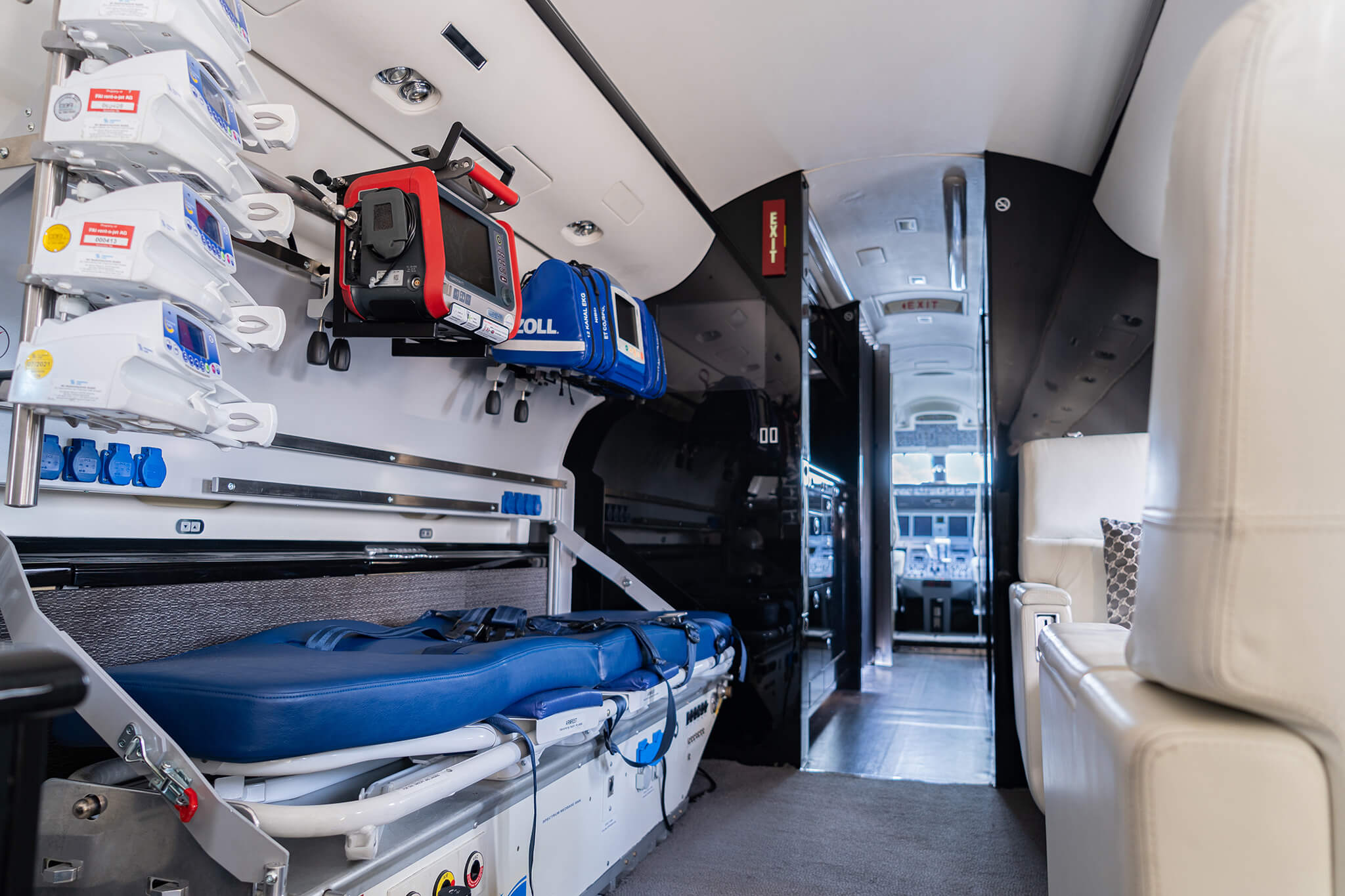
An air ambulance is used when a patient cannot fly safely on a commercial aircraft and requires dedicated in-flight medical care. These aircraft are fitted with ICU-grade medical equipment, stretchers, oxygen, monitoring systems, and emergency medication.
Air ambulances are used for emergencies, planned repatriations, and long-distance transfers where rapid evacuation is required.
When an air ambulance is typically needed
- The patient cannot sit upright during travel
- ICU-level care or continuous monitoring is required
- Commercial airlines decline medical clearance
- Urgent evacuation or time-critical transport is needed
- Long distances make ground transport unsafe or unrealistic

How the air ambulance process works step by step
Although it may appear complex, the air ambulance process follows a clear, structured workflow.
The full process at a glance
1. Initial call and case review
Basic information is collected, including location, condition, and urgency. This allows EMS to determine feasibility and aircraft availability.
2. Medical assessment
An EMS flight physician reviews medical reports and decides which equipment and care level are required.
3. Complete mission planning
EMS arranges aircraft, crew, medical team, airport slots, ground ambulances, documentation, and international clearances.
4. Bed-to-bed patient transfer
The EMS medical team picks up the patient at the hospital or residence and manages care throughout transport.
5. In-flight medical care
The team provides continuous monitoring and treatment. The aircraft flies directly to the nearest suitable airport.
6. Arrival and hospital handover
Upon landing, EMS ground crews transfer the patient to the final destination, including formal medical handover.

What EMS arranges for you
EMS handles every logistical and medical component of the mission, so families do not have to manage anything themselves.
EMS manages the entire operation
- Medical assessment by experienced flight physicians
- Aircraft, crew, and flight planning
- Bed-to-bed transfer with ground ambulances
- International medical coordination
- Hospital communication and final handover
- All medical reports and documentation
- Real-time updates for family members

Cost factors and insurance
Air ambulance pricing depends on several medical and logistical variables.
Costs vary depending on flight distance, aircraft type, crew requirements, medical equipment, and urgency. Insurance coverage depends on the specific policy and whether the repatriation is medically necessary.
Main factors that influence cost
- Distance and flight duration
- Aircraft category and availability
- Required medical equipment and medication
- Number of medical crew members
- Airport fees, landing permits, and ground ambulance transfers
Information needed to begin planning
Accurate information helps EMS quickly determine the safest and fastest transport plan.
Checklist
Medical reports
Including diagnosis, stability, and recent updates.
Medication list
With dosage and allergy information.
Patient location
Hospital name, ward, and attending physician.
Destination details
Receiving hospital or home address.
Travel documents
Passport details for cross-border missions.