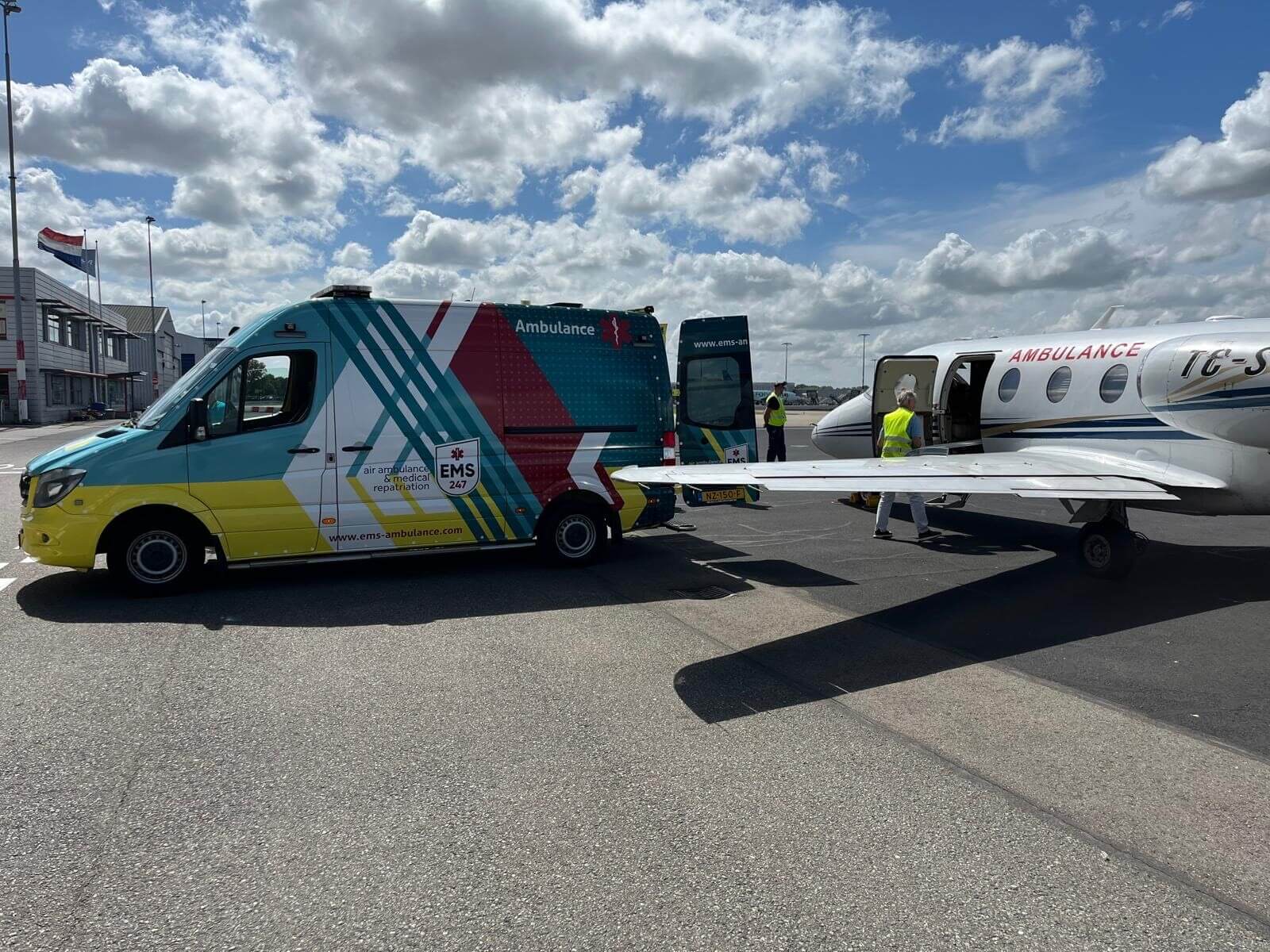
How airports and hospitals are coordinated during an air ambulance transfer
Why coordination matters
Air ambulance missions involve multiple parties. Smooth coordination ensures safety, speed, and medical continuity.
An air ambulance transfer requires synchronizing medical handovers, airport procedures, ground ambulance availability, aircraft readiness, and international aviation rules. EMS Air Ambulance coordinates every step, making the process predictable and stress-free for families. The entire chain—from hospital bed to aircraft stretcher to destination hospital—is handled by one expert team.
Key goals of coordinated medical aviation
- Continuous medical monitoring during handovers
- No downtime between ambulances, hospitals, and aircraft
- Minimized delays at airports
- Safe transfer under medical supervision at all times

How hospitals and airports work together
Clear communication and precise timing are essential for a safe and efficient transfer.
Steps in coordinating hospitals and airports
Hospital medical clearance
The treating doctor shares medical updates, requirements, and stability assessments.
Airport slot planning
EMS arranges priority handling, medical vehicle access, and aircraft positioning.
Ambulance-to-aircraft timing
Ground ambulance arrival is synced with aircraft readiness to avoid waiting times.
Arrival hospital coordination
The receiving hospital prepares beds, specialists, and immediate admission procedures.
Ground transport planning
Ground ambulances are a critical link between hospitals and airports.
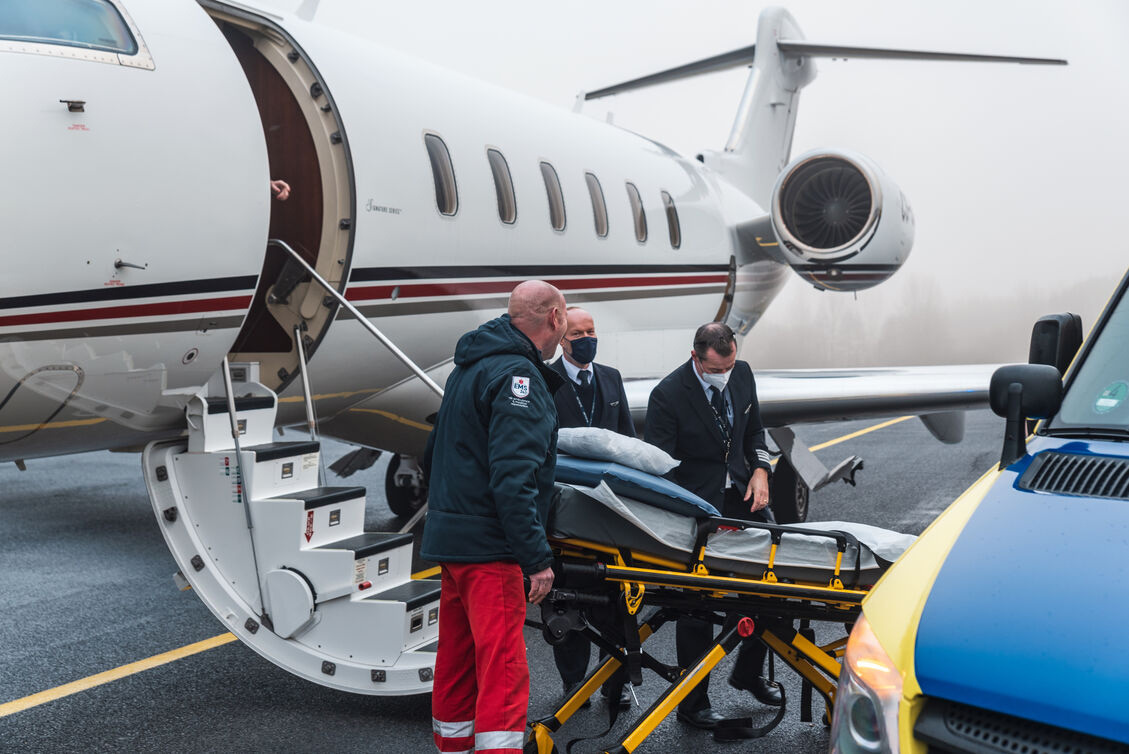
EMS coordinates ambulance teams that handle hospital pickup and airport drop-off with medical supervision. At the destination, another ambulance awaits at the tarmac, ready to safely move the patient directly to the receiving hospital.
Ground operations include
- Hospital pickup and bedside handover
- Ambulance escort onto airside zones
- Transfer to aircraft stretcher
- Receiving ambulance waiting on arrival
- Direct admission to the destination hospital

Medical team preparation
The medical team ensures stability before, during, and after the flight.
Before departure, the medical team reviews the patient’s condition, required equipment, and risk profile. All medical supplies are loaded onto the aircraft and checked for redundancies. Communication is maintained with both the sending and receiving hospital for uninterrupted care continuity.
Medical preparations include
- Patient risk assessment
- Equipment and medication checks
- Flight medical planning
- Communication with hospital specialists
International approvals and handling
Cross-border medical flights require fast and precise aviation and medical documentation.
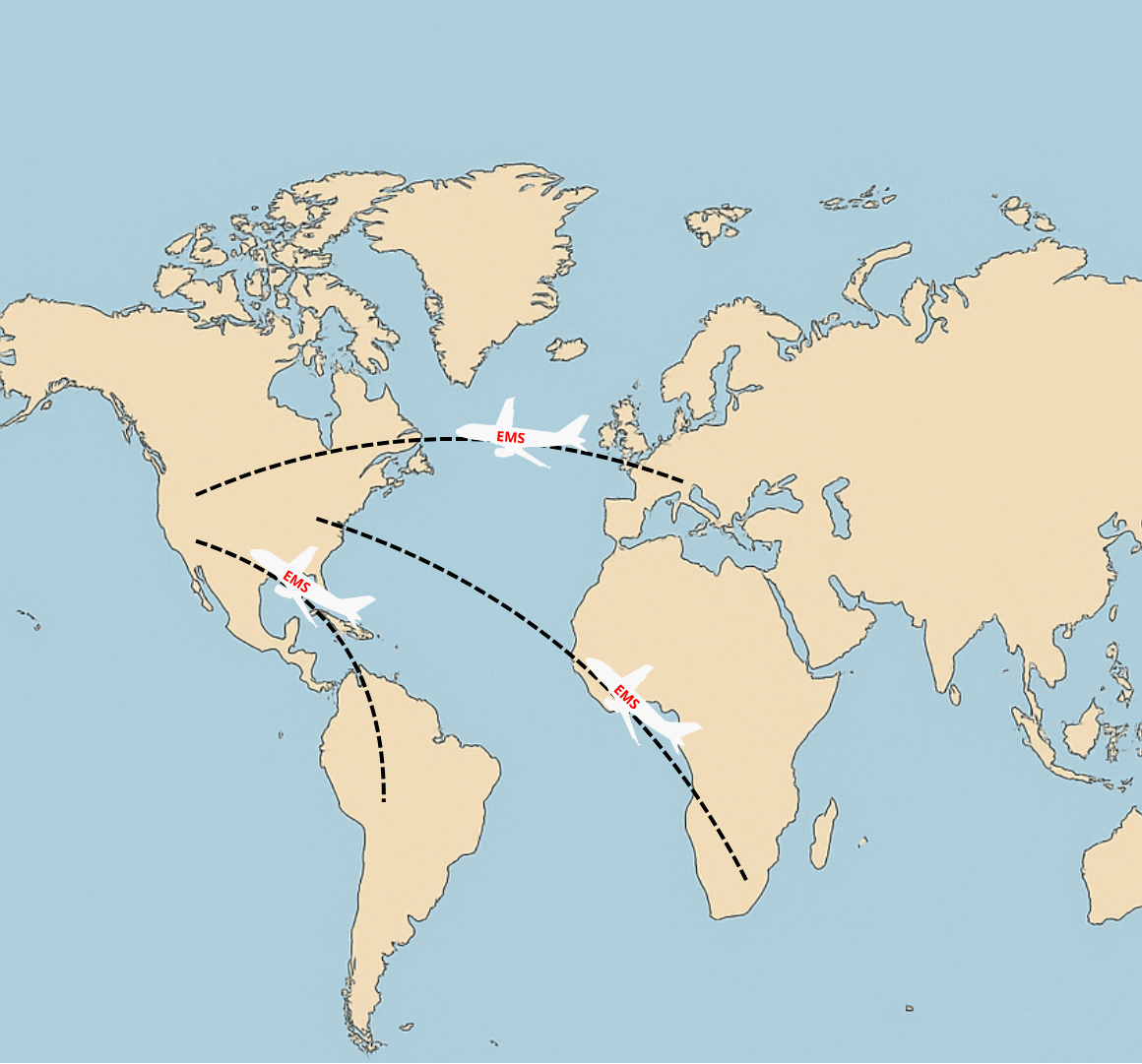
International medical flights involve customs clearance, immigration coordination, airspace permits, and airport ground handling. EMS Air Ambulance manages all documentation and permissions so families do not need to arrange anything themselves.
Handled by EMS
- Overflight and landing permits
- Customs and immigration procedures
- Medical documentation for border officials
- Ambulance access to restricted airport zones