Medical repatriation meaning: what it is and when you need it
Medical repatriation is the medically supervised transport of a patient from a foreign country back to their home country for continued treatment or recovery. Whether someone falls seriously ill abroad, suffers a severe injury on holiday, or needs specialist care the local hospital cannot provide, medical repatriation is the formal, structured process of bringing that person home safely with qualified medical oversight at every stage.
What medical repatriation actually involves
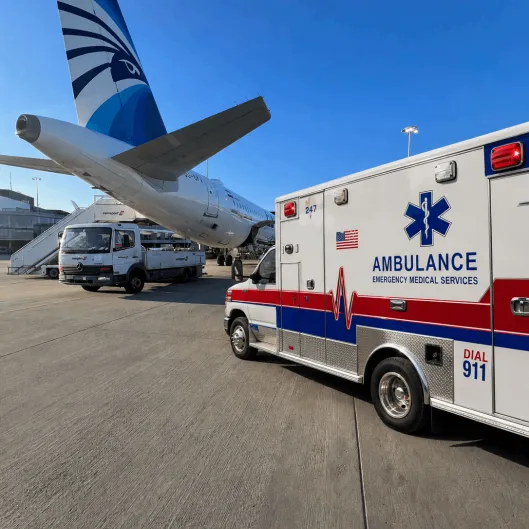
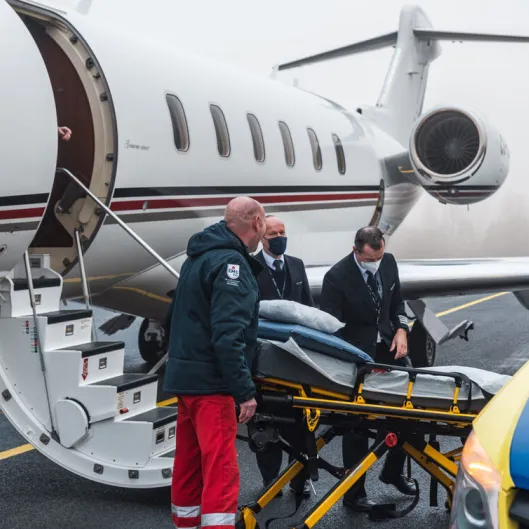
Medical repatriation is a coordinated, end-to-end patient transfer, not simply booking a seat on a commercial flight. The process runs from the bedside at the foreign hospital to the receiving ward in the patient's home country. At EMS, we call this a true bed-to-bed service: the patient never travels unaccompanied, and qualified medical professionals manage every handover.
The term is sometimes confused with medical evacuation, and the distinction matters. Medical evacuation moves a patient to the nearest appropriate medical facility, often in an emergency. Medical repatriation brings the patient home once the immediate crisis is stabilised. Understanding this difference helps families and insurers choose the right service at the right time. Our detailed comparison of medical repatriation vs medical evacuation explains this further.
Across our operations in 136 countries, the situations that trigger a repatriation request include:
- Serious illness such as stroke, cardiac events, or organ failure occurring abroad
- Traumatic injury from road accidents, falls, or sporting incidents
- Surgical complications requiring specialist follow-up care not available locally
- Chronic condition deterioration during long-term stays or expatriate assignments
- Premature birth or neonatal complications in a foreign hospital
Legal and medical requirements for repatriation
Medical repatriation requires formal medical clearance before a patient can cross a border, along with documentation confirming the patient's condition, required medical equipment, and the receiving hospital's acceptance. Most countries enforce these standards through their aviation authorities and border health agencies.
The attending physician at the foreign hospital must issue a fitness-to-fly certificate before any patient travels. According to International Air Transport Association data from 2023, airlines refused travel to patients in 15% of cases where no prior medical clearance had been arranged. For patients with complex conditions, the documentation stage alone can take 24 to 72 hours. Our guide to the air ambulance medical approval process explains how this works in practice.
Key documentation typically required for a medical repatriation includes:
- Current medical summary and diagnosis from the treating hospital abroad
- Fitness-to-fly certificate signed by a licensed physician
- Confirmation of the receiving hospital or care facility in the home country
- Insurance pre-authorisation letter or self-pay agreement
- Customs and border clearance documentation for medical equipment crossing borders
- Passport and visa documentation for accompanying medical escort staff
The repatriation process: from first call to home arrival
Once a family or insurer contacts EMS, we begin the intake process immediately and deliver a free quotation in under 30 minutes. Every additional day in a foreign facility carries financial and clinical risk, and early coordination consistently shortens the total repatriation timeline.
A typical medical repatriation follows this sequence:
- Initial assessment: Our medical coordinators review the patient's current condition, location, and destination requirements within the first hour.
- Transport type selection: Depending on clinical stability, we assign an air ambulance, a medical escort on a commercial flight, or a road ambulance for shorter distances.
- Documentation and clearance: Our team gathers fitness-to-fly certificates, receiving hospital confirmations, and any cross-border permits required.
- Medical crew dispatch: A certified medical team, including at minimum a specialised nurse and often a physician, is assigned to the case.
- Transfer and in-transit care: The patient travels with continuous monitoring, IV access, oxygen, and emergency medication as required by their condition.
- Receiving handover: On arrival, our team formally transfers care to the receiving hospital or home care provider with a complete patient handover report.
Cases involving accidents abroad add significant coordination complexity. Our team handles repatriations after road traffic accidents regularly, where patients often have multiple injuries and require specialist trauma-level transport. Our article on repatriation after road traffic accidents covers those specific situations in detail.
Medical escort requirements during repatriation
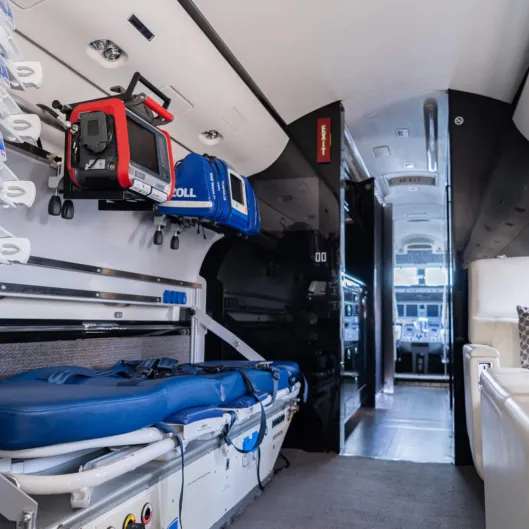
Every medical repatriation requires a qualified escort, and the level of clinical support depends directly on the patient's condition. A stable patient recovering from a fracture may need only a registered nurse. A patient in intensive care with ventilator support needs a physician alongside a critical care nurse, plus specialised portable equipment including transport ventilators, infusion pumps, and cardiac monitoring.
At EMS, our 50 certified medical professionals include intensivists, emergency physicians, anaesthesiologists, and specialised transport nurses. TUV ISO 9001 certification means our protocols are independently verified. For families choosing a repatriation service, this certification is one of the most reliable indicators of genuine clinical quality.
The aircraft cabin environment itself affects patient stability in ways many families overlook. At cruising altitude, cabin pressure typically corresponds to 6,000 to 8,000 feet above sea level, reducing available oxygen by roughly 15 to 25% compared to ground level. For patients with compromised respiratory or cardiac function, this is clinically significant and must factor into the escort team's preparation. Air ambulances can be pressurised to sea level; standard commercial flights cannot. This is why patients with serious conditions require a dedicated air ambulance rather than a commercial carrier with a nurse escort.
Geographically challenging locations add another planning layer. Island patients often need a ground or sea transfer to an airport before the main air leg begins. Our experience with medical repatriation from remote islands confirms that multi-modal coordination is the norm for these cases.
Frequently asked questions about medical repatriation meaning
What is the exact meaning of medical repatriation?
Medical repatriation is the organised, medically supervised transport of a patient from a foreign country back to their home country for continued care. It occurs after the acute medical crisis has stabilised and differs fundamentally from emergency evacuation, which moves a patient to the nearest suitable facility. The goal is to return the patient to their home country where they can continue treatment with family support and familiar medical infrastructure.
Who pays for medical repatriation?
Travel insurance covers medical repatriation costs in most cases when the policy includes medical transport cover. A medical escort on a commercial flight typically costs between 3,000 and 8,000 euros. A full air ambulance repatriation ranges from 15,000 to over 80,000 euros depending on distance and clinical complexity. Families without insurance pay directly, and EMS provides transparent, all-inclusive pricing from the outset.
How long does a medical repatriation take to arrange?
Straightforward cases with a stable patient and complete documentation can be arranged within 24 to 48 hours of first contact. Complex cases involving intensive care patients, multiple countries, or incomplete documentation typically take 3 to 5 days. The most common delay is waiting for the foreign hospital to issue a fitness-to-fly certificate, particularly in regions with slower administrative processes.
Is medical repatriation the same as medical evacuation?
No. Medical evacuation moves a patient urgently to the nearest suitable hospital, often from a remote or under-resourced location during an acute emergency. Medical repatriation moves a patient home after the immediate emergency has been managed and clinical stability achieved. These terms describe different stages of international patient care with distinct clinical and logistical requirements.
Can a patient be repatriated if they are on a ventilator?
Yes. Ventilator-dependent patients are repatriated regularly using dedicated air ambulances equipped with transport ventilators and managed by intensive care-level medical crews. This requires careful pre-flight assessment, an appropriate aircraft with pressurisation capability, and a physician on board throughout the flight. EMS handles these high-dependency cases as standard with 24/7 availability for critical situations.
We bring you home with the right care
Medical repatriation meaning, reduced to its core purpose: getting a patient home safely with the correct level of clinical care at every point in the journey. EMS operates in 136 countries, holds a 4.5-star rating from families we have served, and provides a free quote in under 30 minutes. No matter where your loved one is right now, we coordinate every detail of their safe return. Our guide to the international medical repatriation process explains how the full process works, and you can contact us any time, day or night, to discuss your specific situation.
Need medical transport?
Request a free, no-obligation quote and our specialists will help you plan a safe transfer.
Related blogs