Before an Air Ambulance Flight: How Medical Approval Really Works
Why medical approval is required
Every air ambulance mission begins with a professional assessment to ensure patient safety.
Medical approval is essential because flying changes the body’s physiology. Cabin pressure, oxygen levels, vibration, and altitude can worsen certain conditions. To prevent complications, flight doctors conduct a structured review of medical stability and risks.
Only when the patient can be transported safely with the right medical equipment and team will an air ambulance mission be approved.
Key reasons approval is required
- Cabin pressure can affect respiratory or cardiac conditions
- Some injuries worsen during take-off or turbulence
- Certain medications require monitoring
- Patients must be stable enough for transport at altitude
- Aircraft must be equipped for the patient’s needs
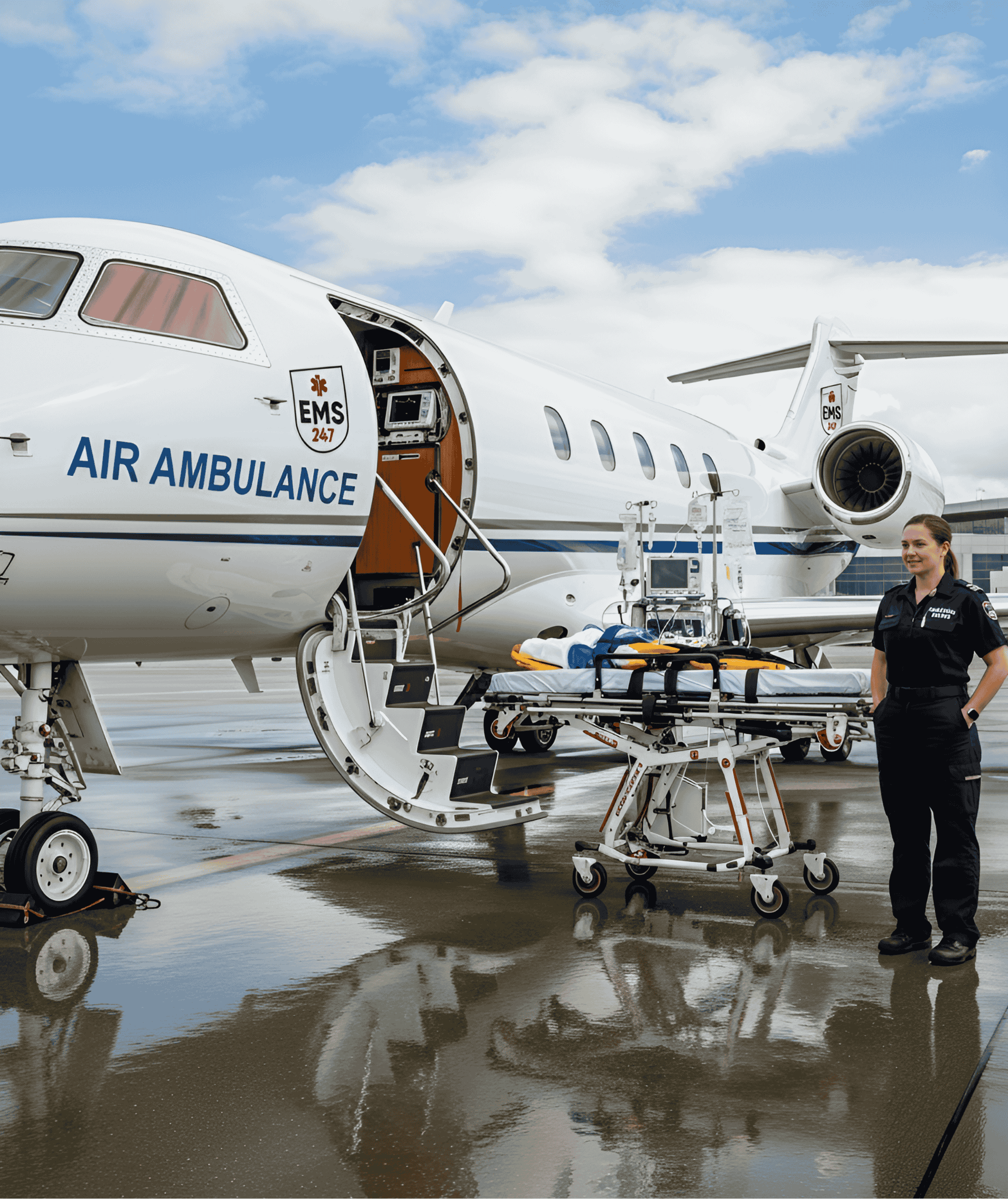
The medical fit-to-fly assessment
A structured evaluation determines whether the patient can safely travel by air ambulance.
Fit-to-fly evaluation steps
Review of diagnosis
Doctors assess the underlying condition and recent developments.
Vital stability check
Heart rate, oxygen saturation, blood pressure, consciousness, and pain levels are reviewed.
Assessment of required equipment
Ventilators, monitors, oxygen, or medication pumps may be needed during the flight.
Ability to tolerate altitude
Some conditions worsen with lower cabin pressure, requiring extra precautions.
Selection of transport type
Flight doctors determine if an air ambulance, medical escort, or ground ambulance is safest.

Documents and reports needed
Clear medical information ensures a fast and accurate approval process.
Commonly required documents
- Recent medical summary (24–48 hours old)
- Hospital discharge notes or ICU reports
- Medication list with dosages
- Imaging results (CT, MRI, X‑ray if relevant)
- Infection status or isolation requirements
- Oxygen and ventilation requirements
- Contact details of treating physician
When documentation is complete, medical approval can often be issued within hours. Missing or unclear information may delay planning, especially for complex conditions.

Risk evaluation by flight doctors
A detailed risk analysis ensures that the aircraft, team, and equipment match the patient’s needs.
Flight doctors evaluate all potential risks before approving a mission. This includes the patient’s current condition, the impact of altitude, infection control, required medical interventions during flight, and possible deterioration scenarios.
Typical risks assessed
- Respiratory instability or oxygen dependency
- Recent surgery or fractures affected by pressure changes
- Uncontrolled bleeding or internal injuries
- Cardiac arrhythmias or heart failure
- Neurological risks such as raised intracranial pressure
- Infectious diseases requiring isolation

How the final decision is made
Approval is given only when doctors confirm that safe flight conditions can be guaranteed.
How approval is finalised
Full medical review
Doctors verify all medical data and stability trends.
Risk–benefit analysis
Transport risks are compared to remaining in current location.
Operational planning
Aircraft, crew, flight route, and medical team are assigned.
Clearance issued
Approval is confirmed and the mission is activated.
Coordination with hospitals
Departure and arrival teams are synchronised for handover.