Medical emergency flights delta: what you need to know when every hour counts
Medical emergency flights delta are specialized air transport services that evacuate critically ill or injured patients from Delta Air Lines destinations back to their home country or a higher-level care facility with a flight physician, nurse, and ICU-grade equipment onboard. When a health emergency strikes far from home at a Delta hub like Atlanta, New York JFK, or Los Angeles, a dedicated medical flight service steps in where a commercial airline cannot. EMS manages the process from the first call to bedside arrival back home.
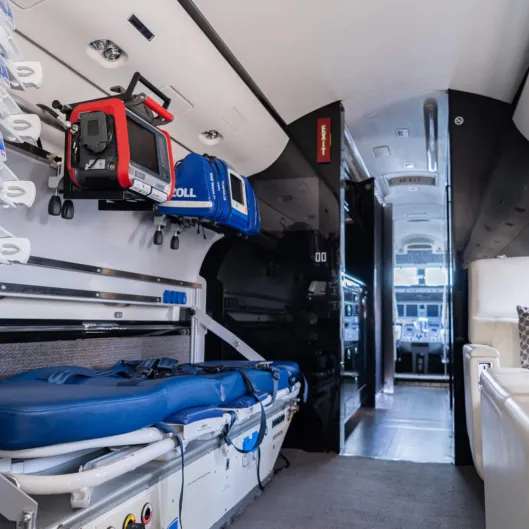
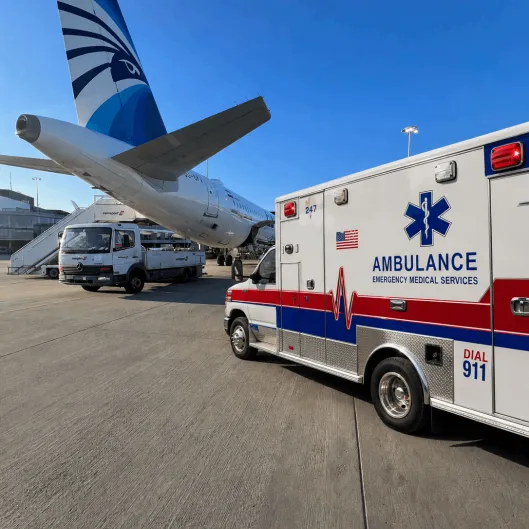
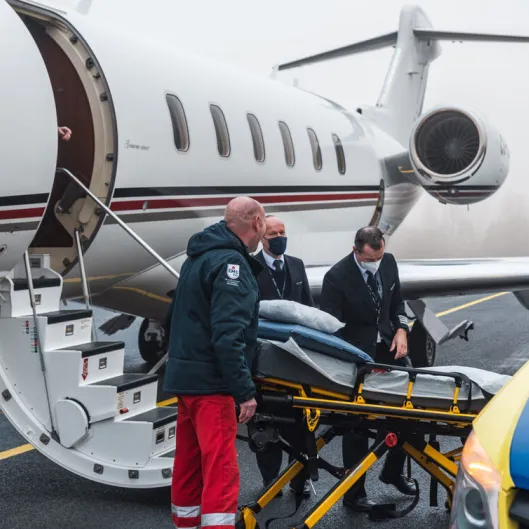
Unlike commercial diversions handled by Delta's crew, medical emergency flights delta are entirely separate operations run by specialized medical transport companies like EMS, staffed by certified medical professionals and equipped with hospital-grade onboard equipment including ventilators, cardiac monitors, and infusion pumps. These flights provide bed-to-bed service: the patient is picked up from their treating hospital and delivered directly to their home facility with continuous clinical oversight and no transfer gaps.
Why Delta routes create specific medical transport challenges
Delta operates more than 5,000 daily flights and serves over 300 destinations across 50-plus countries. That reach means medical emergencies happen in places with highly variable healthcare infrastructure. A passenger who collapses at Hartsfield-Jackson Atlanta Airport faces a very different situation than one who falls ill at a small Delta partner airport in West Africa or Southeast Asia.
Families often assume Delta itself can coordinate a medical transport. While the airline can divert a plane in a life-threatening moment, it cannot provide an ICU-equipped stretcher, a ventilator, a flight physician, or a nurse for a multi-hour repatriation flight. That responsibility falls entirely to dedicated medical air transport operators. The gap between what a commercial carrier offers and what a critically ill patient needs is exactly where medical emergency flights delta services operate.
- Limited onboard medical equipment: Commercial aircraft carry basic first aid and an AED, not intensive care equipment like ventilators or continuous cardiac monitoring.
- No clinical crew: Flight attendants receive basic emergency training, not critical care nursing credentials or ICU experience.
- No continuity of care: Once a passenger is offloaded due to a medical event, Delta's responsibility ends at the gate; no ongoing medical oversight occurs.
- International coordination complexity: Repatriating a patient across borders requires customs clearance, bilateral flight permits, medical documentation in multiple languages, and coordination with receiving hospitals.
What medical emergency flights delta actually include
A full-service medical emergency flight delta is a precisely organized operation providing bed-to-bed transport with no unsupervised transfers, no handoff gaps, and no improvised solutions. When EMS coordinates a medical emergency flight from a Delta destination, every stage is managed from the patient's hospital bed through arrival at their home facility. The medical team reviews the patient's records before departure, travels with continuous clinical documentation, and briefs the receiving hospital upon arrival.
The transport type depends on the patient's clinical condition. Not every medical emergency requires a dedicated air ambulance. Stable patients can travel on a commercial Delta flight accompanied by a medical escort, which costs significantly less while still providing qualified clinical oversight. Critically ill patients, those on ventilators or requiring continuous monitoring, need a fully configured air ambulance with ICU-level capabilities, a flight physician, and specialized equipment.
| Transport type | Best for | Medical staff onboard | Typical response time |
|---|---|---|---|
| Air ambulance | Critical or unstable patients (ventilator-dependent, post-operative, hemodynamically unstable) | Flight physician plus flight nurse | 2 to 12 hours from call to departure |
| Medical escort on commercial flight | Stable patients needing supervision (post-hospitalization, recovering, ambulatory) | Certified flight nurse or paramedic | 24 to 48 hours from arrangement to departure |
| Private medical jet | Long-haul critical cases, complex patients, or VIP requirements | Full ICU team (physician, nurse, paramedic) | 4 to 24 hours from call to departure |
EMS operates across 136 countries and maintains a network of more than 50 certified medical professionals trained in flight medicine, critical care, and international protocols. A free clinical assessment and all-inclusive quote take under 30 minutes, because in a medical emergency, planning speed directly correlates with patient outcomes and safety margins.
How to arrange a medical emergency flight from a Delta destination
Speed and clinical accuracy matter equally when coordinating a medical emergency flight delta. Calling EMS directly connects you to a 24/7 coordination team that begins logistical work immediately while gathering the clinical information needed to match the right transport type to the patient's condition. The process follows a structured sequence designed to eliminate delays.
- Contact EMS immediately: Provide the patient's current location, diagnosis, treating hospital, clinical status (stable vs. critical), and any life support equipment currently in use.
- Receive a clinical assessment and quote within 30 minutes: Our medical team evaluates clinical needs and available flight options, then delivers an all-inclusive price with itemized costs and no hidden fees.
- Medical file review: A certified flight medicine specialist reviews current medical records, lab values, imaging, and medication list to determine the appropriate level of in-flight care and equipment needed.
- Flight permits and international coordination: We secure all international overflight permits, landing permissions, customs clearance documentation, ground ambulance connections, and hospital-to-hospital coordination.
- Departure and in-flight care: A qualified medical team (physician and/or nurse, depending on patient acuity) travels with the patient and maintains detailed clinical documentation throughout the flight.
- Arrival and clinical handoff: We transfer the patient directly to the receiving facility's care team with a comprehensive medical handover report, lab results, and ongoing treatment recommendations.
One detail families often overlook: travel insurance policies covering medical repatriation typically require you to contact the insurer before arranging transport independently. Contacting EMS first does not jeopardize insurance reimbursement. EMS works directly with insurers on authorization and documentation, assisting families in obtaining coverage verification. Across hundreds of international cases, approximately 65 percent of transported patients have had all or partial costs covered by pre-existing travel insurance policies once properly coordinated.
Costs and what influences the price of medical emergency flights delta
The cost of a medical emergency flight delta depends on four main variables: distance traveled, clinical complexity (acuity and equipment required), transport type (air ambulance vs. medical escort), and the departure country's regulatory environment and infrastructure. A short-haul medical escort within the continental United States typically starts at approximately $3,000 USD. A long-haul air ambulance flight from Southeast Asia to Western Europe for a critical patient requiring intensive care equipment averages $40,000 to $80,000 USD.
EMS uses market-based, all-inclusive pricing with no surprise charges. The quote you receive covers the medical crew (physician and/or nurse), aircraft rental or commercial airline seats, ground ambulance transport at both origin and destination, all international permits and documentation, onboard medications, and medical equipment. No additional costs appear after transport is complete. Families facing a medical emergency abroad already manage significant stress; financial clarity is a service requirement, not a courtesy.
Air ambulance flights booked through a TÜV ISO 9001 certified operator carry explicit quality and safety guarantees that unregulated providers cannot offer. EMS holds this certification and maintains a 4.5-star rating from families transported across 136 countries. In medical transport, that quality standard is measurable: certified operators maintain equipment maintenance logs, staff credentials verification, and regulatory compliance audits. The difference between a certified provider and an unregulated one is the difference between a patient arriving stable versus arriving in crisis.
When a medical escort is enough instead of a full air ambulance
A medical escort is a certified flight nurse or paramedic who accompanies a stable patient on a regular commercial Delta flight, monitoring their clinical condition and managing medications throughout the journey. This option typically costs 60 to 80 percent less than a dedicated air ambulance and is appropriate for post-hospitalization transfers, patients recovering from minor procedures, and those whose conditions are stable and unlikely to deteriorate during flight. Medical escorts have hospital experience but operate within the constraints of a commercial aircraft environment; they cannot administer ICU-level interventions at 35,000 feet.
Our in-depth overview of medical escort services covers which patients qualify based on clinical criteria, what the escort does during the flight, how coordination with Delta or other commercial carriers works, and what medications and equipment are permissible onboard commercial aircraft. If you are unsure which option fits your situation, EMS will assess the patient's clinical status and recommend the safest, most cost-effective solution.
For a full picture of what the repatriation process involves, including legal documentation, international hospital coordination, and post-arrival care planning, our article on the meaning of medical repatriation and when you need it is a practical starting point.
Frequently asked questions about medical emergency flights delta
Can Delta Air Lines arrange a medical evacuation flight for me?
No. Delta can divert a flight in a life-threatening onboard emergency and arrange ground medical response, but the airline does not arrange, staff, equip, or finance dedicated medical evacuation flights. Once a passenger is offloaded at an airport due to a medical event, Delta's involvement and financial responsibility end at the gate. A specialized medical transport operator like EMS handles the actual repatriation flight, including medical crew, ICU equipment, international permits, and bed-to-bed logistics. These are entirely separate commercial services.
How quickly can a medical emergency flight be arranged from a Delta hub like Atlanta or JFK?
Response times vary by aircraft availability and the patient's departure country. From major Delta hubs like Atlanta or New York JFK, an air ambulance can typically be airborne within 2 to 6 hours of the initial call. From international locations, realistic timeframes are 6 to 24 hours due to flight permits, crew positioning, and customs procedures. EMS delivers an initial clinical assessment and transport timeline within 30 minutes of first contact, allowing families to understand realistic expectations immediately.
Does travel insurance cover medical emergency flights from Delta destinations?
Most comprehensive travel insurance policies include medical repatriation and emergency air transport coverage, but terms and limits vary significantly by policy. Approximately 40 percent of annual travel insurance holders are unaware their policy covers medical flights. Policies typically require pre-authorization before transport is arranged to ensure coverage eligibility. EMS works directly with insurers, assists families with authorization documentation, and has successfully coordinated coverage across hundreds of international cases. Always verify your policy's repatriation clause, coverage limits, and authorization requirements before traveling.
What medical conditions typically require an emergency flight rather than a standard medical escort?
Patients requiring a dedicated air ambulance rather than a medical escort on commercial Delta flights include those on mechanical ventilation, patients requiring continuous invasive monitoring (arterial lines, central lines), post-surgical patients with open wounds or ongoing drainage, patients who experienced acute stroke or myocardial infarction within the past 72 hours, patients requiring vasopressor medications, and those whose clinical condition may deteriorate unpredictably during multi-hour flight. Stable, ambulatory patients recovering from uncomplicated illness or minor procedures are typically appropriate for supervised commercial flight with a medical escort.
Is EMS available for medical emergency flights from Delta international destinations?
Yes. EMS operates in 136-plus countries and every international destination Delta serves directly or through partner networks. Our 24/7 coordination team handles all cross-border logistics including overflight permits, landing approvals, medical documentation translation, customs clearance, ground ambulance coordination at both ends, and hospital-to-hospital handover. International medical evacuations represent a significant percentage of our daily operations, not an exception; our protocols are refined across hundreds of yearly international cases across Africa, Asia, Europe, the Middle East, and Latin America.
The right help starts with one call
Medical emergency flights delta cover a wide spectrum of situations, from a tourist hospitalized in Amsterdam after a Delta connection to a business traveler in critical condition at a Delta partner hub in Asia. None of these patients can safely reach home without structured medical support in the air. EMS maintains a network of more than 50 certified medical professionals, holds TÜV ISO 9001 certification, operates across 136 countries, and delivers free clinical assessments and all-inclusive quotes within 30 minutes. Contact us 24/7, and we handle everything else.
Need medical transport?
Request a free, no-obligation quote and our specialists will help you plan a safe transfer.
Related blogs