Can Critically Ill Patients Safely Fly Long Distances?
How long-distance ICU flights work
A long-range ICU air ambulance functions as a flying intensive care unit, designed for unstable or critically ill patients.
A long-distance ICU medical flight uses a fully equipped air ambulance capable of handling complex conditions such as respiratory failure, cardiac instability, neurological complications, and trauma cases. These aircraft are designed to maintain a controlled medical environment even during extended international flights.
Every mission includes a specialised doctor and ICU nurse, enabling continuous monitoring and immediate intervention if the patient's condition changes during the journey.
Typical situations requiring long-distance ICU transport
- Patients on ventilators or requiring oxygen management
- Neurological conditions needing continuous monitoring
- Multi-organ issues requiring complex medication infusions
- Patients unable to tolerate commercial flights
- Long-distance repatriation after serious accidents
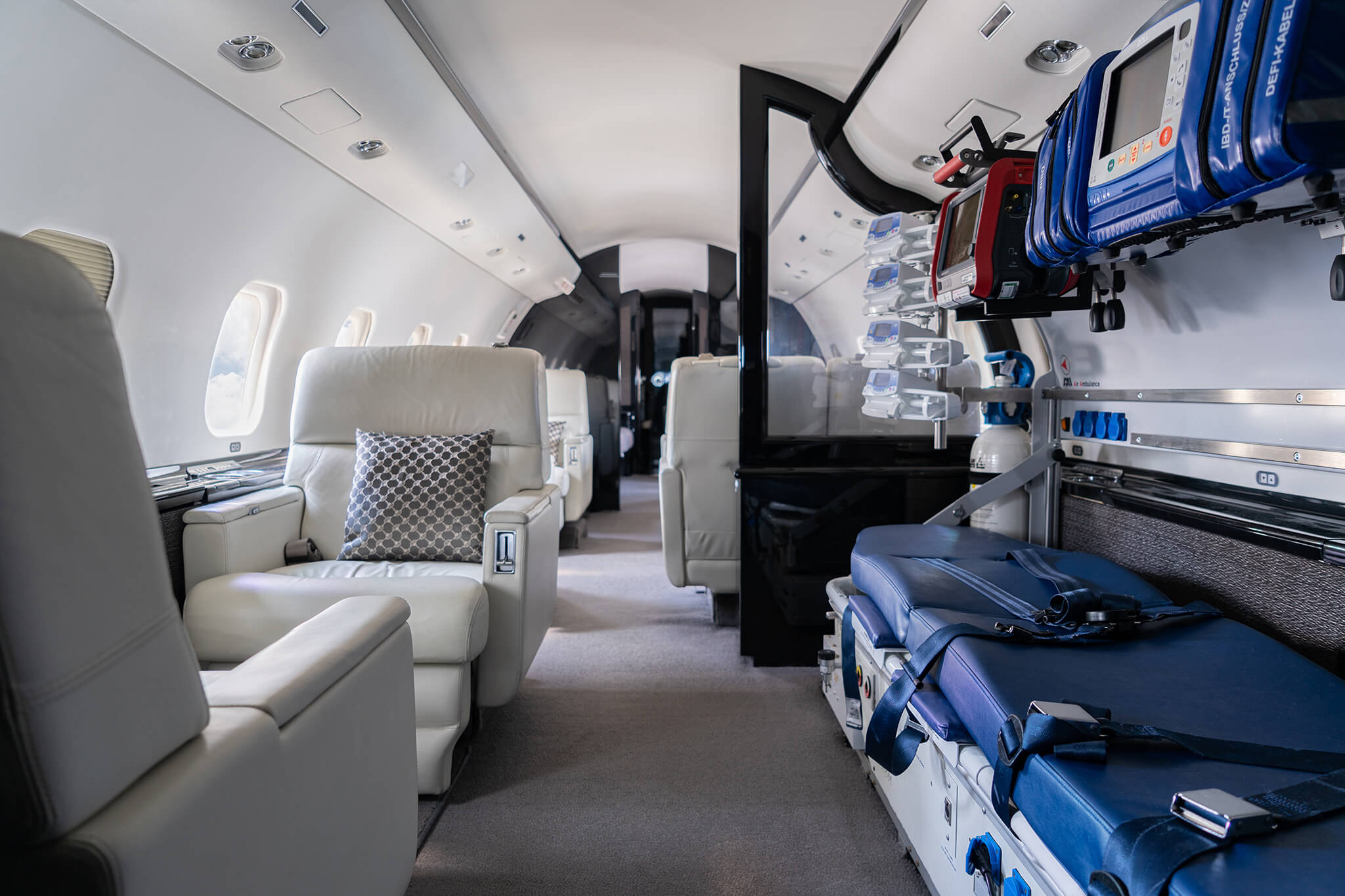
Safety measures on board
Long-distance ICU flights rely on strict protocols to ensure patient stability over many hours.
Key long-distance safety procedures
- Cabin pressure control for patients sensitive to altitude changes
- Advanced oxygen systems for ventilator-dependent cases
- Continuous ICU supervision by experienced medical teams
- Strict fatigue management for crew on long missions
- Fuel stop planning to maintain medical stability
- Neurological and cardiopulmonary monitoring throughout the flight
Did you know?
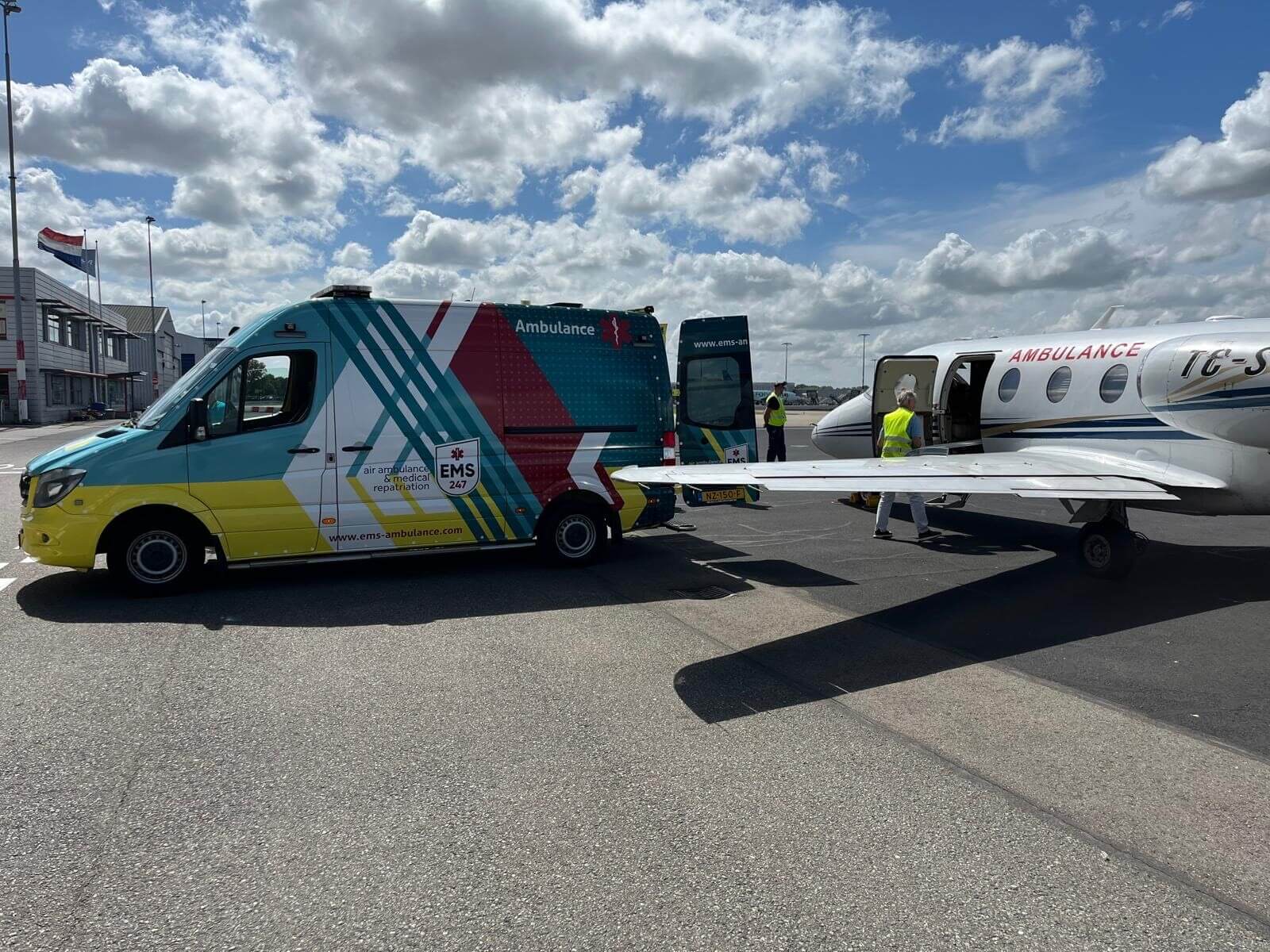
Planning long-range medical flights
Proper planning ensures patient stability and avoids mid‑flight risks.
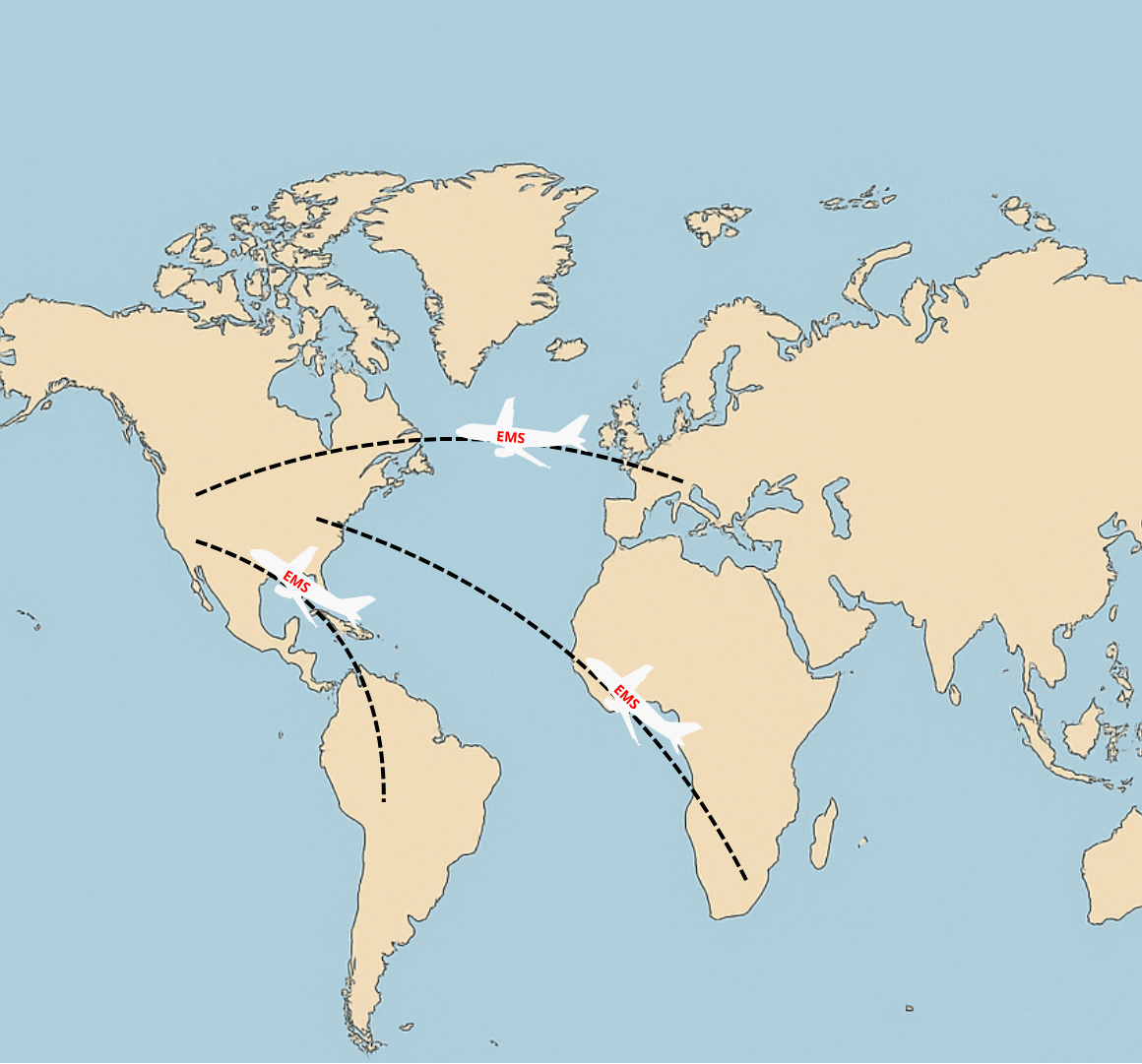
How long-distance ICU flight planning works
Medical assessment
Doctors evaluate if the patient is stable enough to fly and determine the required ICU setup.
Route selection
The safest path is chosen, often including scheduled fuel or medical evaluation stops.
Aircraft preparation
ICU equipment, oxygen reserves, and medications are configured for long-range operation.
Team briefing
Medical and flight crews align on patient risks and intervention plans.
Transport & handover
Continuous monitoring until transfer to the receiving hospital.
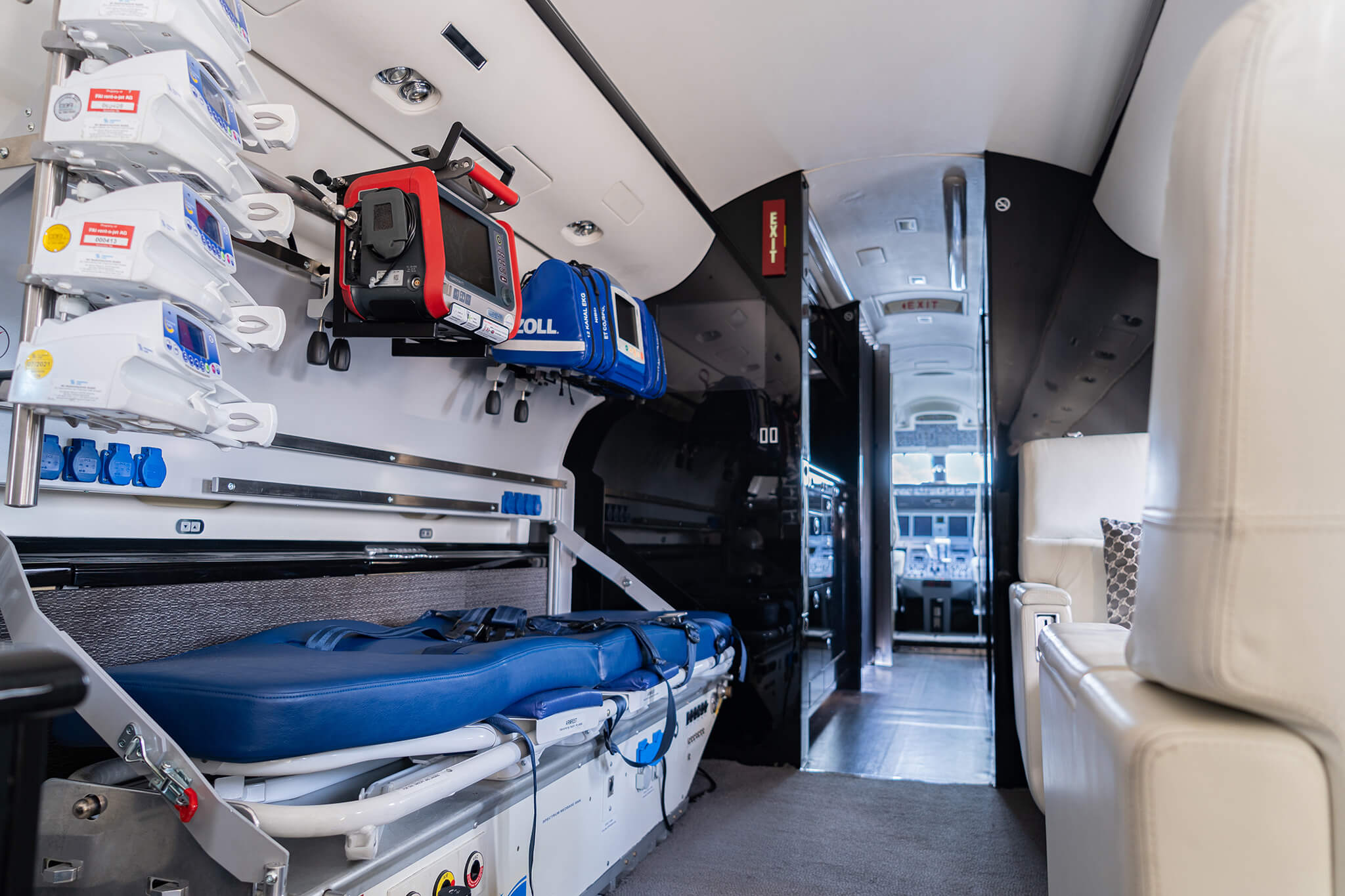
Medical equipment and monitoring
Long-distance ICU air ambulances carry the same level of equipment as a hospital intensive care unit.
Typical ICU equipment on long-distance medical jets
- Transport ventilators with oxygen titration
- Infusion pumps for continuous medication
- Portable blood pressure, ECG, and SpO2 monitors
- Neurological monitoring for head injuries and stroke patients
- Suction devices and emergency airway tools
- Backup power systems and redundant oxygen supplies
Costs and insurance
Long-distance ICU flights are specialised and involve multiple operational factors.
The cost of long-range air ambulance flights depends on the aircraft type, medical crew, distance, and required equipment. Long intercontinental flights typically require large medical jets with extended range capabilities. Insurance may cover part or all costs depending on the policy and medical necessity.
Key cost factors
- Distance and required fuel stops
- Aircraft type (mid-size vs long-range jet)
- ICU team composition
- Oxygen and specialised equipment needs
- Ground handling and hospital transfers


