What Happens During an International Medical Repatriation?
Understanding international medical repatriation
Repatriation brings a patient back to their home country with professional medical support from start to finish.
International medical repatriation is used when a patient cannot travel independently due to their medical condition. It ensures safe transport supported by trained medical professionals and equipment. The process includes assessing the patient's condition, coordinating with hospitals, arranging transport, and ensuring a smooth handover upon arrival.
This type of transport can be carried out by air ambulance, medical escort on a commercial flight, or a combination of ground ambulances before and after the flight.
Common reasons for medical repatriation
- Unexpected illness or injury abroad
- A patient cannot travel without oxygen or monitoring
- Need for stretcher or lying-down transport
- Specialised care required during the journey
- Post-surgery patients unable to fly commercially
Important to know

How the workflow is organised
International repatriation follows a fixed step-by-step process designed to avoid delays and guarantee safety.
The step-by-step workflow
Initial intake
Collecting medical details, location, travel timeline, and discussing logistics.
Medical assessment
A doctor evaluates the patient’s stability and decides the safest transport option.
Hospital coordination
Contact with the sending and receiving hospitals for reports, acceptance, and handover planning.
Flight and logistics planning
Booking the aircraft, crew, medical team, ground ambulances, and permits.
Customs and immigration preparation
Ensuring all documents and border requirements are cleared in advance.
Final medical check
The medical team confirms the patient is stable for travel before departure.
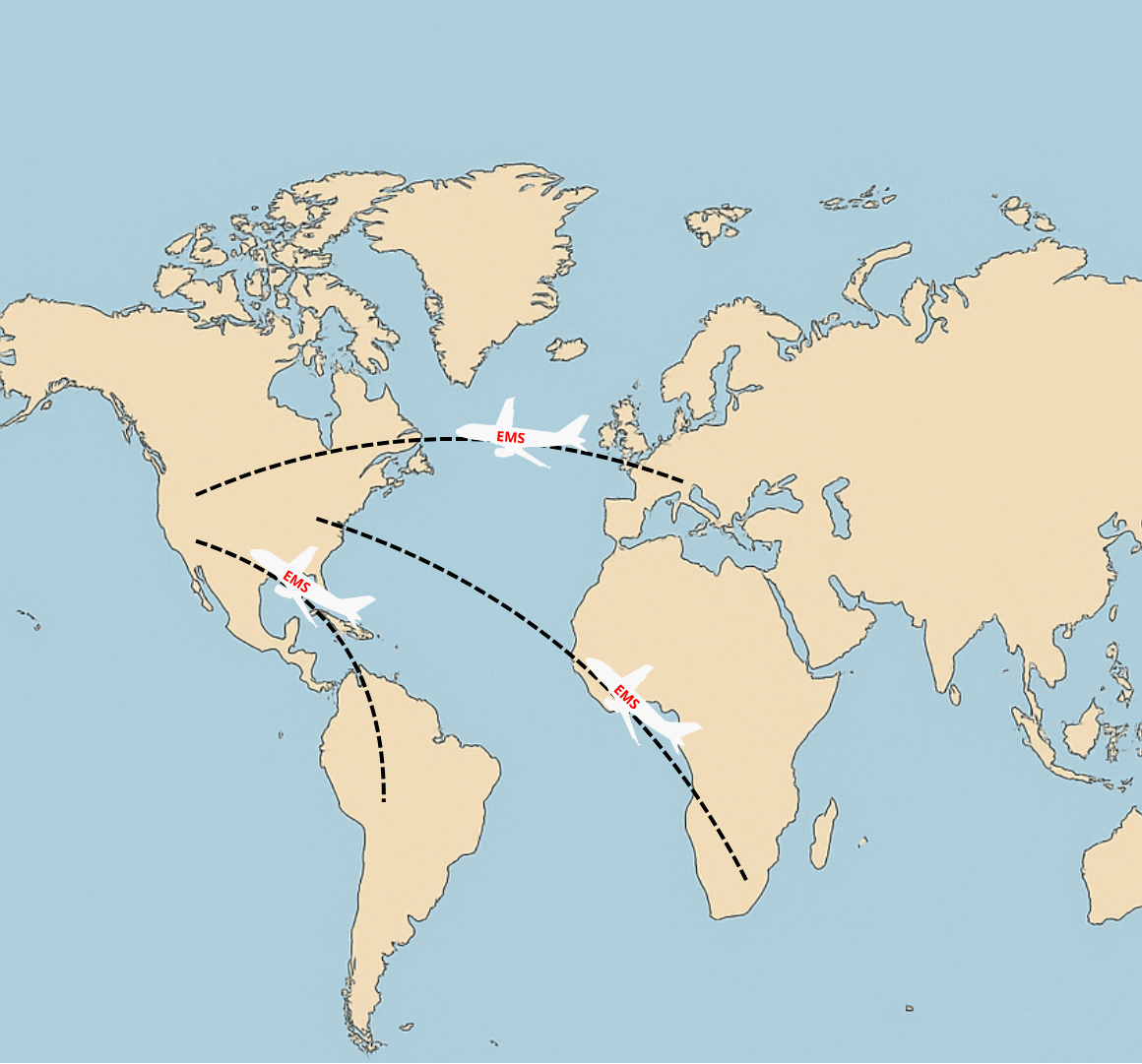
Medical coordination and clearance
The medical clearance process ensures that every repatriation meets international safety standards.
Medical clearance is essential for international flights. Doctors review the patient’s current condition, stability, oxygen needs, medications, and risks associated with flying. Airlines and aviation authorities require accurate medical documentation before approving travel—especially when stretchers, oxygen, or intensive care equipment is involved.
What medical teams verify before clearance
- Vital signs and stability
- Need for oxygen or monitoring
- Risk of in-flight deterioration
- Recent surgeries or untreated infections
- Fit-to-fly documentation
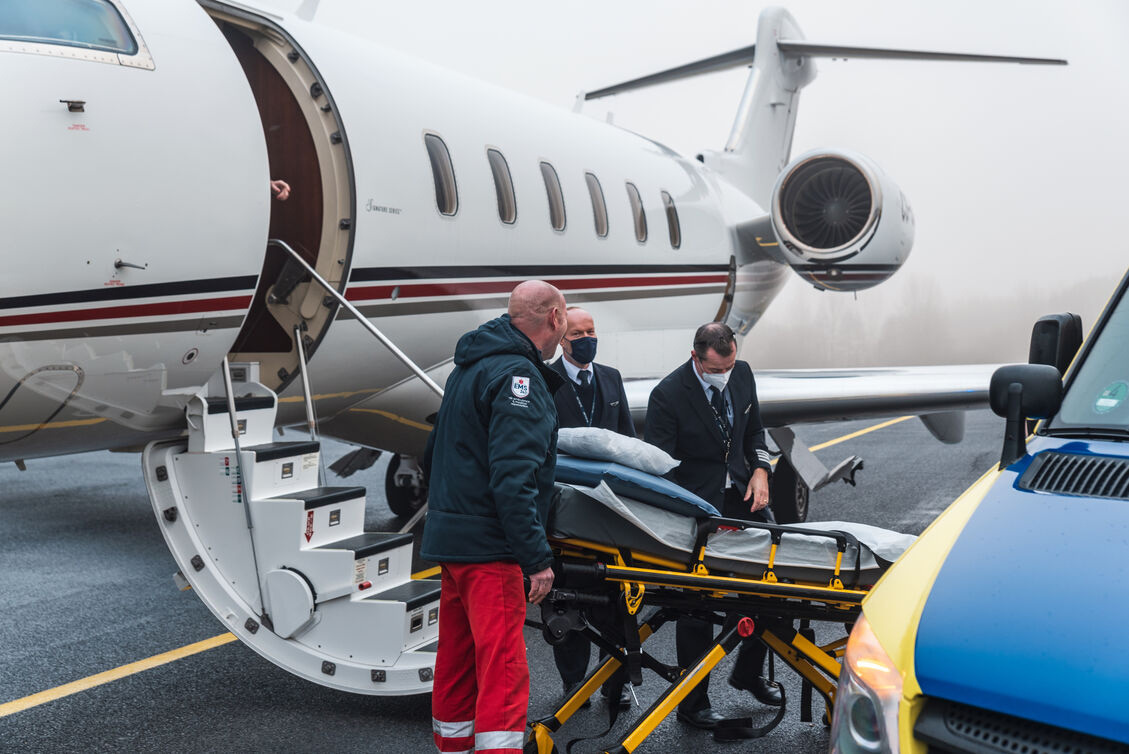
The repatriation flight
During the flight, the patient receives continuous medical care tailored to their condition.
During the flight
Bed-to-aircraft transfer
The patient is transported by ground ambulance directly to the aircraft.
Onboard stabilisation
Equipment is connected and the medical team ensures comfort and safety.
In-flight monitoring
Vital signs, medication, and oxygen levels are checked continuously.
Communication
The medical team updates coordinators and the destination hospital if needed.

Arrival, customs, and hospital handover
Upon landing, customs and medical teams work together for a smooth handover.
The arrival process includes fast-track immigration clearance for medical cases. A ground ambulance is pre-arranged to meet the aircraft on the tarmac. The receiving hospital has already been briefed and prepared for admission, ensuring no delays in medical care.
The final stage
Landing procedures
Medical passengers receive priority for border formalities.
Transfer to ground ambulance
The medical team escorts the patient off the aircraft.
Transport to hospital
The destination hospital is reached quickly with full medical monitoring.
Bed-to-bed handover
All medical data is transferred to the receiving doctors.