Patient transfer services near me: what they are, how they work, and who to call
Patient transfer services near me are specialized medical transportation that moves patients safely between hospitals, care facilities, or across international borders with qualified medical personnel present throughout the journey. Unlike emergency ambulances, patient transfer services are planned, clinically managed movements involving nurses, paramedics, or physicians who monitor and treat the patient from pick-up to arrival at the destination facility. Whether you are coordinating a local hospital discharge or arranging transport home from abroad, these services cover every clinical and logistical need. Choosing the right provider can directly affect patient outcomes.
The main types of patient transfer services available to you
Patient transfer services come in several forms, each suited to a specific clinical situation. Selecting the wrong type wastes time and can put the patient at risk. Here is a clear breakdown of the options most families encounter.
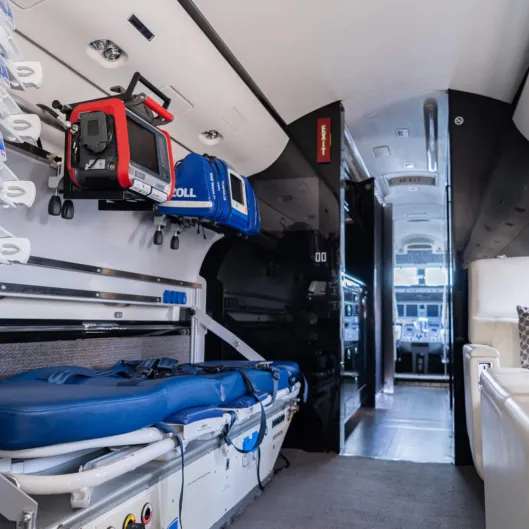
- Air ambulance: A dedicated medical aircraft staffed with intensive-care-level equipment and specialists. Used when distance is long, the patient's condition is critical, or commercial flight is not safe.
- Medical escort on a commercial flight: A certified medical professional accompanies a stable patient on a scheduled airline. This costs significantly less than a private air ambulance while still providing clinical oversight throughout the flight.
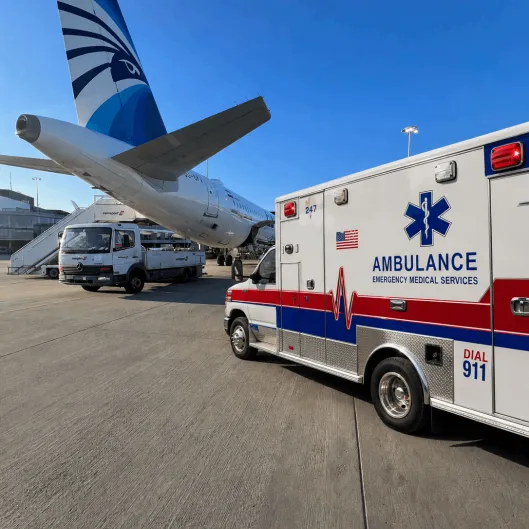
- Road ambulance: Ground-based transport for shorter distances or when air travel is not possible. Equipped with monitoring equipment and staffed by trained paramedics.
- Private medical jet: A fully configured private aircraft for patients who need intensive care during long-haul international transport.
- Rapid response team: An emergency-level deployment when a patient deteriorates suddenly and requires immediate extraction from a remote or overseas location.
In practice, approximately 1 in 6 travellers who experience a serious medical emergency abroad require organised patient transport home, based on travel insurance claims data across European markets. Many families searching for patient transfer services near me actually need international medical repatriation because the patient is stranded abroad after an accident or sudden illness. Providers like EMS operate across 136 countries and handle exactly this scenario every week.
What to expect from a professional patient transfer service
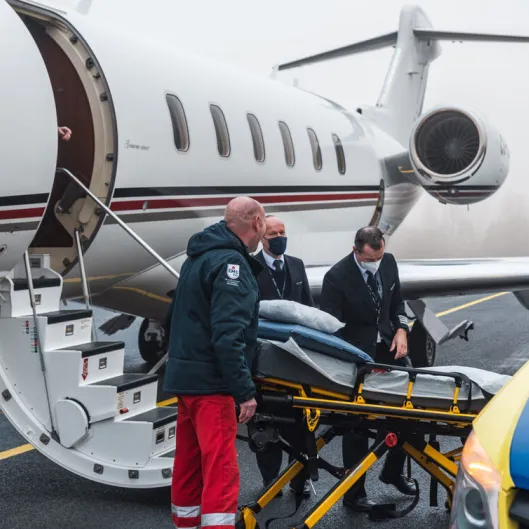
A high-quality patient transfer service delivers what the industry calls bed-to-bed care: direct collection from the patient's hospital bed at the origin and delivery to a bed at the destination facility, with no coordination required from the patient or family in between. EMS provides bed-to-bed patient transport as standard across all its services, including pre-flight medical assessment, ground ambulance from hospital to airport, in-flight care, and onward ground transport to the receiving facility.
Key quality indicators to look for in any patient transfer provider include:
- ISO 9001 certification for quality management, which confirms the provider meets internationally verified standards
- 24/7 dispatch availability, because medical emergencies do not respect business hours
- Transparent, all-inclusive pricing confirmed before transport begins
- A team of 50 or more certified medical professionals covering diverse specialties
- Verified patient and family ratings, such as EMS's 4.5-star global rating from families across multiple continents
- A free quote turnaround of under 30 minutes, which matters when time is critical
When do you need patient transfer services near me versus international repatriation?
Local patient transfer services near me handle movements within a country or region, typically under 500 kilometres by road or short-haul flight. International medical repatriation covers patients who need to return home across national borders, often spanning thousands of kilometres. Standard travel insurance rarely covers the full cost of a medically staffed international transfer, which can range from 15,000 to over 80,000 euros depending on distance, aircraft type, and required medical support level.
For elderly patients, the planning requirements are more detailed because conditions like heart failure, dementia, or post-surgical recovery demand specialist knowledge of in-flight physiology. Cabin pressure at cruising altitude reduces blood oxygen saturation by up to 15% compared to sea level, which directly affects patients with cardiac or respiratory conditions. To understand how medical transportation for seniors works in practice, including what questions to ask providers, reviewing dedicated guidance before making a decision is worthwhile.
How EMS handles your patient transfer from start to finish
EMS provides a complete bed-to-bed transfer service that begins with a free, all-inclusive quote within 30 minutes of your inquiry. Our team of 50 certified medical professionals assesses the patient's records, coordinates with both the sending and receiving hospitals, and arranges every segment of the journey across all transport types: air ambulance, medical escort, road ambulance, and private jet.
EMS has completed thousands of patient transfers across 136 countries, including remote locations with limited medical infrastructure. Our TUV ISO 9001 certification confirms that every step meets a documented quality standard, verified by an independent auditor. Our rapid response team can mobilise within hours when a situation deteriorates, and our coordinators walk families through every step without medical jargon.
One detail most guides overlook: the handover protocol between our team and the receiving hospital is as important as the transport itself. EMS provides a full clinical handover document so the destination team has complete information on in-transit medications, vital sign trends, and any complications that arose during transport. This continuity of care directly reduces hospital re-admission rates in the first 72 hours after transfer.
Frequently asked questions about patient transfer services near me
What is the difference between a patient transfer service and a regular ambulance?
A regular ambulance responds to acute emergencies and transports patients to the nearest appropriate facility, while a patient transfer service is a planned, coordinated movement between two specific locations, often over long distances. Transfer services carry specialist staff and advanced monitoring equipment, handle all logistics including coordination with the receiving hospital, and are designed for continuity of care rather than emergency response.
How quickly can a patient transfer be arranged?
Urgent patient transfers can be arranged within 4 to 12 hours for ground transport and within 12 to 24 hours for air ambulance missions, depending on location and aircraft availability. EMS provides a quote within 30 minutes of first contact, and our rapid response team can mobilise faster in genuine emergencies. Early contact always results in a smoother transfer with better clinical preparation at both ends.
Does travel insurance cover patient transfer services?
Most standard travel insurance policies include some form of emergency medical evacuation, but coverage limits vary widely—many policies cap at 50,000 euros, which may not cover a long-distance private air ambulance. Read your policy terms before you travel. EMS works directly with insurance providers to manage claims, which reduces the administrative burden on families during an already difficult situation.
Can a patient be transferred if they are on a ventilator or intensive care support?
Yes, air ambulances and private medical jets carry ICU-level equipment including ventilators, cardiac monitors, and infusion systems, staffed by intensive care nurses and emergency physicians who manage ventilated patients throughout transport. This level of care is not available on commercial flights, so a dedicated air ambulance is the right choice for patients on life support.
What information do I need to provide when requesting a patient transfer?
You will need the patient's current location and destination, a brief medical summary including diagnosis and current medications, the treating physician's name, and contact details for the receiving facility. EMS coordinators collect clinical records directly from both hospitals and guide you through each step—you do not need to gather everything yourself before calling.
Getting the right patient transfer service starts with one call
Patient transfer services near me cover everything from local hospital-to-hospital moves to full international repatriation with intensive care support at altitude. The key is matching the service type to the patient's clinical condition and destination. EMS operates 24 hours a day, 7 days a week, across 136 countries, with a team of certified medical professionals ready to respond. We provide a free quote in under 30 minutes and stay with you through every stage of the process. To learn more about how international air ambulance transport works for long-distance patient transfer, our detailed guide covers aircraft types, medical staffing, and what to expect on the day of transport.
Need medical transport?
Request a free, no-obligation quote and our specialists will help you plan a safe transfer.
Related blogs