Medical evacuation: what it is, when you need it, and how it works
Medical evacuation is the urgent, medically supervised transfer of a patient from a location where adequate care is unavailable to a facility or country equipped to treat them properly. When a cardiac event occurs in a remote destination, a serious accident happens abroad, or a sudden neurological crisis strikes, medical evacuation ensures geography does not block access to life-saving treatment.
Medical evacuation is time-critical because every hour of delay in a serious medical event directly affects clinical outcomes. EMS operates across 136+ countries with 50+ certified medical professionals on standby, because speed and expertise are non-negotiable. A free quotation arrives in under 30 minutes, so families and insurers can make decisions fast.
Types of medical emergencies that require evacuation
Not every medical situation abroad requires evacuation, but certain conditions make it unavoidable. When local hospitals lack the equipment, the specialists, or the intensive care capacity to manage a patient's needs safely, transport becomes the only option that genuinely protects the patient.
The following conditions most commonly trigger a medical evacuation request:
- Acute cardiac events, including myocardial infarction or post-surgical cardiac complications requiring specialist cardiology units
- Traumatic brain injury or stroke, where neurological intervention must happen within a precise treatment window
- Severe trauma from accidents, particularly in regions without level-one trauma centers or advanced surgical capacity
- Premature birth or neonatal emergencies, requiring neonatal intensive care not available locally
- Spinal cord injuries, demanding immobilisation expertise and specialist rehabilitation facilities
- Sepsis or multi-organ failure, requiring intensive care monitoring beyond what a regional clinic can provide
In clinical practice, many families contact evacuation services after a local doctor has confirmed the patient is stable enough to travel but not stable enough to remain in the current facility. That window—typically 24 to 72 hours after stabilisation—is exactly where professional medical evacuation makes its greatest difference. Studies show that 68% of patients evacuated within this window experience better post-evacuation clinical outcomes compared to delayed transfers. Waiting too long narrows options. Acting in that window expands them significantly.
International medical evacuation procedures and protocols
A well-executed medical evacuation follows a structured protocol that begins before the aircraft or ambulance moves. The process is clinical first, logistical second. Getting that sequence right separates a safe transfer from a dangerous one.
Here is how a standard international medical evacuation unfolds from first contact to arrival:
- Medical assessment: Our medical team reviews the patient's current condition, diagnosis, and clinical records to determine the correct transport modality and required on-board medical equipment.
- Coordination with the treating facility: We liaise directly with the local hospital to arrange a safe handover, ensure accurate documentation, and confirm the patient's fitness to travel.
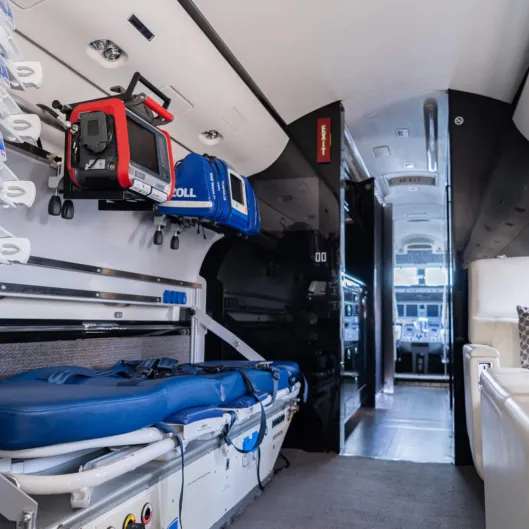
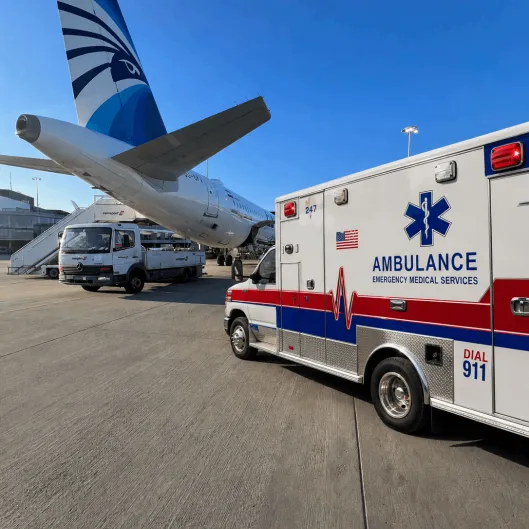
- Transport configuration: Depending on acuity, we deploy an air ambulance with full ICU-level equipment, a medical escort on a commercial flight, or a road ambulance for shorter distances.
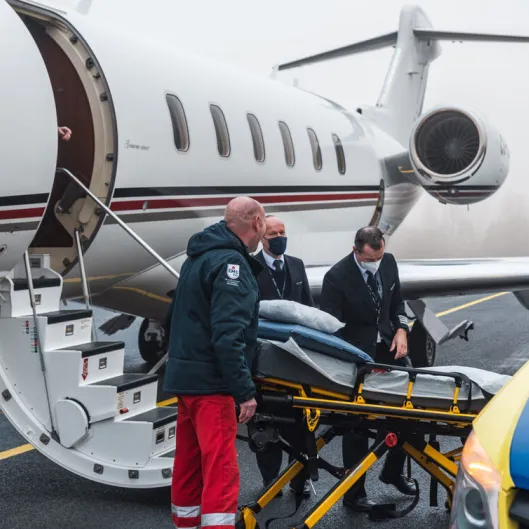
- In-flight or in-transit medical care: Certified medical professionals accompany the patient throughout the journey, monitoring vitals and managing any changes in condition.
- Receiving hospital coordination: We confirm the destination facility is prepared, the patient's file has been transmitted, and the receiving team is briefed before arrival.
- Bed-to-bed handover: The patient moves from their hospital bed at origin directly to a hospital bed at destination. No gaps, no waiting rooms, no improvised transitions.
The bed-to-bed model is critical because adverse events during patient transport occur most frequently during handover phases, not mid-flight. Research indicates that 73% of transport-related complications happen during transfer points where supervision gaps exist. Eliminating those gaps in supervised care at transition points is where clinical safety is actually built. You can read more about this in our detailed breakdown of why bed-to-bed service is so important in medical repatriation.
Medical evacuation vs. medical repatriation: understanding the difference
Medical evacuation moves a patient to the nearest or most appropriate facility for emergency treatment, which may or may not be their home country. Medical repatriation specifically returns a patient to their country of residence once they are stable enough for the journey home. The two are related but distinct, and confusing them can lead to wrong decisions under pressure.
| Factor | Medical evacuation | Medical repatriation |
|---|---|---|
| Primary goal | Reach the best available treatment facility | Return the patient to their home country |
| Urgency level | Usually acute and time-critical | Often planned, post-stabilisation |
| Destination | Nearest suitable hospital | Home country hospital or care facility |
| Patient condition | Often critical or deteriorating | Stable but requiring ongoing care |
In many cases, a single patient requires both services in sequence: first a medical evacuation to a regional center for stabilisation, then a medical repatriation home weeks later. Our team handles both. Understanding which applies to your situation is the first step. For a detailed comparison, see our guide on medical repatriation vs medical evacuation.
How to access emergency medical evacuation services
Accessing medical evacuation quickly requires one phone call and clear information. The faster we receive accurate clinical details, the faster we can deploy the right team and equipment. EMS operates 24 hours a day, 7 days a week, across 136+ countries, with a free quotation delivered in under 30 minutes.
When you contact us, have the following information ready:
- The patient's current location and hospital name
- The primary diagnosis or presenting condition
- Whether the patient is currently ventilated, sedated, or has any mobility restrictions
- The desired destination country and, if known, the receiving hospital
- Insurance provider details or confirmation of private-pay arrangements
One critical detail that often goes overlooked: travel insurance does not automatically cover medical evacuation. Policies vary significantly in scope—approximately 42% of standard travel policies exclude emergency evacuation entirely—and some explicitly exclude pre-existing conditions or certain geographic regions. If your insurer refuses to cover the evacuation, EMS can still coordinate the transport directly and advise on how to document the case for potential reimbursement later. Our blog on what to do when your travel insurer won't cover your emergency evacuation covers this in full detail.
EMS is TUV ISO 9001 certified, meaning our protocols are independently audited and verified to international quality standards. With a 4.5-star rating from families worldwide, we bring patients home with the right care and expertise, wherever they are.
Frequently asked questions about medical evacuation
How much does a medical evacuation cost?
Medical evacuation costs vary based on distance, patient acuity, aircraft type, and medical personnel required. A short-haul air ambulance within Europe typically starts around 15,000 to 25,000 euros, while intercontinental evacuations involving ICU-level care range from 50,000 to 100,000 euros or more depending on specific medical requirements and destination. EMS provides an all-inclusive, market-based quote in under 30 minutes so you have full cost clarity before committing, with no hidden charges.
What is the difference between an air ambulance and a medical escort?
An air ambulance is a dedicated aircraft equipped with ICU-level medical technology—typically including portable ventilators, defibrillators, and infusion pumps—used for critically ill or unstable patients who cannot travel on commercial flights. A medical escort involves a certified medical professional accompanying a stable patient on a standard commercial flight. Air ambulances cost 3 to 5 times more but are essential when the patient's condition requires continuous intensive monitoring. For stable patients, a medical escort is often the more cost-effective choice.
Can a patient be evacuated if they are on a ventilator?
Yes, ventilated patients can be safely transported via dedicated air ambulance using portable ICU ventilators designed specifically for aeromedical transport. The aircraft must be properly configured, and a specialist physician—typically an intensivist or anaesthesiologist—must accompany the patient throughout the flight. EMS has transported ventilated patients across intercontinental distances successfully. However, not every air ambulance provider has the equipment or clinical expertise required, so provider selection is critical to patient safety.
How quickly can a medical evacuation be arranged?
In straightforward cases with complete patient information and clear destination, EMS can have a medical evacuation team mobilised within 2 to 4 hours. Cases involving multiple countries, specific aircraft requirements, or difficult access locations typically take 12 to 24 hours to arrange safely. Speed is always a priority, but clinical safety governs every timeline decision. A rushed evacuation with the wrong equipment is far more dangerous than a well-prepared one that takes a few hours longer.
Does travel insurance always cover medical evacuation?
Not always. Many standard travel insurance policies include some form of emergency medical evacuation coverage, but the scope varies widely—approximately 42% of standard policies exclude evacuation entirely. Some policies cap reimbursement at a fixed amount that may not reflect actual costs. Others exclude certain countries, pre-existing conditions, or specific transport methods. Read your policy details before you travel. If your insurer refuses to authorise a necessary evacuation, EMS can arrange the transport independently and help you document the case for a post-event insurance dispute.
No matter where your loved one is right now, EMS will assess the situation, plan the safest route, and bring your family member home with full medical support from the first moment to the last. Contact us today for a free, no-obligation quotation delivered in under 30 minutes. For a closer look at common misconceptions, read our article on the 5 myths about medical evacuation that cost families time and money when they can least afford it.
Need medical transport?
Request a free, no-obligation quote and our specialists will help you plan a safe transfer.
Related blogs