Flying after surgery: what you need to know before you board
Flying after surgery is air travel during recovery from a medical procedure, and it carries real risks that many patients are never clearly told about. Cabin pressure changes, reduced oxygen levels, immobility, and the physical demands of airports can all interfere with healing. Getting this decision right protects your recovery and, in some cases, your life.
Medical clearance requirements before flying post-surgery
You need written medical clearance from your treating surgeon before flying after surgery. This is not a formality. Most commercial airlines require a MEDIF (Medical Information Form) completed by a physician if a passenger has had a recent procedure. Without it, the airline can deny boarding, and your travel insurance may refuse to cover complications that arise during the flight.
Cabin pressure during a flight sits at the equivalent of roughly 1,800 to 2,400 metres altitude. At that pressure, gases in the body expand by approximately 30%. After abdominal or bowel surgery, or any procedure involving internal gas, that expansion can be genuinely dangerous. Wound sites with trapped air are particularly vulnerable. Your surgeon needs to confirm that your body has stabilised before you fly.
Medical clearance checks before flying after surgery include:
- A written fit-to-fly letter from your operating surgeon or treating physician
- Confirmation that wound sites are closed, dry, and free of active infection
- Blood clot risk assessment, with an anticoagulation plan documented if needed
- Review of all medications, including those affected by altitude or pressure changes
- Oxygen requirement assessment, since cabin air contains roughly 15% oxygen compared to 21% at sea level
Timeline recommendations for different types of surgery
The minimum waiting period depends entirely on the type of surgery you had. No single number of days applies to every patient. The British Aerospace Medicine Association and the UK Civil Aviation Authority publish evidence-based guidance with specific minimum waiting periods by procedure type.
| Type of surgery | Minimum recommended wait before flying |
|---|---|
| Simple day surgery (e.g. minor laparoscopy) | 1 day |
| Abdominal or chest surgery | 10 days minimum |
| Open heart or coronary bypass surgery | 10 to 14 days |
| Hip or knee replacement | 4 to 6 weeks (DVT risk is high) |
| Brain or spinal surgery | At least 14 days, often longer |
| Eye surgery involving gas injection | Until gas has fully reabsorbed (up to 6 weeks) |
These are minimum thresholds, not targets. A patient who had a hip replacement four weeks ago and still has significant swelling may need to wait considerably longer. Flying after surgery with an unresolved complication is always riskier than delaying travel by a few extra days or weeks.
Risks and complications when flying too soon after surgery
Flying too soon after surgery increases the risk of deep vein thrombosis (DVT) significantly. On flights longer than four hours, DVT risk runs roughly two to four times higher than at rest in healthy passengers, and that figure rises again after major orthopaedic or abdominal procedures. Immobility during a flight already increases DVT risk in healthy passengers. In post-surgical patients, who often have heightened clotting activity as part of the healing response, the risk compounds further.
Beyond clotting, flying after surgery too early carries several specific dangers:
- Wound dehiscence: pressure changes and swelling can stress healing incisions and cause them to reopen
- Hypoxia: patients with reduced lung capacity after chest surgery may not tolerate lower cabin oxygen levels
- Pain escalation: trapped intestinal gas expands at altitude, causing acute discomfort after abdominal procedures
- Infection spread: a wound that was borderline at ground level can deteriorate quickly in a dry, pressurised cabin
- Medical emergency with no support: commercial flights carry limited medical equipment, and diverting a plane is costly and distressing for everyone on board
One detail that brief online advice rarely covers: anticoagulant medications prescribed after surgery often need dose timing adjusted for long-haul flights crossing multiple time zones. Your prescribing physician must address this specifically before you travel. It is not something to manage independently mid-flight.
Medical support options available during air travel
The right level of medical support during flying after surgery depends on your stability, your destination, and your flight duration. A stable patient who simply needs monitoring may travel on a commercial flight with a qualified medical escort. A patient who requires continuous oxygen, IV medication, or monitoring equipment needs a dedicated medical flight.
For detailed guidance on returning home after a procedure abroad, our page on flying home after surgery covers what to arrange and what to expect at each stage of the process.
Support options for flying after surgery range from basic escort to full intensive-care level:
- Medical escort on a commercial flight: a nurse or paramedic accompanies the patient, carries emergency medication, and coordinates with cabin crew. Suitable for stable patients with low-to-moderate risk.
- Stretcher on a commercial flight: several seats are removed to create a lying-down space, with a medical professional present. Used when the patient cannot sit upright for the full flight duration.
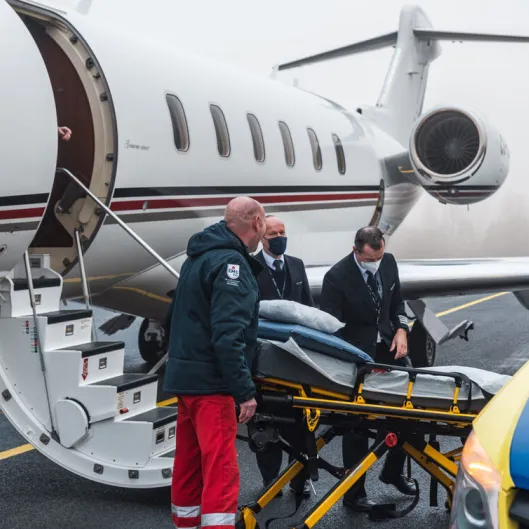
- Air ambulance (dedicated medical aircraft): a full clinical environment with ventilators, cardiac monitors, defibrillators, and intensive care nurses. Used when the patient is unstable or requires active treatment during transit.
- Private medical jet: faster and more flexible than a standard air ambulance, with full medical equipment and direct routing between smaller airports closer to the patient's home.
If you are supporting a family member who had an accident abroad, our guide on repatriation after a road traffic accident explains how we coordinate medical transport across borders from the first call.
How medical transport services assist post-surgical patients
EMS Ambulance operates in 136 countries with a team of 50 or more certified medical professionals available 24 hours a day. We provide bed-to-bed service: we collect the patient directly from the hospital ward abroad and deliver them to a hospital or home address in their country of residence. The patient does not need to organise transfers, airport navigation, or equipment logistics.
Our process for flying after surgery starts with a free medical assessment, completed within 30 minutes of your enquiry. That assessment determines the right transport type, the appropriate medical team, and the timing that keeps the patient safe. We are TUV ISO 9001 certified, and our 4.5-star rating from families reflects what it actually feels like to go through this process with proper support.
For patients who had a stroke abroad, the considerations for flying after surgery overlap significantly with neurological recovery needs. Our article on repatriation flight after a stroke covers the specific clinical checks required before a neurological patient can safely travel by air.
Whether your surgery happened two days ago in a hospital nearby or three weeks ago in a clinic on the other side of the world, we coordinate every step of the journey home with the right clinical team in place.
Frequently asked questions about flying after surgery
How soon after surgery can I fly on a commercial flight?
The minimum safe time for flying after surgery depends on your specific procedure. Minor day surgery may allow flying after 24 hours, while abdominal or chest surgery requires at least 10 days before flying is safe. Hip or knee replacement typically needs 4 to 6 weeks due to elevated deep vein thrombosis risk. Your surgeon must provide written clearance before you book any flight, regardless of the procedure type.
What happens if I fly too soon after surgery?
Flying too soon after surgery can trigger deep vein thrombosis, with long-haul flights increasing clot risk two to four times higher than at rest in post-surgical patients. Other complications include wound reopening, hypoxia from reduced cabin oxygen, or acute pain from gas expansion in the abdomen. In serious cases, the plane may need to divert for an emergency landing. Commercial aircraft carry minimal medical equipment, so a patient who deteriorates mid-flight has very limited options.
Do I need a medical escort to fly after surgery?
A medical escort is recommended for most post-surgical patients flying after surgery. While stable patients on short flights may not require one, patients on long-haul flights, those with active wounds, or anyone on a complex medication regime benefit significantly from having a qualified nurse or paramedic present. A medical escort can administer medication, manage equipment, and respond immediately if your condition changes during the flight.
Can an air ambulance fly me home directly from a foreign hospital?
Yes, an air ambulance can collect you directly from the hospital ward and transfer you to your destination hospital or home address when flying after surgery. EMS Ambulance provides bed-to-bed service across 136 countries, with medical teams equipped for intensive care during the flight. This is the preferred option when a patient is too unstable for a commercial flight or requires continuous medical monitoring throughout the journey.
Will my travel insurance cover medical transport after surgery?
Many travel insurance policies include medical repatriation for flying after surgery, but coverage terms vary widely. Some policies exclude conditions that existed before the trip, while others require pre-authorisation before any medical transport is arranged. Contact your insurer as early as possible after a surgical event abroad. EMS Ambulance works directly with insurers on your behalf to confirm coverage and coordinate transport without delays.
Need medical transport?
Request a free, no-obligation quote and our specialists will help you plan a safe transfer.
Related blogs