How international air ambulance costs are calculated
Why international air ambulance flights have no fixed price
Each medical flight is unique. The patient’s condition, required equipment, distance, and aircraft availability all influence the final cost.
International medical flights vary widely in distance, complexity, and urgency. EMS Air Ambulance & Medical Repatriation Ltd. evaluates every case individually to determine safe and efficient transport. Because no two patients or routes are the same, pricing must be calculated based on real‑time factors, including medical assessments and aircraft availability.
EMS Air Ambulance provides clear, transparent explanations so families and medical partners understand exactly what influences the final cost.
Key elements that always vary
- Medical condition and required care level
- Urgency and availability of aircraft
- Departure location and destination distance
- Ground ambulance transfers at both ends
- International airport fees and permits
Important

Main cost factors for international air ambulance flights
Price is determined by a combination of distance, equipment, staffing, and operational requirements.
Primary pricing components
- Flight distance and fuel usage
- Type and size of aircraft required
- Pilot and medical crew hours
- Specialised medical equipment
- Overflight and landing permits
- Airport handling and logistics fees
- Required ground ambulance support
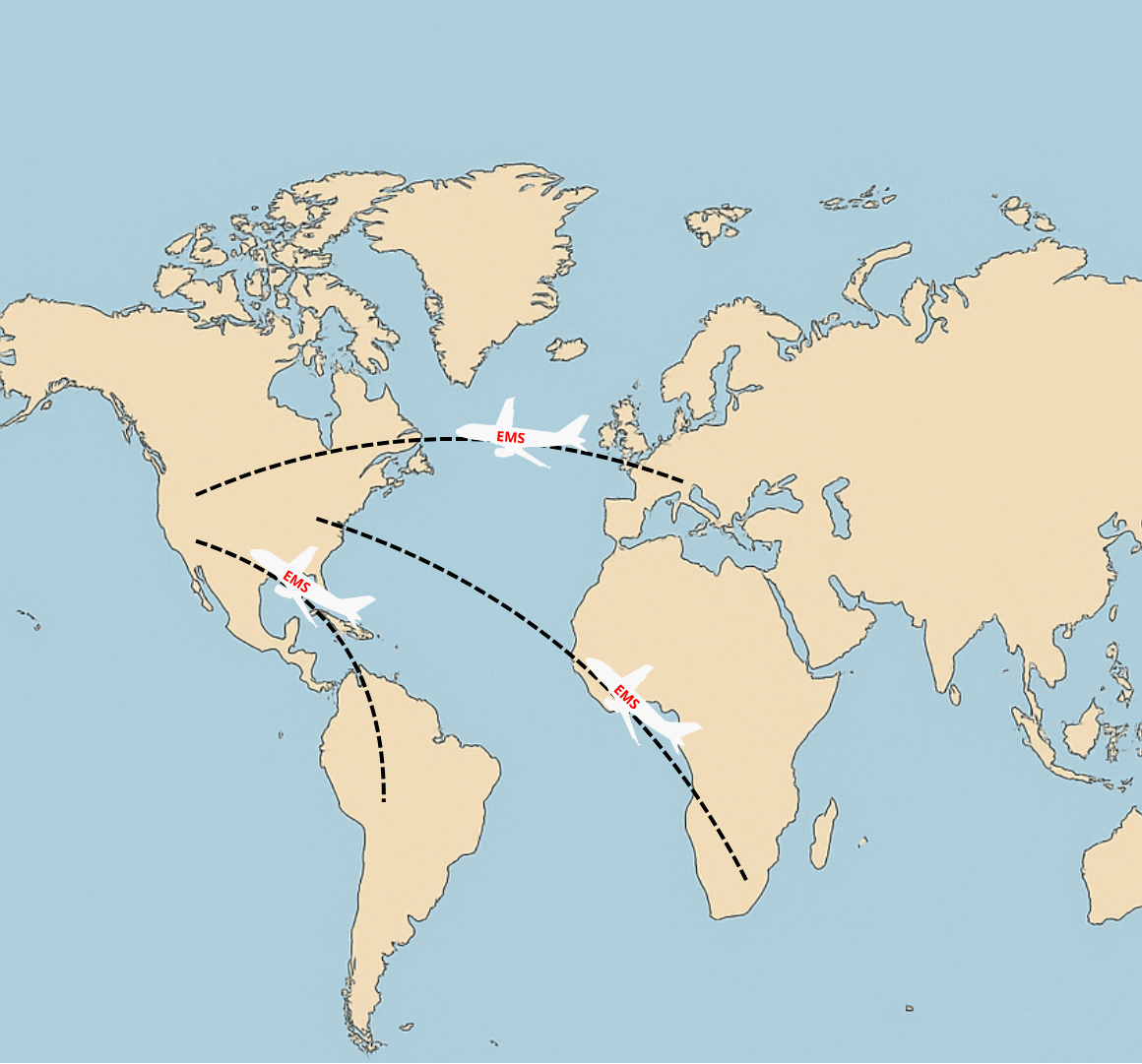
How medical requirements influence pricing
Medical needs directly determine which aircraft and crew configuration are required.
Medical complexity is one of the strongest cost drivers. Critical‑care patients require more advanced monitoring, ventilators, infusion pumps, and a broader medical team. Stable patients may only require a nurse or doctor, reducing cost.
EMS Air Ambulance tailors each flight to the exact level of care needed, ensuring safety without unnecessary expense.
Medical factors that increase cost
- Need for ICU-level support
- Ventilator or advanced airway management
- Continuous cardiac monitoring
- Multiple infusion lines
- High-risk or unstable conditions

Operational and logistical elements
International missions require coordination across borders, time zones, and medical facilities.
What operational planning includes
Route and overflight planning
Ensures safe international passage and compliance with regulations.
Coordination with hospitals
Aligns timing, handover, and medical requirements.
Ground logistics
Includes local ambulances, equipment transfer, and airport handling.
Crew scheduling
Pilot and medical staff availability influences timing and cost.

How EMS Air Ambulance calculates a transparent quote
Clear assessments and tailored recommendations ensure accurate, honest pricing.
What the quote is based on
Medical assessment
Review of reports, stability, and required equipment.
Aircraft selection
Choosing the safest and most efficient aircraft type.
Routing and logistics
Distance, airports, and ground handling needs.
Timing and urgency
Urgent missions may require repositioning an aircraft.
Full transparency
EMS Air Ambulance provides a clear breakdown of all costs.