How international air ambulance costs are calculated: complete explanation
How air ambulance costs are calculated
No two international medical flights are the same, which means no fixed price exists.
EMS Air Ambulance provides custom pricing based on the patient’s medical condition, the distance between departure and destination, the aircraft required, and the urgency of the mission. Fuel costs, crew duty time, medical equipment, clearances, ground ambulances, and international handling also influence the final price. Because each patient’s needs differ, prices can only be given after a medical and logistical review.
Why costs vary per mission
- Medical condition and care level required
- Distance flown and route complexity
- Aircraft availability and positioning
- Airport fees, handling, and permissions
- On‑board medical team composition
- Required equipment such as ventilators or neonatal incubators
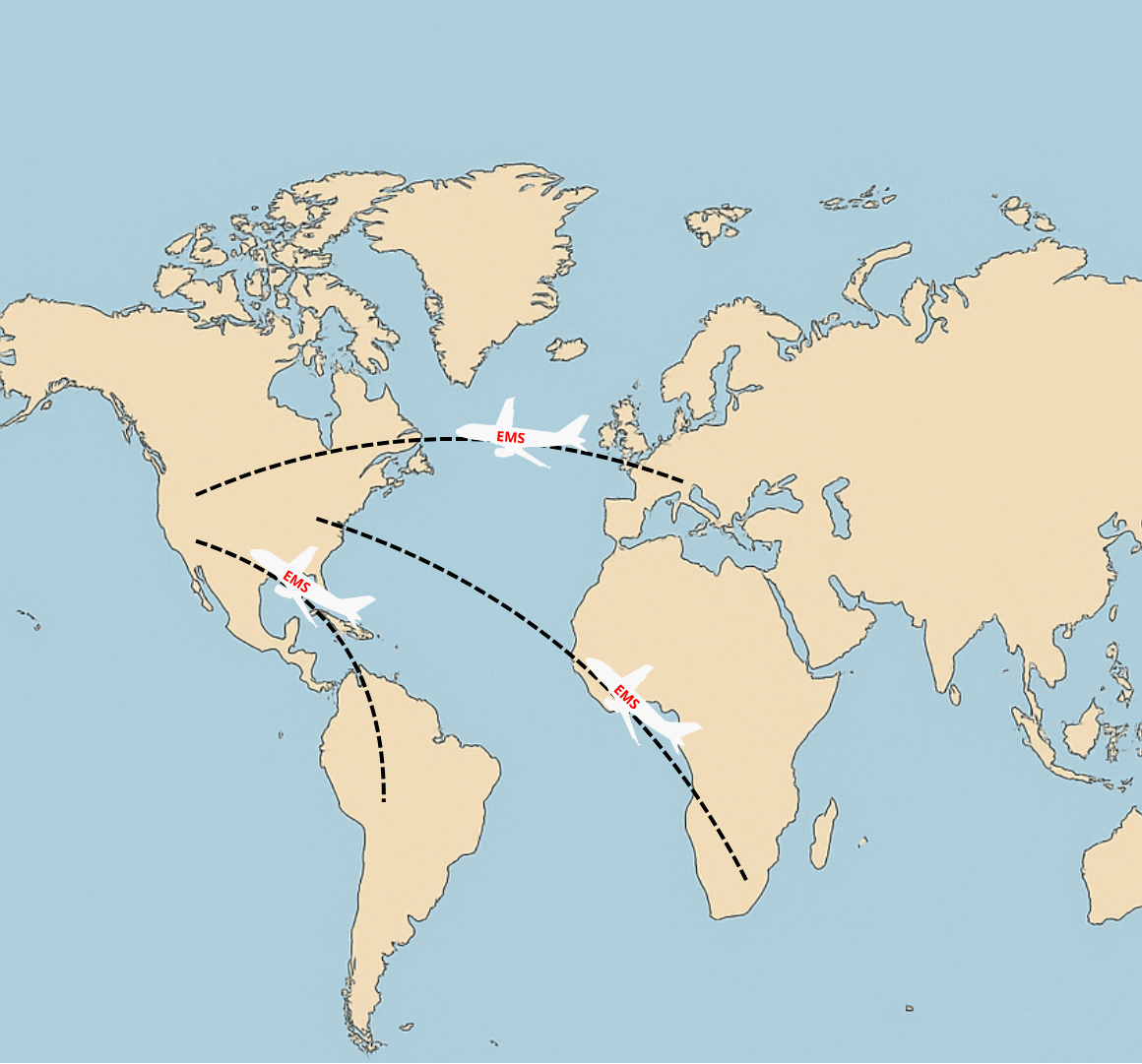
Key cost factors
Several predictable components make up the final price, even though each case is unique.
Main pricing components
Aircraft operational costs
Fuel, crew hours, flight planning, and aircraft handling.
Medical team and equipment
Doctor, nurse, ventilators, monitoring systems, oxygen, and consumables.
Ground transportation
Ambulance transfers at both airports.
International flight permits
Diplomatic clearances, overflight permissions, and landing fees.
Urgency level
Time-critical missions may require rapid aircraft positioning.

How distance and routing influence cost
Longer distances require larger aircraft, more fuel, and more complex routing.
International medical flights often cross multiple airspaces, each requiring clearances and fees. Longer missions may need refueling stops, aircraft swaps, or medical crew rotations. These factors all contribute to the total price. EMS Air Ambulance always selects the most efficient and medically safe route for each patient.

Medical requirements and staffing
The patient’s medical condition directly determines the team and equipment needed.
Examples of medical factors that affect pricing
- Need for ICU‑level care during flight
- Requirement for a physician, intensive‑care nurse, or specialist
- Use of ventilators, infusion pumps, or cardiac monitoring
- Need for isolation equipment or infection control
- Neonatal or pediatric specialist teams

Aircraft types and pricing differences
Different aircraft have different range capabilities and operating costs.
Mid-range jets
- Lower operating costs
- Fast availability
- Limited range
Long-range jets
- High comfort level
- Suitable for critical patients
- Higher hourly cost
Ultra-long-range jets
- Global reach
- Space for advanced medical setups
- Highest operational cost
Insurance and reimbursement
Coverage varies significantly depending on policy type and medical justification.
EMS Air Ambulance does not partner directly with insurance companies. However, many patients are able to request reimbursement afterward if the transport is medically necessary and supported by proper documentation. Approval depends entirely on the insurer’s policy terms, exclusions, and proof of medical necessity.
Important to know
- Reimbursement is not guaranteed and depends on your insurer
- Medical necessity documents must be complete
- Patients pay EMS directly and may submit documents afterward
- Travel insurance often has strict exclusions for pre‑existing conditions


