Air Ambulance for Neurological Conditions: Safe Transport for Stroke and Brain Injury Patients
Why neurological patients need air ambulance transport
Neurological patients require safe, stable, and medically supervised conditions that commercial flights cannot guarantee.
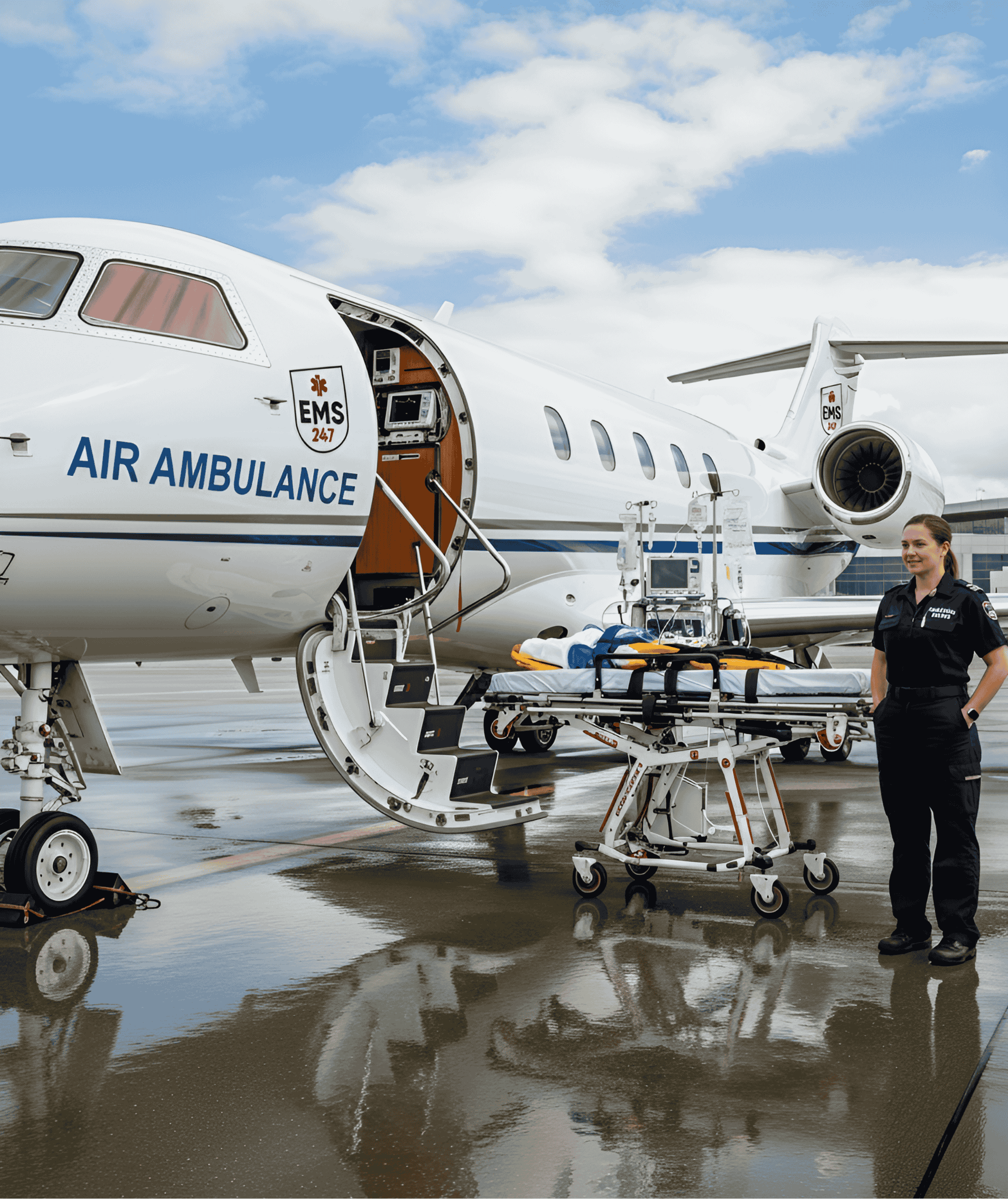
Neurological conditions such as stroke (CVA), traumatic brain injury, brain hemorrhage, and uncontrolled seizures require constant monitoring of vital signs, air pressure, oxygen levels, and neurological status. Air ambulances offer the specialised environment needed for safe transport.
International medical flights must minimise vibrations, movement, stress, and rapid pressure changes that can worsen neurological conditions. This is why dedicated medical aircraft with ICU-level equipment are often required.
Common neurological conditions requiring air ambulance transport
- Acute ischemic stroke (CVA)
- Hemorrhagic stroke or brain bleed
- Traumatic brain injury (TBI)
- Post-surgery neurosurgical patients
- Uncontrolled seizures or epilepsy
- Brain tumors requiring specialist care
- Patients requiring intracranial pressure monitoring
Important
Transport options for neurological cases
The severity of the neurological condition determines the safest transport method.
Air ambulance (ICU level)
- Continuous neurological monitoring
- ICU ventilator and advanced equipment
- Stable cabin pressure suitable for brain injury patients
- Higher cost due to ICU capabilities
Medical escort on a commercial flight
- More cost-effective
- Possible for patients with mild or stable neurological symptoms
- No ICU equipment
- Airlines must approve medical conditions
Ground ambulance
- No air pressure changes
- Highly controlled medical environment
- Slow for long distances
- Not suitable for intercontinental transport
How neurological air ambulance transport works
Each step is designed to ensure neurological stability throughout the journey.
Process steps
Intake and case review
Neurological reports, imaging, and recent assessments are reviewed.
Medical approval
Specialist evaluates the patient’s fit-to-fly status.
Planning and logistics
Aircraft selection, crew, ground ambulances, and medical equipment are arranged.
Flight and monitoring
Continuous neurological monitoring and management during the flight.
Arrival and hospital handover
Direct transfer to the receiving neurological or ICU department.

Costs and insurance
Neurological air ambulance transport varies in cost based on care level and distance.
Air ambulance flights for neurological patients often require ICU-level equipment, neurologically trained staff, and advanced monitoring devices such as ICP monitors. These factors influence the total cost. Insurance coverage depends on medical necessity, policy terms, and documentation.
Main cost factors
- Flight distance and destination
- ICU-level medical equipment required
- Neurologist or specialised medical crew availability
- Urgency of departure
- Ground ambulance connections
Preparation for neurological air ambulance transport
Accurate medical records help avoid delays and allow correct equipment planning.
Checklist
Neurological reports
Recent CT/MRI results, stroke severity scores, and TBI assessments.
Medication overview
Including anti-seizure medication and anticoagulants.
Treating doctor contact
Essential for medical coordination and handover.
Patient identification and travel documents
Passport, insurance documents, and local medical contacts.