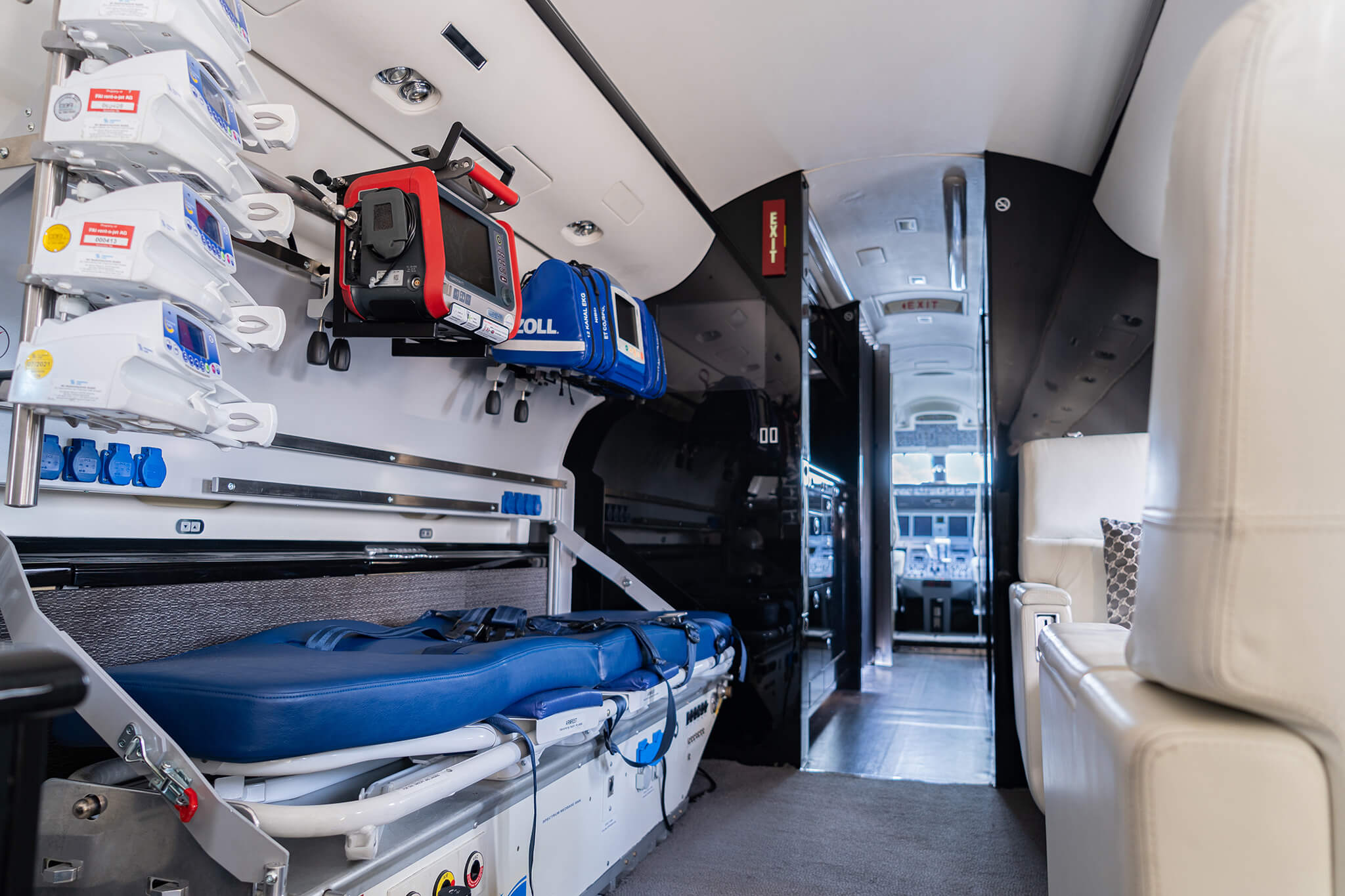
Air Ambulance for Neurological Conditions: Safe International Transport for Complex Cases
Neurological air ambulance basics
Neurological patients require specialised monitoring, equipment, and experienced clinicians throughout the entire flight.
Air ambulances provide advanced in-flight medical care for patients with neurological conditions such as stroke, traumatic brain injuries, intracranial hemorrhage, and severe seizures. These patients often cannot travel safely on commercial flights due to the risk of deterioration and the need for constant neurological assessment.
Specialist medical crews monitor neurological responses, maintain blood pressure control, manage ventilation, and ensure rapid intervention if changes occur during the flight.
Situations where neurological air ambulance transport is required
- Acute or recent ischemic stroke
- Hemorrhagic stroke or brain bleeding
- Traumatic brain injury with unstable neurological status
- Severe or uncontrolled seizures
- Patients requiring ventilatory support or ICP monitoring
- High risk of re-bleeding or deterioration during travel
Critical to know

Transport options for neurological patients
The medical condition determines which type of transport is safe and appropriate.
Air ambulance
- Continuous neurological monitoring
- Ventilator and ICU-level care
- Rapid international transfer
- Higher cost due to specialised equipment
Medical escort on commercial flight
- Cost-effective option
- Suitable for mild or improving neurological cases
- Not suitable for unstable or ventilated patients
Ground ambulance
- ICU equipment available
- No altitude changes
- Longer travel time for international routes
How international neurological transport works
A structured approach ensures safe and reliable transfer for high-risk neurological patients.
Steps in neurological air medical transport
Neurological assessment
Reviewing CT/MRI findings, neurological status, and stability.
Transport decision
Determining if air ambulance, medical escort, or ground ambulance is safe.
Pre-flight stabilisation
Optimising blood pressure, oxygenation, and seizure control.
In-flight monitoring
Continuous observation of neurological function and vital signs.
Handover at destination
Transfer to the receiving neurology or ICU team.

Costs and medical requirements
Neurological cases involve advanced equipment and specialist care, which influence the cost.
Costs for neurological air ambulance transport depend on distance, equipment needs such as ventilators or ICP monitoring, aircraft type, and the level of medical staffing required. Insurance coverage is possible if medical necessity is established and supported by documentation from the treating neurologist.
Main factors affecting neurological transport costs
- International flight distance and route
- Required neurological equipment and ICU capabilities
- Number and expertise level of medical personnel
- Urgency and availability of aircraft
- Ground ambulance transfers before and after the flight
Preparing neurological patients for transport
Accurate medical documentation ensures safe planning and prevents delays.
Checklist for neurological air ambulance transport
Recent CT/MRI results
Essential for assessing flight risk and stability.
Neurological evaluation
Detailed report including GCS score and seizure history.
Medication overview
Especially anticoagulants, anti-seizure drugs, and sedation.
Communication with treating neurologist
For coordination and clearance for transport.
Travel documents and insurance
Passport, policy details, and medical necessity documentation.