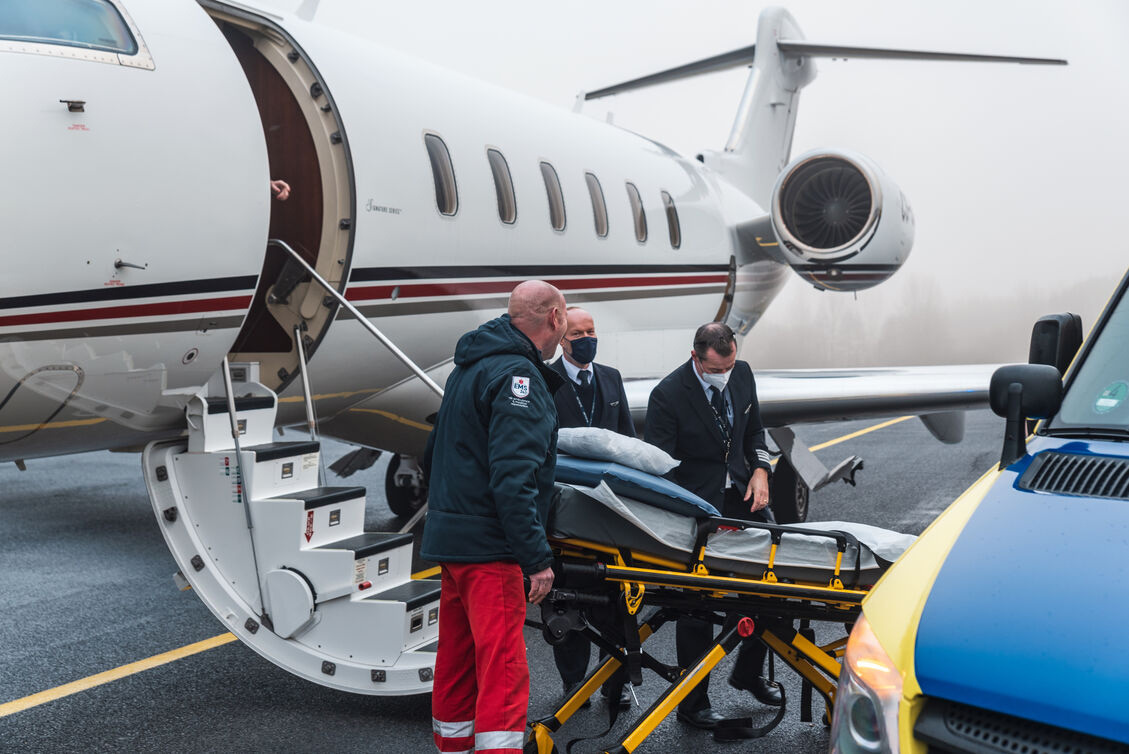
Air Ambulance for Spinal Cord Injury Patients: Safe Medical Repatriation Worldwide
What spinal cord air ambulance transport involves
A spinal cord injury requires strict, safe, and medically supervised air transport.
A spinal cord injury (SCI) often makes regular travel impossible. Patients may require complete immobilization, continuous pain management, prevention of pressure sores, and advanced monitoring. Air ambulance transport provides the controlled, stable environment needed to avoid further injury or complications during travel.
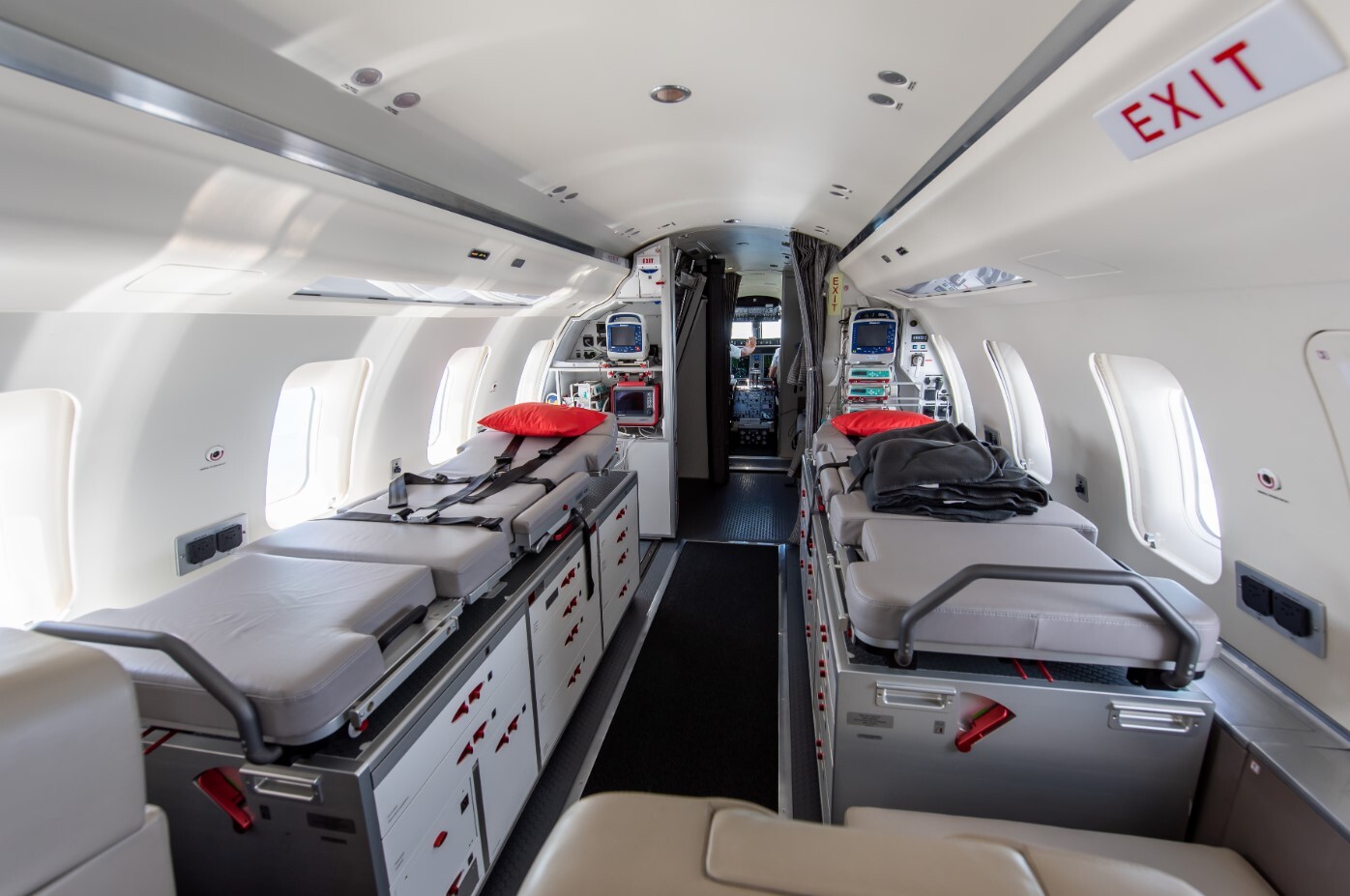
These medical flights use dedicated aircraft equipped with stretchers, vacuum mattresses, spinal boards, and intensive care equipment. A specialized medical team ensures safe handling throughout the journey.
Common reasons for spinal cord medical flights
- Transport after spinal trauma or accident
- Post‑operative transfer after spinal surgery
- Need for immobilized long‑distance travel
- High risk of neurological deterioration
- Complex pain management requirements

Specialist equipment for spinal injury flights
Dedicated equipment ensures stability, safety, and comfort during the entire journey.
Typical SCI‑specific equipment onboard
- Vacuum immobilization mattresses
- Spinal boards and cervical stabilization devices
- Anti‑pressure sore mattress systems
- IV pain management equipment
- Advanced monitoring for neurological stability
- Oxygen and respiratory support systems
How immobilized transport works
Immobilization prevents secondary spinal injury during the flight.
Immobilized air transport procedure
Stabilization
Patient is positioned on a vacuum mattress or spinal board to prevent movement.
Transfer to ambulance
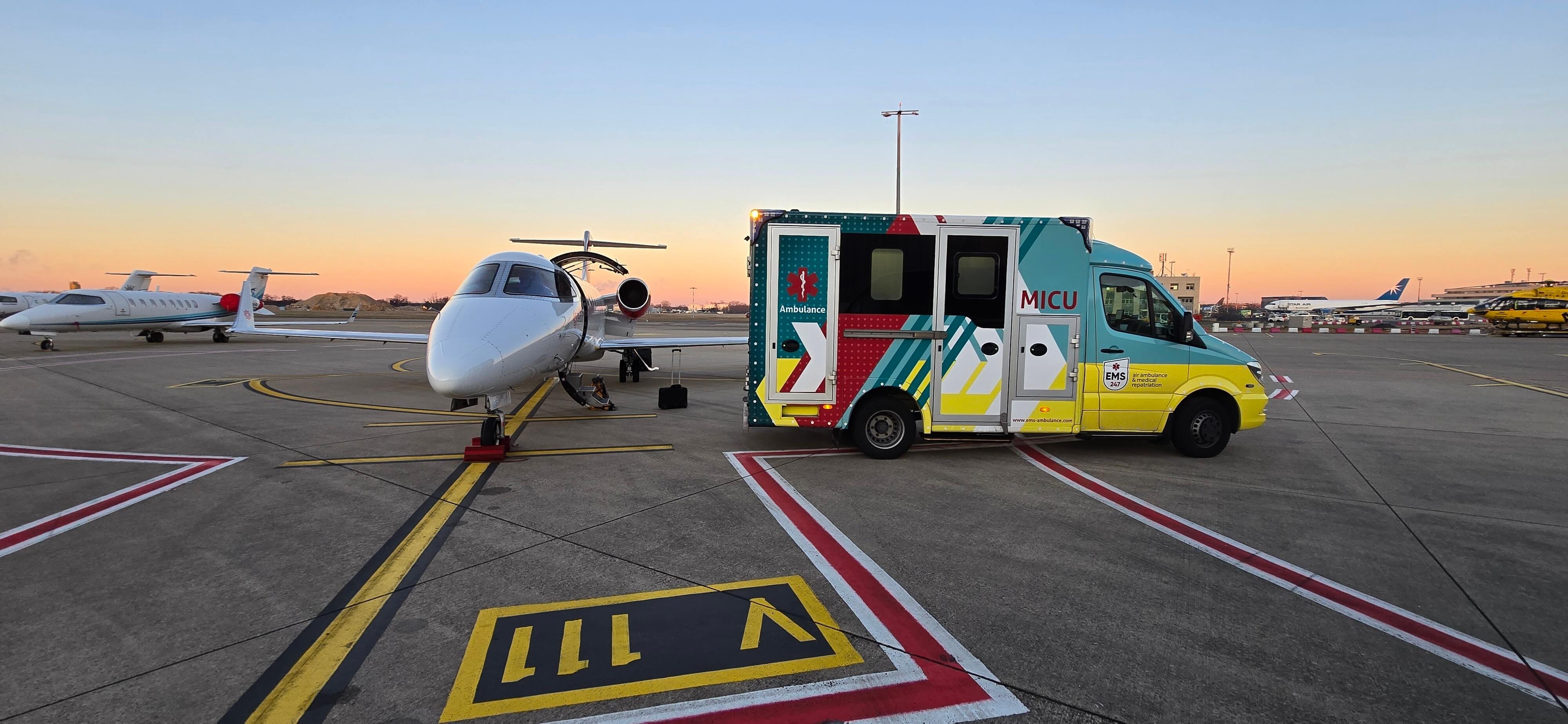
A ground team uses log‑roll techniques to maintain spinal alignment.
Aircraft loading
Special lifts and loading systems minimize movement.
In‑flight care
Continuous monitoring, pain management, and pressure sore prevention.
Handover
Patient is transferred to hospital staff with a full medical report.

The medical transport process
Transporting a spinal injury patient follows a detailed, structured method.
How it works
Medical intake
Doctors review recent scans, surgery reports, and stability.
Transport planning
Flight, ground ambulances, and medical team are coordinated.
Equipment setup
SCI‑specific immobilization systems are prepared.
Flight and supervision
A specialist team monitors vital signs and comfort.
Arrival and hospital handover
A detailed report is shared with the receiving hospital.
Cost factors and insurance
Spinal injury air transport costs vary depending on medical needs and distance.
The price of a spinal cord injury air ambulance depends on the flight distance, type of aircraft, level of care required, and ground logistics. Intensive monitoring or advanced immobilization systems can influence the total cost. Insurance sometimes reimburses the transport when medical necessity is proven, especially after trauma or surgery.
Main elements affecting cost
- Flight distance and route
- Required medical specialists
- Immobilization and pressure sore prevention systems
- Urgency of transport
- Ground ambulance transfers
What to prepare before the flight
Having complete medical information speeds up approval and planning.
Checklist
Medical summary
Include diagnosis, neurological level, stability, and recent imaging.
Medication list
Including pain medication and muscle relaxants.
Surgical reports
If the patient recently underwent spinal surgery.
Passport and insurance
Required for international repatriation.