ICU Air Ambulance vs Standard Medical Transport: The Essential Differences
What is an ICU air ambulance
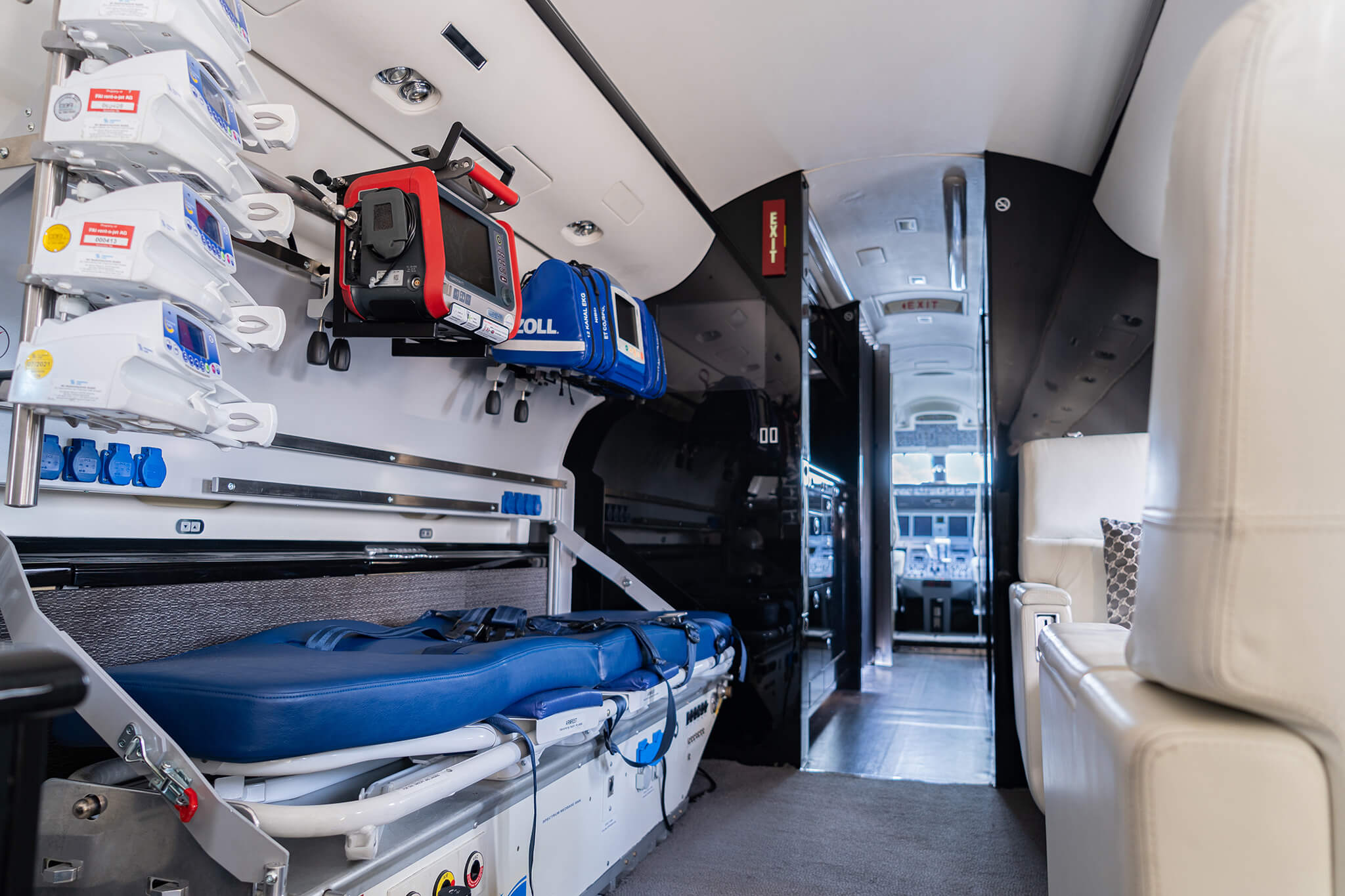
ICU air ambulances deliver full intensive‑care capabilities in a dedicated medical aircraft.
An ICU air ambulance is a specially outfitted aircraft staffed with an intensive‑care medical team, advanced monitoring systems, ventilators, medications, and life‑support capabilities. It is designed for patients who are unstable, critically ill, or unable to tolerate standard forms of travel.
This type of transport mirrors the level of care found in a hospital ICU, ensuring that the patient receives continuous monitoring, rapid intervention, and specialized treatment throughout the entire flight.
ICU air ambulances are typically needed when the patient requires
- Mechanical ventilation or advanced airway support
- Continuous cardiac or hemodynamic monitoring
- IV infusions, sedation, or specialized medications
- Risk management for sudden deterioration
- Repatriation after severe trauma, stroke, or organ failure

What is standard medical transport
Standard medical transport supports stable patients who do not require ICU‑level interventions.
Standard medical transport involves either a ground ambulance or a medical escort accompanying a stable patient on a commercial flight. It is suitable when the patient’s condition is predictable, stable, and does not require real‑time intervention or intensive monitoring.
Although medical equipment is available, it is limited to what is necessary for stable patients, such as oxygen therapy, mobility assistance, or basic monitoring.
When standard medical transport is appropriate
- The patient is medically stable
- No advanced airway support is needed
- No high‑risk medication infusions required
- Transport urgency is low to moderate
- Mobility assistance or basic supervision is sufficient

Key differences between ICU air ambulance and standard medical transport
The right transport method depends entirely on the patient’s medical condition, risk level, and required care.
ICU Air Ambulance
- Full ICU capabilities
- Rapid, direct international transport
- Continuous care by ICU‑trained physicians and nurses
- Higher cost compared to standard transport
Standard Medical Transport
- More affordable
- Suitable for non‑critical cases
- Not suitable for unstable or ICU‑level patients
How ICU air ambulance transport works
High‑acuity patient transport follows a structured medical and logistical workflow.
Typical steps in ICU air ambulance transport
Medical intake
Collection of current condition, stability, and treatment needs.
ICU assessment
Specialists determine safety and required onboard equipment.
Mission planning
Aircraft, team, ground ambulances, and international clearances arranged.
ICU flight
Continuous monitoring and treatment throughout the journey.
Hospital handover
Direct transfer to the receiving medical team.

Costs and insurance
Costs vary widely depending on distance, aircraft type, medical requirements, and urgency.
The cost of an ICU air ambulance typically depends on the aircraft model, flight distance, medical team composition, and any specialized equipment required. Insurance may cover part or all of the transport if it is deemed medically necessary and correctly documented.
Primary cost factors
- Flight distance and route
- Urgency and scheduling requirements
- ICU equipment and medications needed
- Medical team type (doctor, ICU nurse, respiratory therapist)
- Ground ambulance arrangements
What to prepare before arranging transport
Accurate and complete medical information speeds up approval and planning.
Checklist
Recent medical summary
Diagnosis, treatments, and current status.
Full medication list
Including dosages and any allergies.
Hospital contact information
For coordination and medical briefing.
Travel documents
Passports, insurance details, and any necessary clearances.