Do Air Ambulances Operate Internationally or Domestically?
Do air ambulances fly internationally?
Yes. Air ambulances operate within a country and across international borders.
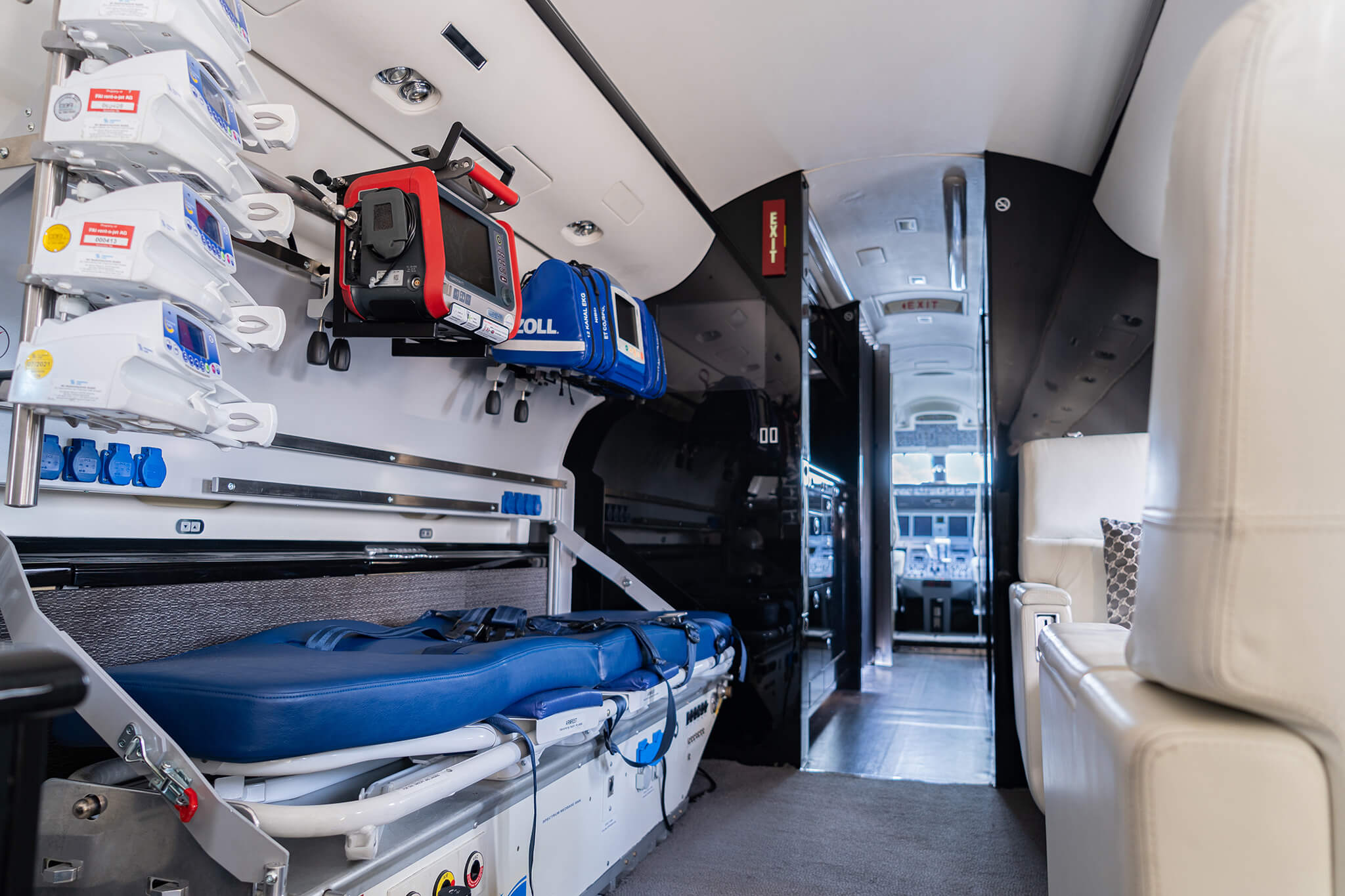
Air ambulances are specialized aircraft equipped with advanced medical systems, allowing patients to be transported safely between countries and continents. EMS Air Ambulance manages worldwide medical flights, handling everything from medical assessments and flight planning to clearances and hospital coordination.
This makes international repatriation possible in both urgent and planned situations, ensuring continuous medical care during every stage of the journey.
Where EMS Air Ambulance operates
- North America, South America, and the Caribbean
- Europe, the UK, and the Middle East
- Asia and Southeast Asia
- Africa and remote regions
- Worldwide oceanic long‑range routes
When international air ambulance transport is needed
Medical flights are used when a patient cannot travel safely on a commercial flight.
Critical or unstable patients
- Fast cross‑border movement
- Advanced monitoring and equipment
- Doctor and critical-care nurse present
- Higher cost due to aircraft operation
Stable patients unable to fly commercially
- Full privacy and controlled environment
- Flexible routing and fast scheduling
- Aircraft availability may vary
Remote evacuations
- Rapid response
- Experienced evacuation teams
- Weather and geography may affect planning
How global medical flights work
International missions require strict planning and medical coordination.
Steps in an international air ambulance
Medical intake
Assessment by EMS medical team to determine feasibility.
Clearances and logistics
Flight permits, border control, hospital coordination.
Aircraft preparation
Medical equipment, medication, and flight crew briefing.
Bedside pickup
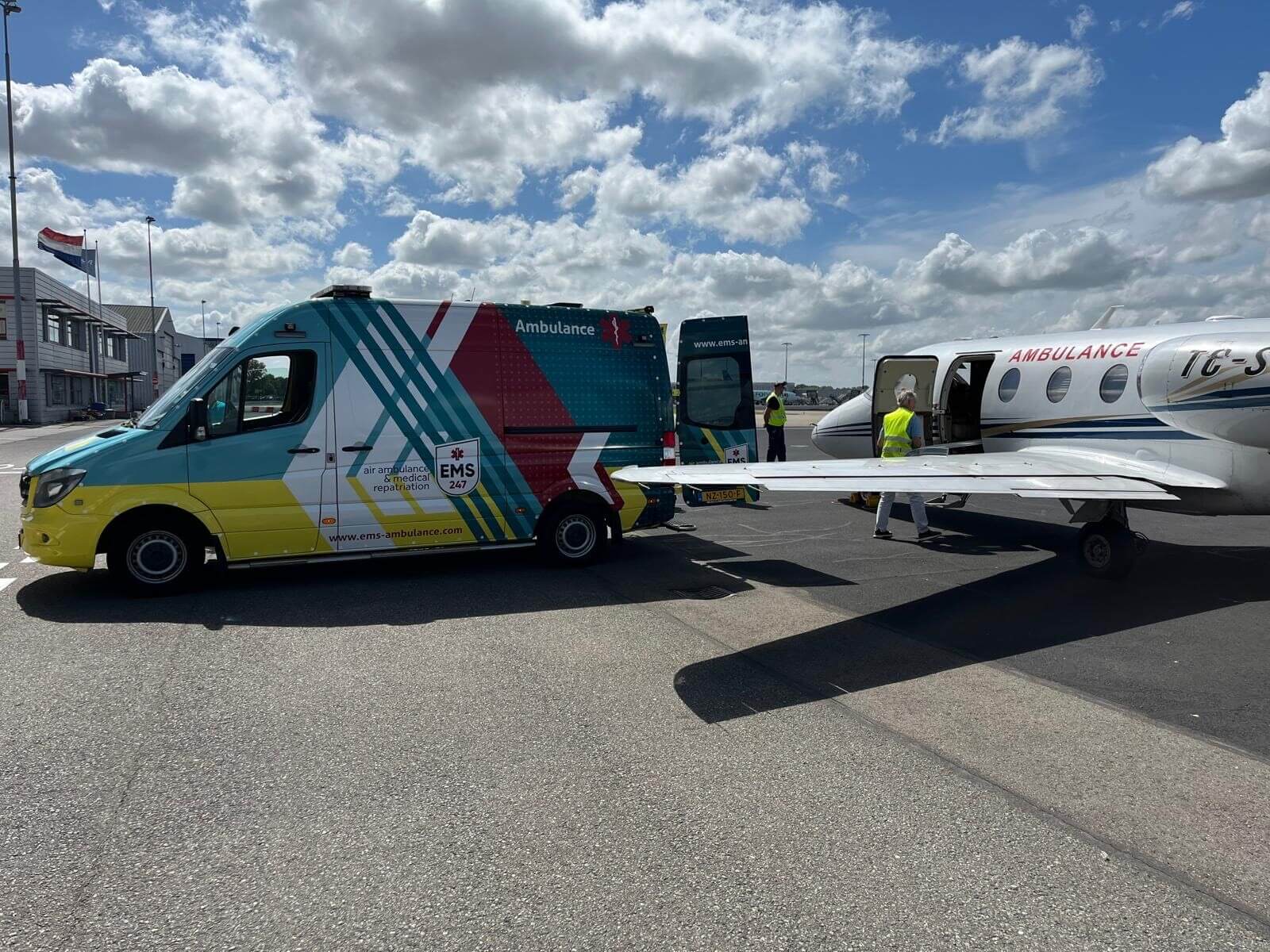
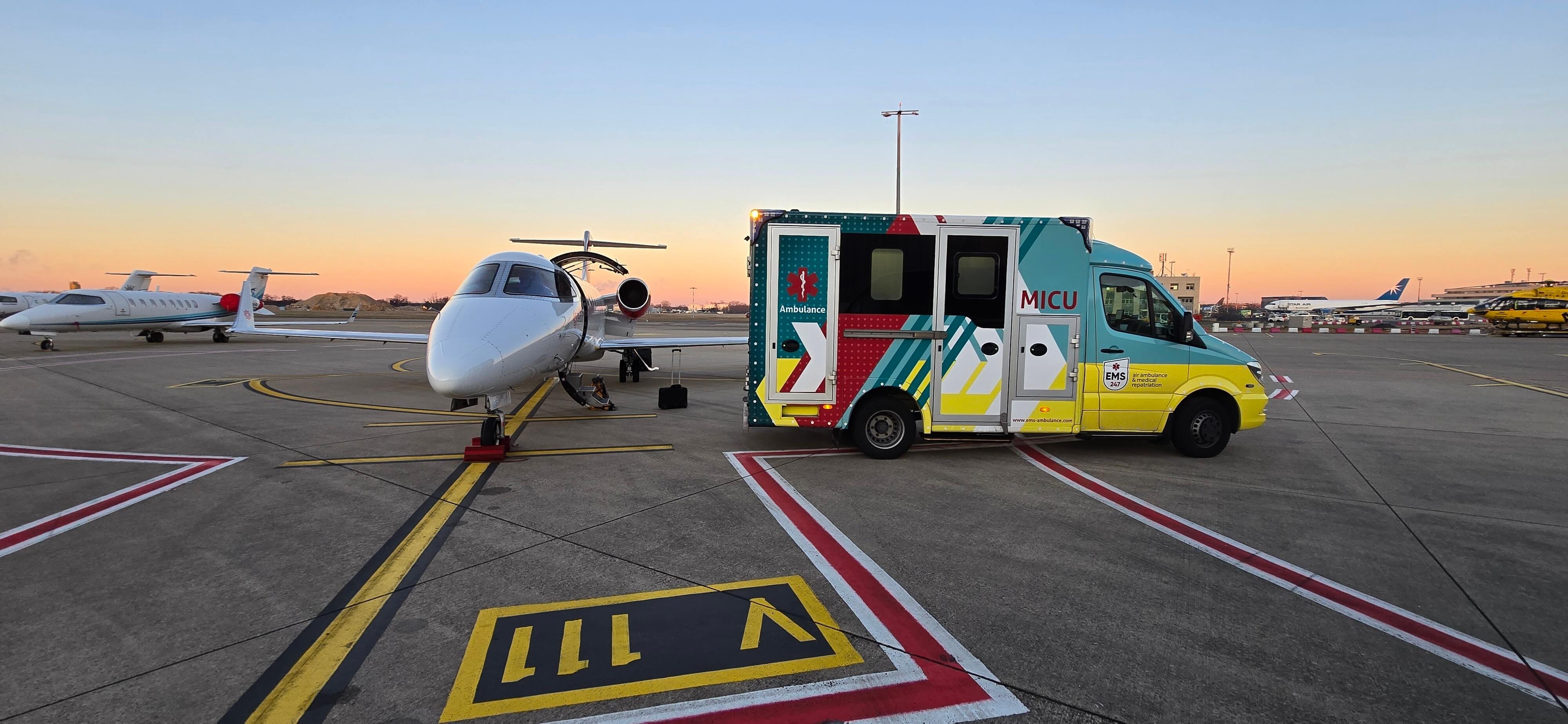
Ground ambulance transport coordinated at both ends.
Medical flight
Continuous monitoring and treatment onboard.
Arrival and handover
Transfer to the receiving medical facility.
Costs and insurance
International flights involve more logistics, but costs can be explained clearly.
The main cost drivers are distance, aircraft type, medical team requirements, international permits, and ground transport at both ends. Some insurance policies partially or fully reimburse medical repatriation when it is medically necessary and pre‑approved.
Key factors influencing cost
- Flight distance and routing
- Urgency and scheduling
- ICU-level or standard medical care
- International landing fees and permits
- Ground ambulances at origin and destination
Preparation checklist
Having complete information speeds up approval and planning.
What we need to arrange your transport
Current medical documents
Diagnosis, stability, and recent reports.
Medication overview
Including allergies and ongoing treatments.
Hospital contact details
For sending medical handover files.
Passport copies
For international border procedures.