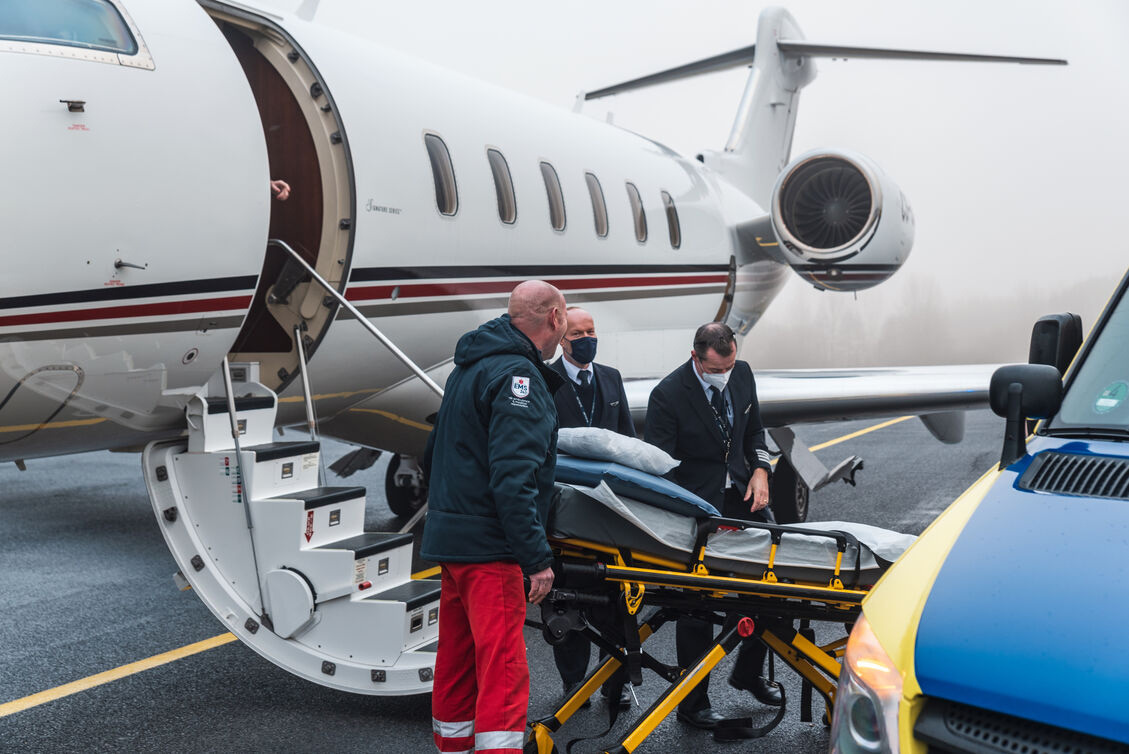
Are air ambulances available 24/7 including nights and weekends?
24/7 emergency availability
Air ambulances operated by EMS Air Ambulance & Medical Repatriation Ltd. are available day and night, every day of the year.
Medical emergencies do not wait for business hours. That is why our air ambulance coordination team is staffed 24 hours a day. Whether the incident occurs at night, during weekends, or over major holidays, our team can dispatch an aircraft and medical crew immediately.
Each mission is handled by experienced flight coordinators, critical care physicians, and intensive care flight nurses trained to stabilize and safely transport patients worldwide.
Always available for:
- Night-time medical evacuations
- Weekend and holiday emergencies
- Critical ICU transfers
- Urgent repatriations after accidents abroad
- Immediate cross-border medical transport
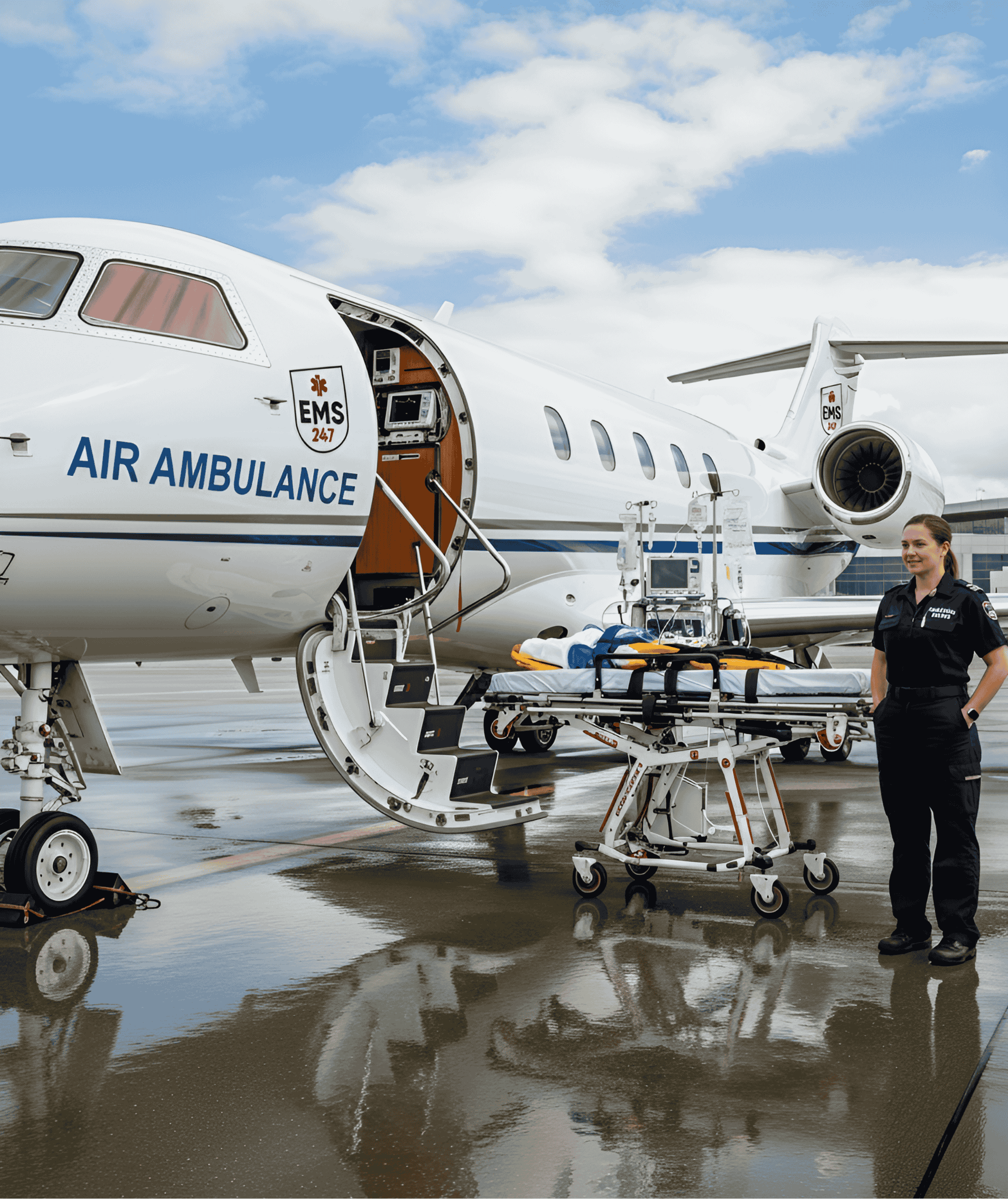
Worldwide rapid deployment
Our air ambulances can be airborne quickly from multiple strategic bases.
EMS operates worldwide, allowing fast dispatch anywhere in Europe, the Middle East, Africa, Asia, or the Americas. Our fleet includes long‑range jets capable of intercontinental flights with full intensive care capability on board.
Fleet capabilities
- ICU-equipped aircraft with advanced monitoring
- Long-range capability for global missions
- Specialized stretcher and ventilator systems
- Doctor and flight nurse on every mission
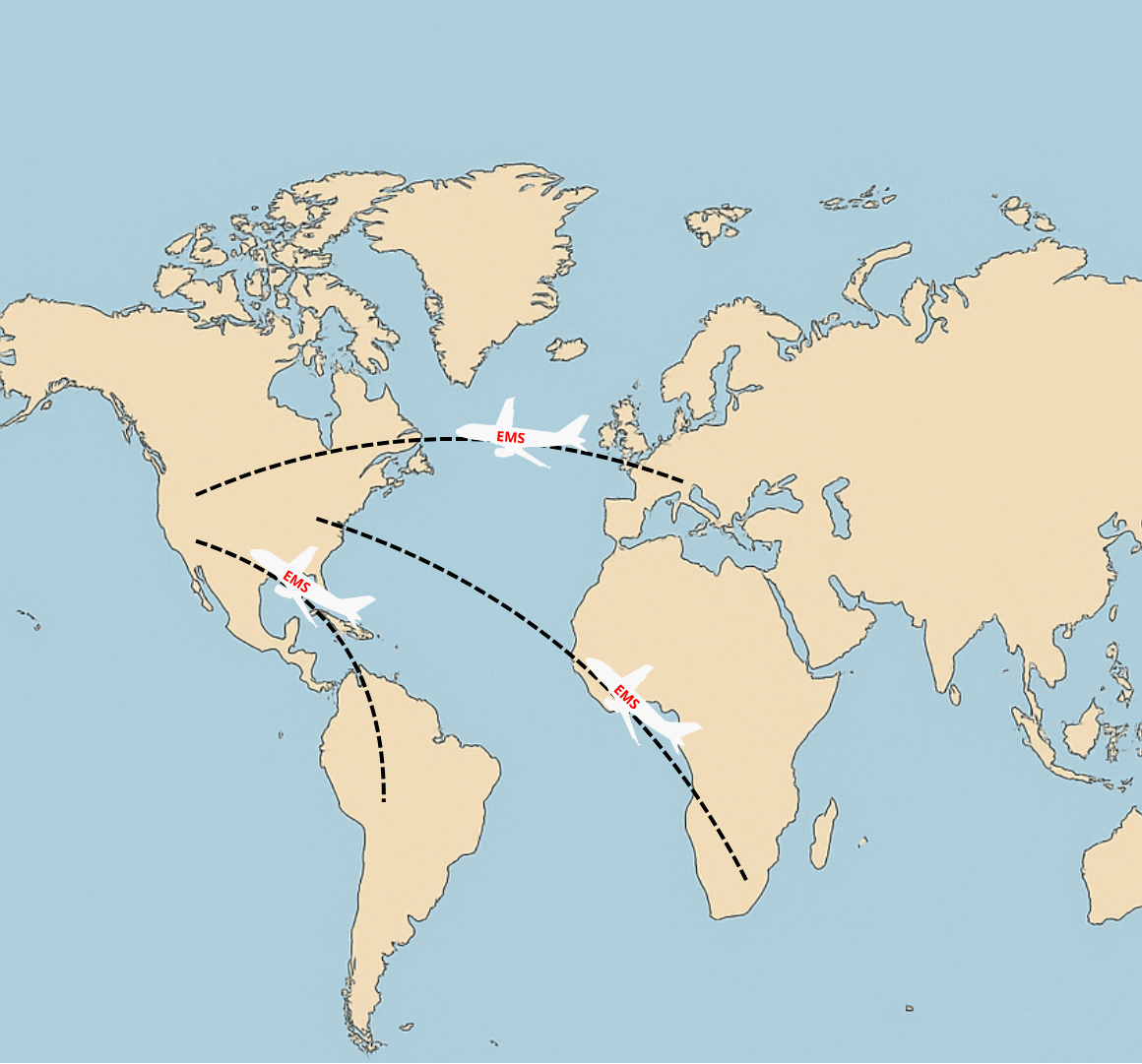
How an urgent medical evacuation works
Medical evacuations follow a strict and efficient process to ensure patient safety.
The emergency procedure
Immediate intake
Our coordinators collect medical details, location, and urgency.
Medical assessment
A doctor determines the required care level, aircraft type, and team.
Flight preparation
Crew, equipment, ground ambulances, and flight permissions are arranged.
Transport
Patient receives continuous ICU-level monitoring during flight.
Handover
Upon arrival, the patient is transferred to the receiving hospital team.
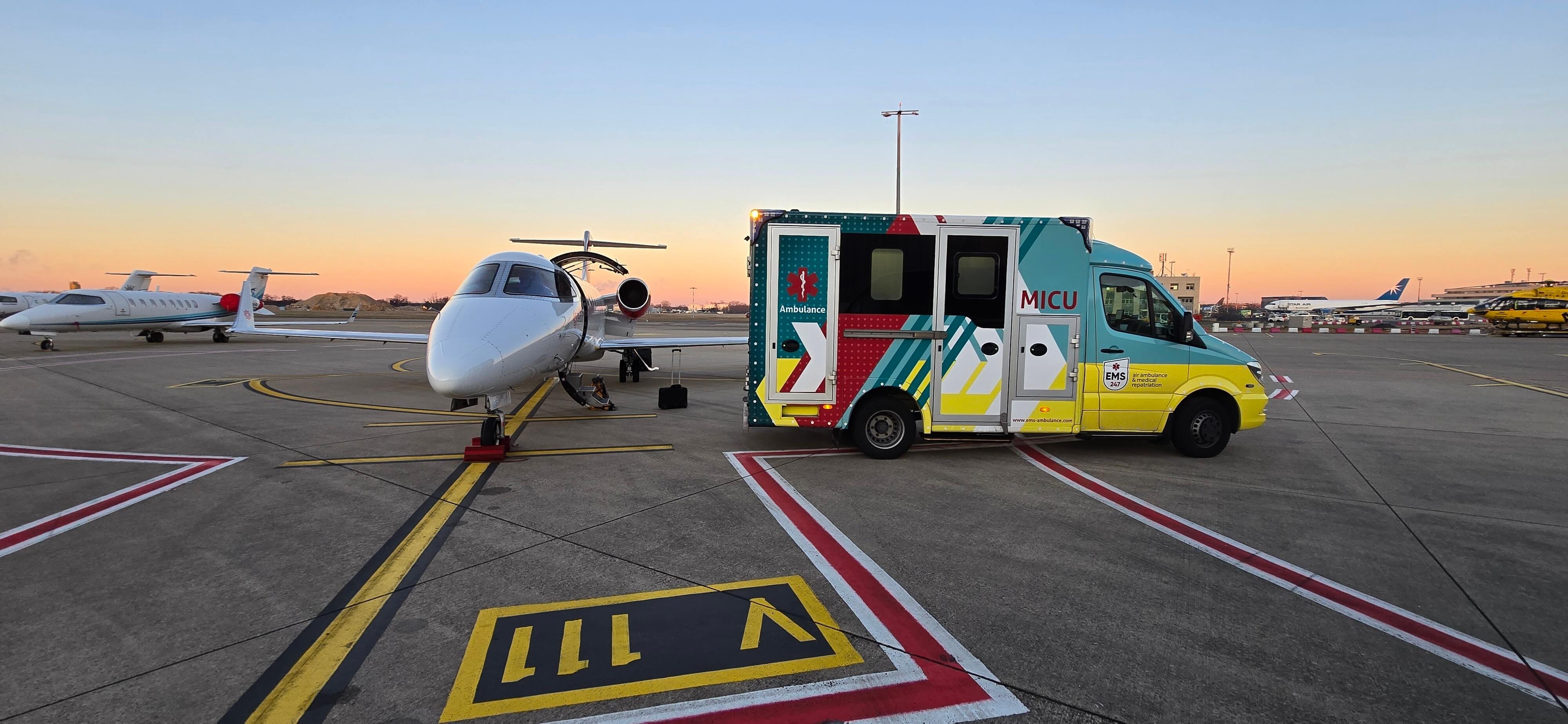
Cost factors for urgent transfers
Emergency flights involve multiple logistical and medical components.
Costs depend on distance, urgency, medical complexity, and aircraft type. While nighttime or weekend operations do not change medical quality, urgency may require faster arrangements that influence pricing.
Main cost drivers
- Flight distance and region
- Urgency and mission launch speed
- Required medical team and equipment
- Ground ambulance transfers
- International clearances and logistics
What to prepare immediately
Having essential information ready speeds up deployment.
Emergency checklist
Medical summary
Latest diagnosis, treatment, and vital information.
Patient location
Exact hospital, clinic, or remote site coordinates.
Contact details
Local doctors and family representatives.
Travel documents
Passport or ID for patient and accompanying persons.