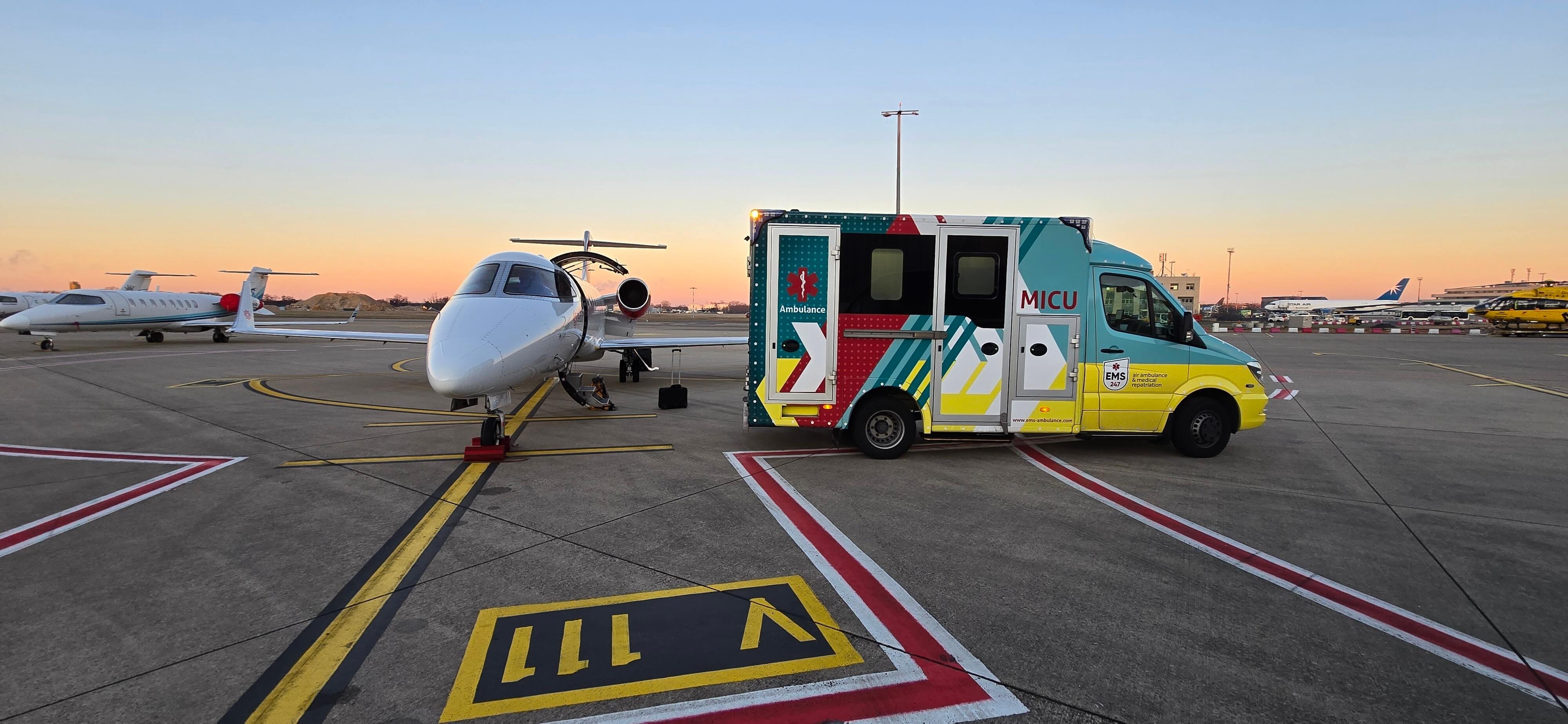
How patients are monitored during a long-distance medical flight
How in-flight monitoring works
Medical flights operate like mobile intensive care units, ensuring continuous oversight during transport.
During long-distance medical flights, a specialised medical team monitors the patient from take-off to landing. The aircraft is equipped with ICU-grade devices that allow continuous tracking of vital functions. This includes cardiac monitoring, oxygen saturation, blood pressure, respiratory support, and medication management.
Medical professionals are trained to stabilise patients during altitude changes and respond immediately if the patient’s condition fluctuates.
Key monitoring activities on board
- Continuous ECG monitoring
- Real-time oxygen saturation tracking
- Blood pressure measurement at intervals or continuously
- Assessment of respiratory patterns and effort
- Monitoring of medication effects and infusion levels
ICU-level care in the air
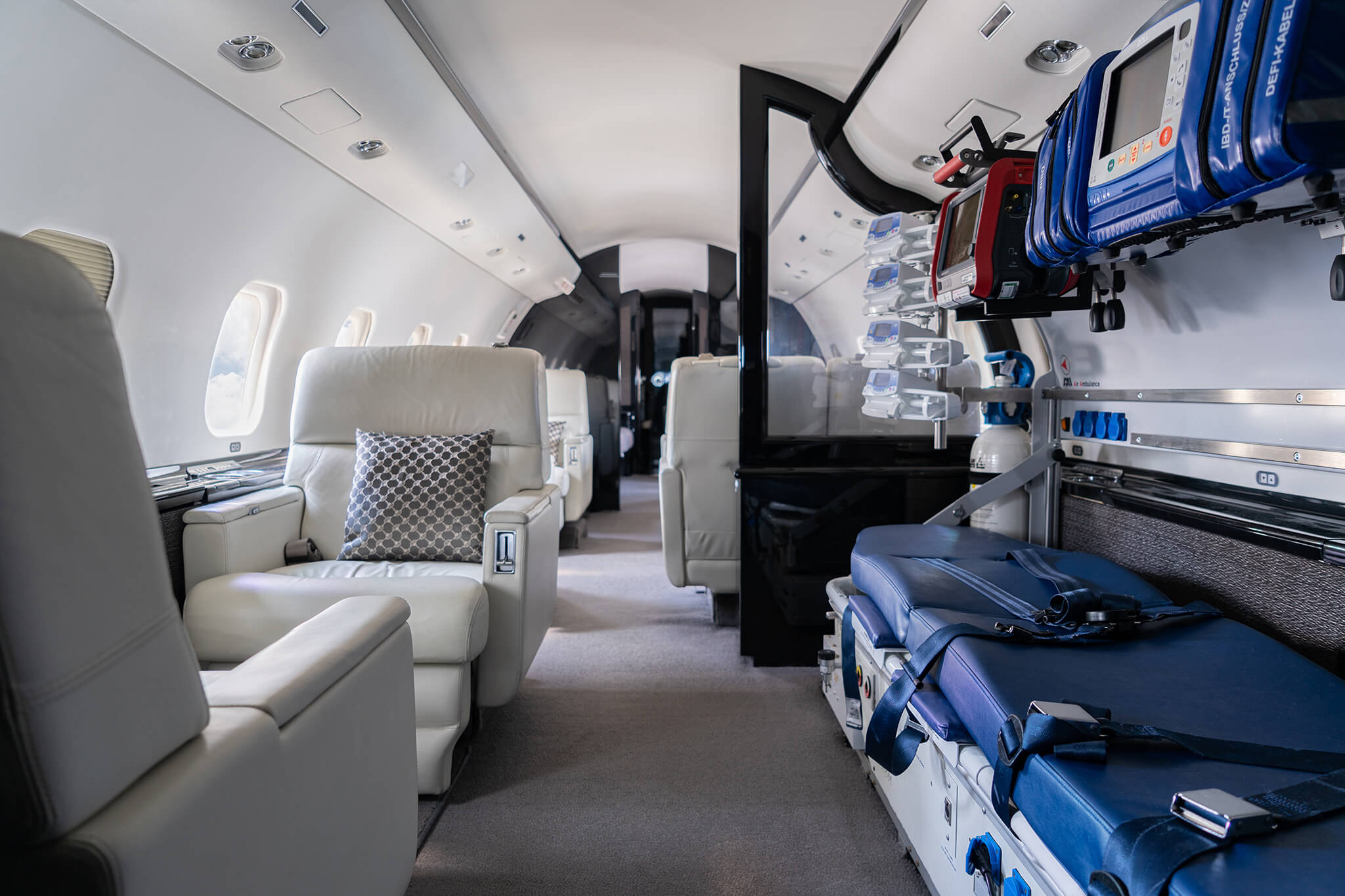
Air ambulances operate as flying intensive care units, enabling long-distance transfers for critical patients.
Long-distance flights require a higher level of stability and medical readiness. That is why air ambulances provide the same type of monitoring and equipment found in hospital ICUs. The team consists of intensive care nurses, paramedics, and often a physician specialised in emergency medicine or intensive care.
Equipment includes defibrillators, ventilators, infusion pumps, suction devices, and emergency medication—ensuring treatment continuity throughout the flight.
Vital signs and equipment
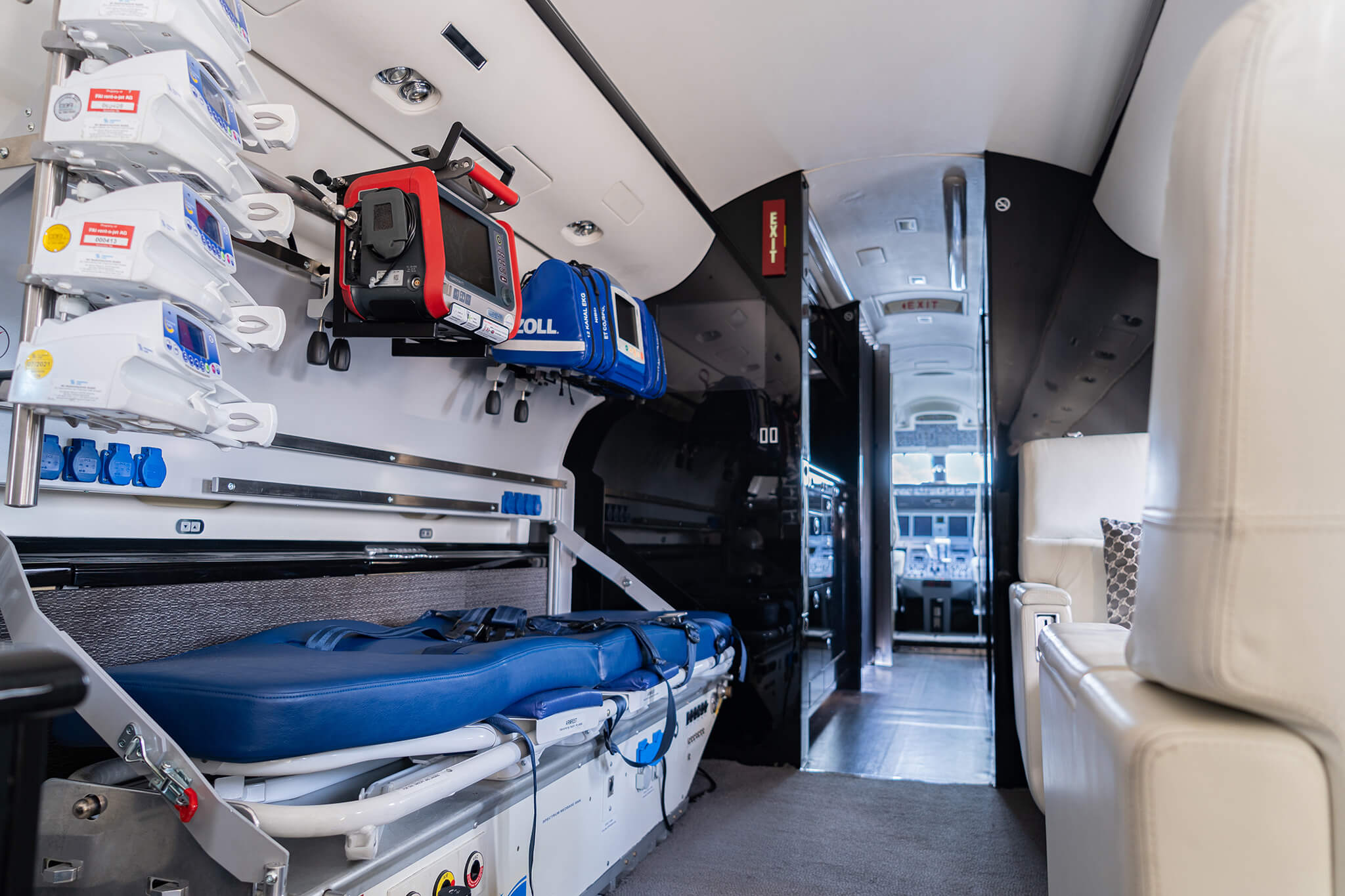
Continuous vital sign monitoring helps the medical crew detect changes early and intervene immediately.
Every patient transported on a medical flight is connected to monitoring equipment for the entire journey. These devices are specially designed for air transport and remain stable even in turbulence. Monitoring includes heart rhythm, blood pressure, respiratory rate, temperature, and oxygen levels.
Typical monitoring devices onboard
- Portable ICU monitors
- Multi-parameter vital signs monitors
- Continuous pulse oximetry
- Capnography (CO₂ monitoring)
- Non-invasive or invasive blood pressure monitoring

Ventilation and oxygen support
Ventilator-dependent patients can be transported safely using advanced aviation-approved ventilators.
Patients who require mechanical ventilation or oxygen therapy receive continuous respiratory support during the flight. Aviation-certified ventilators maintain stable breathing patterns and compensate for cabin pressure changes. Oxygen supplies are carefully calculated to last for the entire mission, including contingencies.
Respiratory support options
- Mechanical ventilation
- High-flow oxygen therapy
- Non-invasive ventilation (CPAP/BiPAP)
- Nebulisation treatments when medically required

Medication and emergency protocols
Medications are administered according to hospital standards, with strict safety procedures.
Intravenous medication, pain management, sedation, and emergency drugs are available at all times. Infusion pumps control dosage and prevent interruptions. The medical team is trained to handle onboard emergencies including cardiac events, respiratory distress, or rapid deterioration.
In-flight emergency procedures
- Advanced life support (ALS) protocols
- Rapid-response defibrillation
- Airway management and intubation
- Stabilisation during sudden condition changes
- Coordinated communication with receiving hospitals