How to Arrange a Medical Flight: Fast, Safe and Fully Coordinated
What a medical flight involves
A medical flight ensures safe international transport for patients who cannot travel without professional medical supervision.
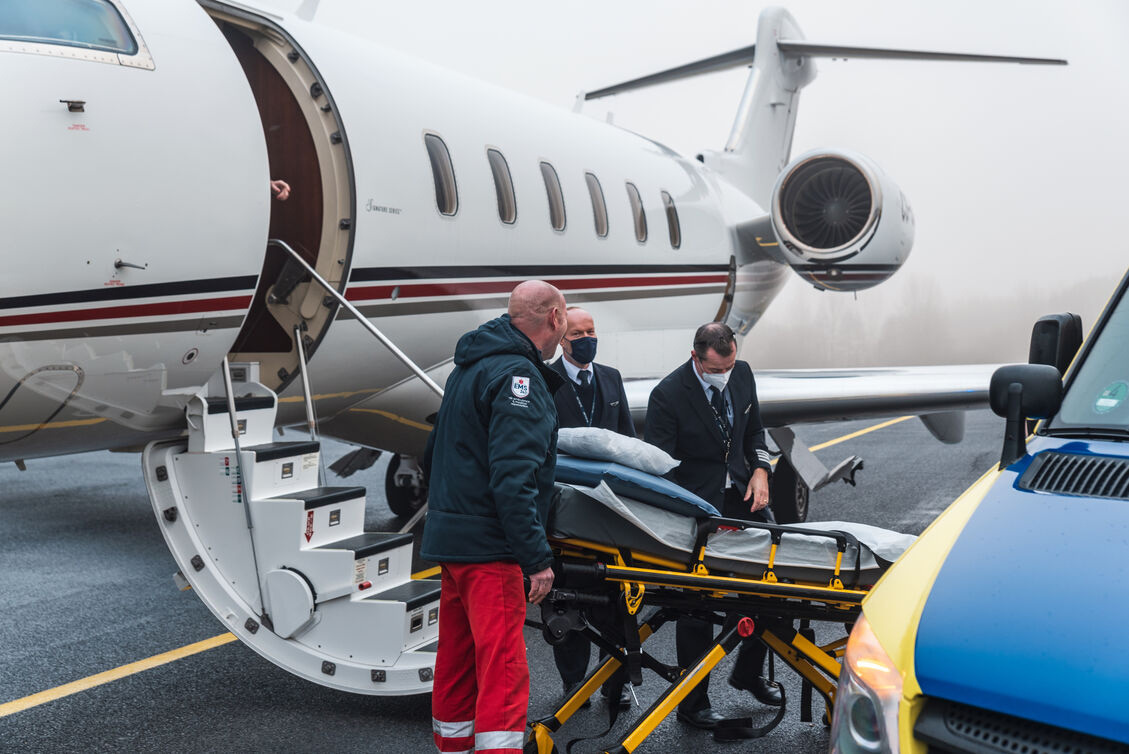
A medical flight is used when a patient requires continuous medical monitoring, specialised equipment or a controlled environment that commercial flights cannot provide. EMS Air Ambulance & Medical Repatriation Ltd. deploys ICU-equipped aircraft operated by experienced doctors and critical care paramedics. This guarantees safety from takeoff to landing.
Whether the situation is urgent or planned, the goal is always the same: delivering the patient safely and quickly to their destination with full medical support.
Common reasons for a medical flight
- Stroke, heart attack or neurological conditions
- Severe injury after an accident abroad
- Need for intensive care monitoring
- Post-surgery patients unable to fly commercially
- Long-distance bed-to-bed transportation
Important to know

Available transport options
Three medical transport solutions are available. The medical condition determines the safest and fastest option.
Air ambulance
- Fastest option for long distances
- Direct flights without layovers
- Allows advanced medical interventions
- Higher cost compared to other methods
Medical escort on a commercial flight
- More affordable
- Suitable for stable, non-critical cases
- Dependent on airline approval
- Limited medical equipment
Ground ambulance
- Flexible and accessible
- No airport logistics
- Slower for long distances
How arranging a medical flight works
EMS handles the entire process — from first call to final hospital handover.
The step-by-step process
1. Immediate intake
24/7 assessment of the situation, urgency and location. Free quote within 30 minutes.
2. Medical evaluation
Doctors review medical reports and determine the safest transport option.
3. Full mission planning
Aircraft, medical team, ground ambulances and all clearances arranged.
4. Bed-to-bed transport
Patient is collected from the hospital or home and escorted throughout the entire journey.
5. Handover at destination
Formal medical handover to the receiving physician or hospital team.

Costs and influencing factors
The cost of a medical flight depends on distance, urgency and required medical capabilities.
Costs vary from case to case. ICU-level flights with a specialised medical team and advanced equipment require more preparation and resources than basic medical escort services. EMS provides transparent pricing and can give an accurate estimate within 30 minutes.
Main cost drivers
- Distance and flight hours
- Type of aircraft required
- Level of medical care and equipment
- Urgency (same-day flights may require repositioning)
- Ground ambulances and international clearances
What you need to provide
Having the correct information ready speeds up the process and allows immediate planning.
Essential information checklist
Medical report
Recent diagnostics, condition summary and treating doctor’s notes.
Medication list
Including dosages, allergies and ongoing treatments.
Patient documents
Passport and any relevant insurance details.
Hospital contacts
Names and phone numbers of sending and receiving medical teams.