International patient transport worldwide: everything you need to know
What international patient transport means
International patient transport ensures safe travel for patients who cannot fly or travel without medical supervision.
International patient transport is organised when someone must return home or travel abroad for medical reasons but cannot do so safely without medical support. This may involve lying transport, continuous monitoring, oxygen supply, advanced medical equipment or a specialised medical team on board.
The priority is always patient safety: the right aircraft, medical equipment, escort team and logistics must be matched to the patient’s condition.
Common reasons for international medical transport
- Recovery after an accident abroad
- Medical emergency during travel
- Long-term illness requiring treatment at home
- Inability to fly without medical escort
- Need for intensive monitoring or lying transport
Good to know

Available transport options
The patient’s medical condition determines the safest and most efficient transport type.
Air ambulance
- Direct and fast worldwide transport
- Suitable for critical or unstable patients
- High-level onboard medical equipment
- Higher cost due to aircraft and medical team
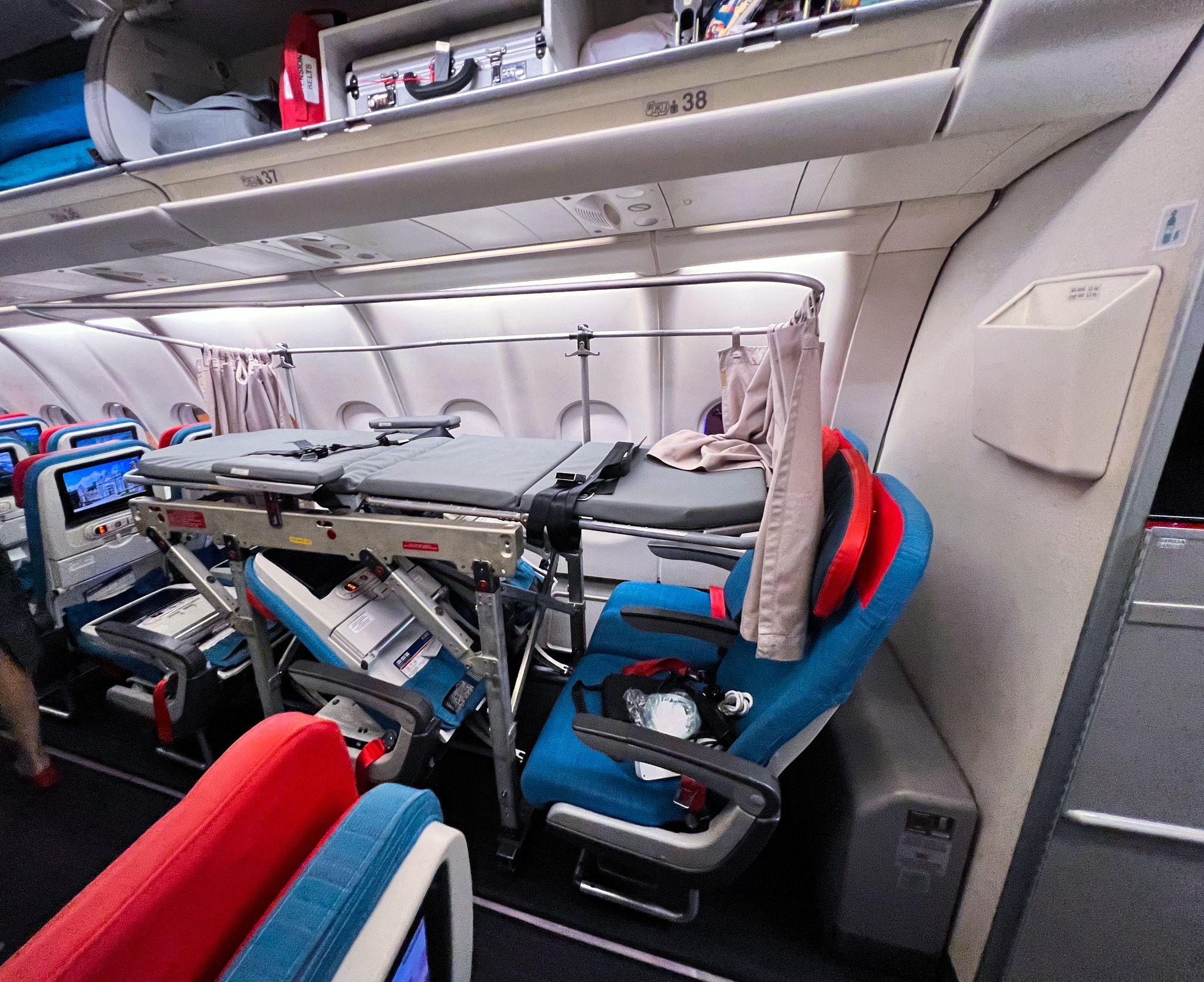
Medical escort on a commercial flight
- More cost‑effective
- Suitable for many stable medical situations
- Dependent on airline approval and seating availability
Ground ambulance
- Flexible scheduling
- No flight restrictions
- Slower transport over long distances
How international medical transport is arranged
The process is structured to ensure clarity, safety and smooth coordination across countries.
Step-by-step process
Intake
Collect details about the patient, medical condition, location and urgency.
Medical assessment
Doctors check stability and determine the safest transport type.
Planning & logistics
Team, aircraft, route, permits, airport coordination and medical equipment are arranged.
Transport execution
The patient is transported with continuous medical supervision.
Arrival & handover
Transfer to a hospital, clinic or home care team at the destination.

Costs, payment and insurance
Costs vary depending on distance, medical needs and transport type. Transparency is essential.
International medical transport costs depend on the transport type, distance, medical equipment, medical staff, urgency and logistical requirements. EMS works independently and does not have contracts with insurance companies. This means the client pays for the transport directly. However, many clients are able to claim reimbursement afterwards depending on their insurance policy and documentation.
Main factors influencing cost
- Transport type (air ambulance, medical escort, ground ambulance)
- Distance and route planning
- Required medical team and equipment
- Urgency and availability
- Airport fees, permits and coordination
- Ground transfers at departure and destination
What to prepare beforehand
Accurate information speeds up assessment and helps avoid delays.
Checklist
Recent medical report
Details about diagnosis, treatment, stability and recent observations.
Medication overview
Including dosages, allergies and treatment schedule.
Contact details of treating doctor
Essential for medical clearance and coordination.
Travel documents
Passports, visas and any insurance policy documents for reimbursement.