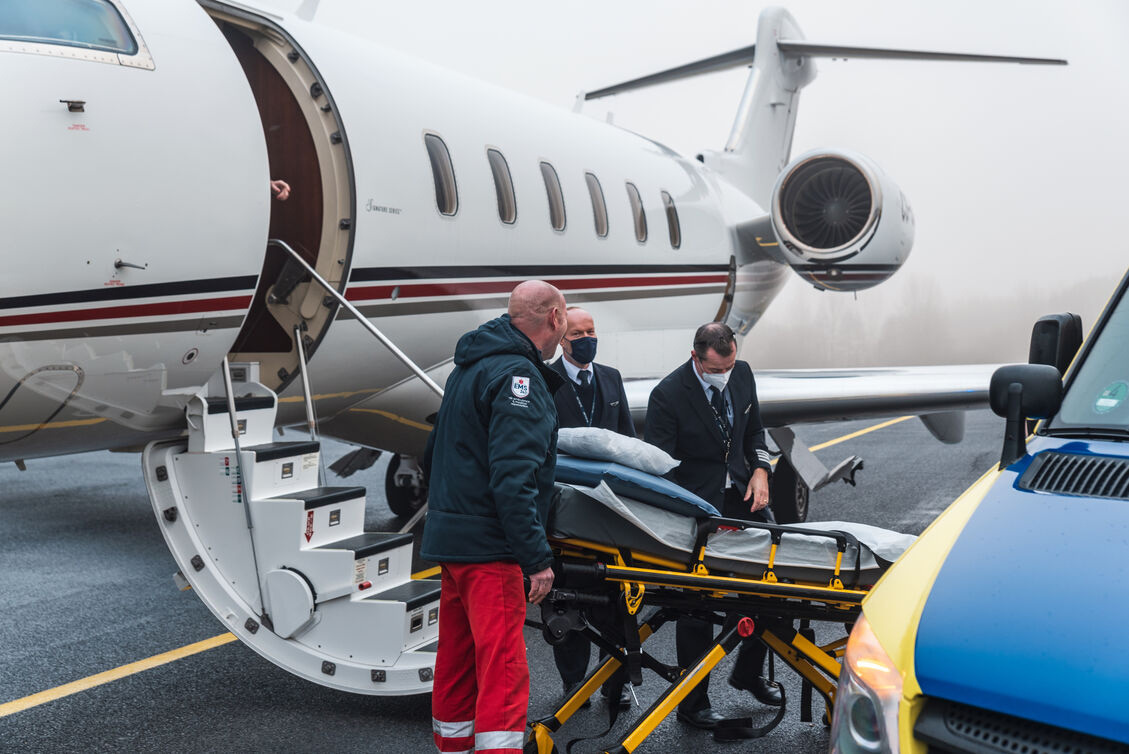
I’m hospitalized abroad: how to return home safely with medical repatriation
What medical repatriation means
Medical repatriation is the organized and medically supervised transport of a patient from abroad back to their home country.
When you're hospitalized abroad, regular travel is usually not possible. Medical repatriation ensures you can return home safely under professional supervision. Depending on your condition, this can involve a dedicated air ambulance, a medical escort on a commercial flight, or long-distance ground ambulance transport.
Repatriation is organized to minimize medical risks, provide continuous monitoring, and guarantee a safe handover to your home hospital or care facility.
When medical repatriation is usually needed
- Hospitalization due to injury, illness, or complications
- Inability to fly independently due to medical limitations
- Need for oxygen, monitoring, or advanced medical care during travel
- Long-distance travel too risky without medical supervision
- Doctor advises specialized medical transport
Important

Available medical transport options
EMS Ambulance provides multiple transport solutions depending on your medical status, urgency, and distance.
Air ambulance
- Fast and direct
- ICU-level medical equipment
- Suitable for critically ill or immobile patients
- Higher costs due to the specialized aircraft
Medical escort on a commercial flight
- More cost-effective
- Suitable for stable patients needing monitoring or oxygen
- Subject to airline regulations and approval
Ground ambulance
- Flexible schedule
- No flight restrictions
- Longer travel time for distant locations
How returning home with EMS Ambulance works
The repatriation process follows clear, structured steps to ensure a safe, rapid, and comfortable return home.
How it works
1. Contact & intake
We collect your medical details, location, and urgency.
2. Medical evaluation
Our medical team assesses your condition and determines the safest transport type.
3. Planning & approvals
We arrange aircraft, medical crew, ground ambulances, and hospital coordination.
4. Transport home
You travel under continuous medical supervision, bed-to-bed.
5. Handover
We deliver a complete medical handover to the receiving hospital or doctor.

Costs and insurance coverage
Medical repatriation costs vary widely based on distance, transport type, and medical needs.
Costs are influenced by aircraft availability, distance flown, medical staff, equipment, and logistics such as ground ambulances. Insurance reimbursement depends on your policy and whether the repatriation is deemed medically necessary. Many travel insurance policies cover repatriation if a doctor confirms it is required.
Main factors influencing repatriation costs
- Type of transport (air ambulance, escort, or ground)
- Distance between hospitals
- Urgency and aircraft availability
- Required medical equipment and personnel
- Local ground ambulance arrangements
What you need to prepare
Having the right information ready speeds up the evaluation and planning process.
Checklist
Medical report
Diagnosis, stability, and treatment summary.
Medication list
Including current dosages and allergies.
Hospital contact details
So both medical teams can coordinate directly.
Passport & insurance info
Required for border control and administrative purposes.