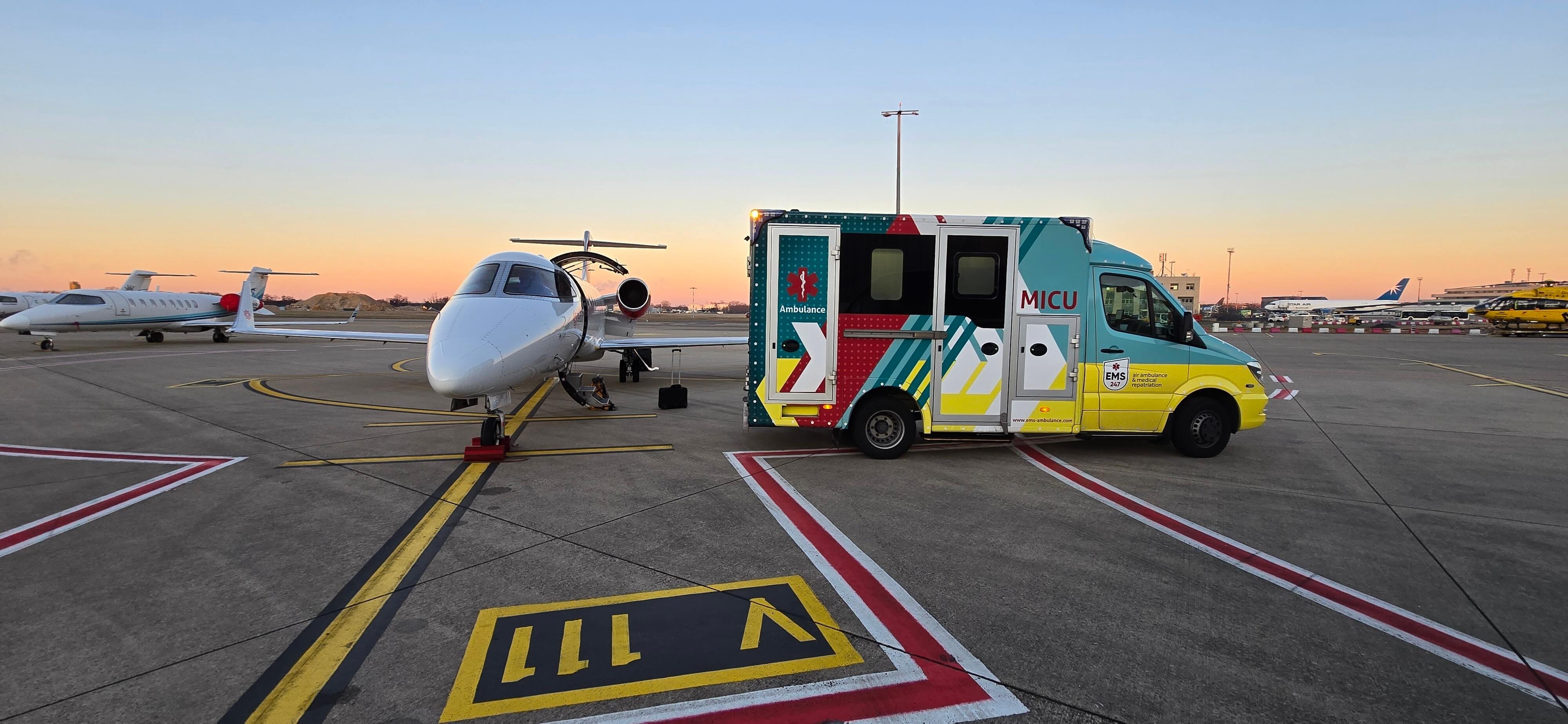
Medical repatriation after a stroke abroad: how to arrange a safe flight home
Can a stroke patient fly home safely
Yes — stroke patients can be flown home safely when the right medical team, aircraft setup, and monitoring are in place.
A stroke is a serious medical event, and timely specialist care is crucial. When a stroke occurs abroad, flying home may still be possible — but only after a medical team confirms stability and ensures the correct level of supervision. EMS Air Ambulance & Medical Repatriation Ltd. specializes in transporting stroke patients internationally with full in-flight monitoring and advanced equipment.
The goal is to prevent complications such as blood pressure spikes, neurological deterioration, oxygen desaturation, or recurrent stroke during the journey. That is why every stroke transport requires a tailored medical plan.
Situations where a medical flight is often required
- The patient cannot sit upright for long periods
- Blood pressure or neurological status requires monitoring
- The treating hospital abroad cannot continue care
- The patient needs oxygen, cardiac monitoring, or IV medication
- Commercial airline medical clearance is not possible
Important to know
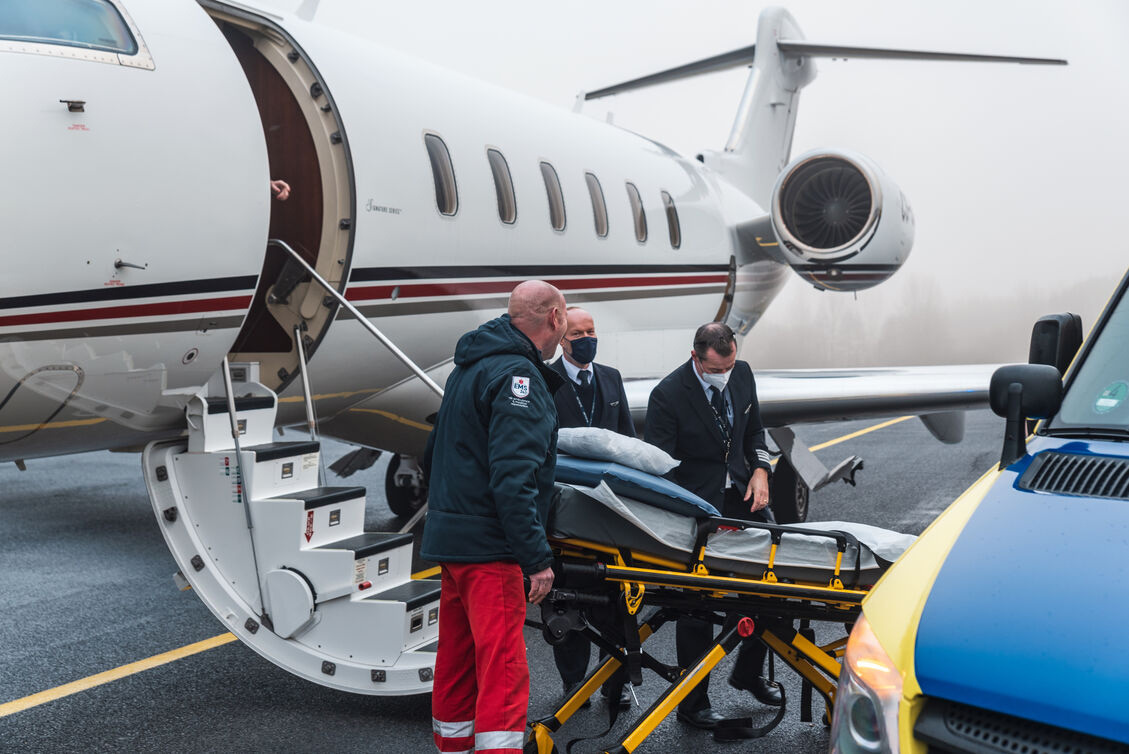
Medical transport options for stroke patients
The right transport method depends on the type of stroke, the patient’s stability, and the medical equipment required for the journey.
Air ambulance
- Direct flights with no layovers
- Neurological monitoring available
- Ideal for unstable or high-risk patients
- Higher cost
Medical escort on a commercial flight
- More cost‑effective
- Suitable for improving patients
- Only possible if airlines approve medical forms
- Limited onboard equipment compared to an air ambulance
Ground ambulance
- No pressurization concerns
- Smooth coordination between hospitals
- Longer travel time for international routes
How EMS arranges the repatriation
EMS Air Ambulance manages the full operation from the patient’s bedside abroad to the receiving hospital at home.
How the repatriation is arranged
Intake
The team collects medical details, diagnosis, imaging reports, and current vitals.
Medical review
EMS physicians determine the safest transport type based on the stroke severity.
Planning & coordination
Flight, crew, ambulance transfers, airport permissions, and hospital arrangements are secured.
Transport
The patient receives continuous care during the full journey, including neurological monitoring.
Handover
EMS provides a structured medical briefing to the receiving care team upon arrival.

Costs and insurance considerations
Stroke repatriation costs vary widely, but they can be clearly explained based on a few key factors.
The price of a medical flight depends on distance, required medical staffing, aircraft type, and urgency. Stroke patients often need advanced monitoring, which affects the team composition. EMS Air Ambulance does not work directly with insurance companies, but in some cases, patients can submit documentation afterward for potential reimbursement. Approval depends entirely on the individual insurance policy and proof of medical necessity.
Main cost factors
- Flight distance and aircraft availability
- Stroke severity and monitoring requirements
- Number of medical specialists required
- Ground ambulance transfers
- Urgency and scheduling constraints
What families need to prepare
Having complete medical information speeds up the assessment and planning process.
Checklist for families
Recent medical summary
Including the stroke type, imaging reports, and treatment timeline.
Medication list
With dosages and any anticoagulant therapy.
Hospital contacts
The treating physician abroad and the receiving team at home.
Travel documents
Passports and relevant insurance policies.