Air ambulance or commercial flight: when is medical air transport the safer choice?
When to choose an air ambulance
An air ambulance is the safest option for patients who cannot travel on a commercial flight due to medical risks.
An air ambulance is a medically equipped private jet with a specialised medical team on board. This option is used when a patient is medically unstable, unable to sit upright, or requires constant monitoring or equipment that a commercial airline cannot provide.
Typical situations requiring an air ambulance
- Patient must travel lying down on a stretcher
- Continuous monitoring is needed (heart, oxygen, medication)
- Recent surgery or severe trauma
- Stroke, heart attack, sepsis, or intensive-care needs
- Ventilator support or complex medical devices
- Urgent evacuation from remote or unsafe regions

When a commercial flight is suitable
A commercial flight with a medical escort is possible for stable patients who need guidance but not intensive care.
Suitable for commercial flight with medical escort
- Patient can sit upright during take-off and landing
- No risk of sudden deterioration
- Requires assistance with medication, mobility, or oxygen
- Recent but stable medical condition (e.g., minor fractures, mild infections)
- Dementia or confusion requiring supervision
Important
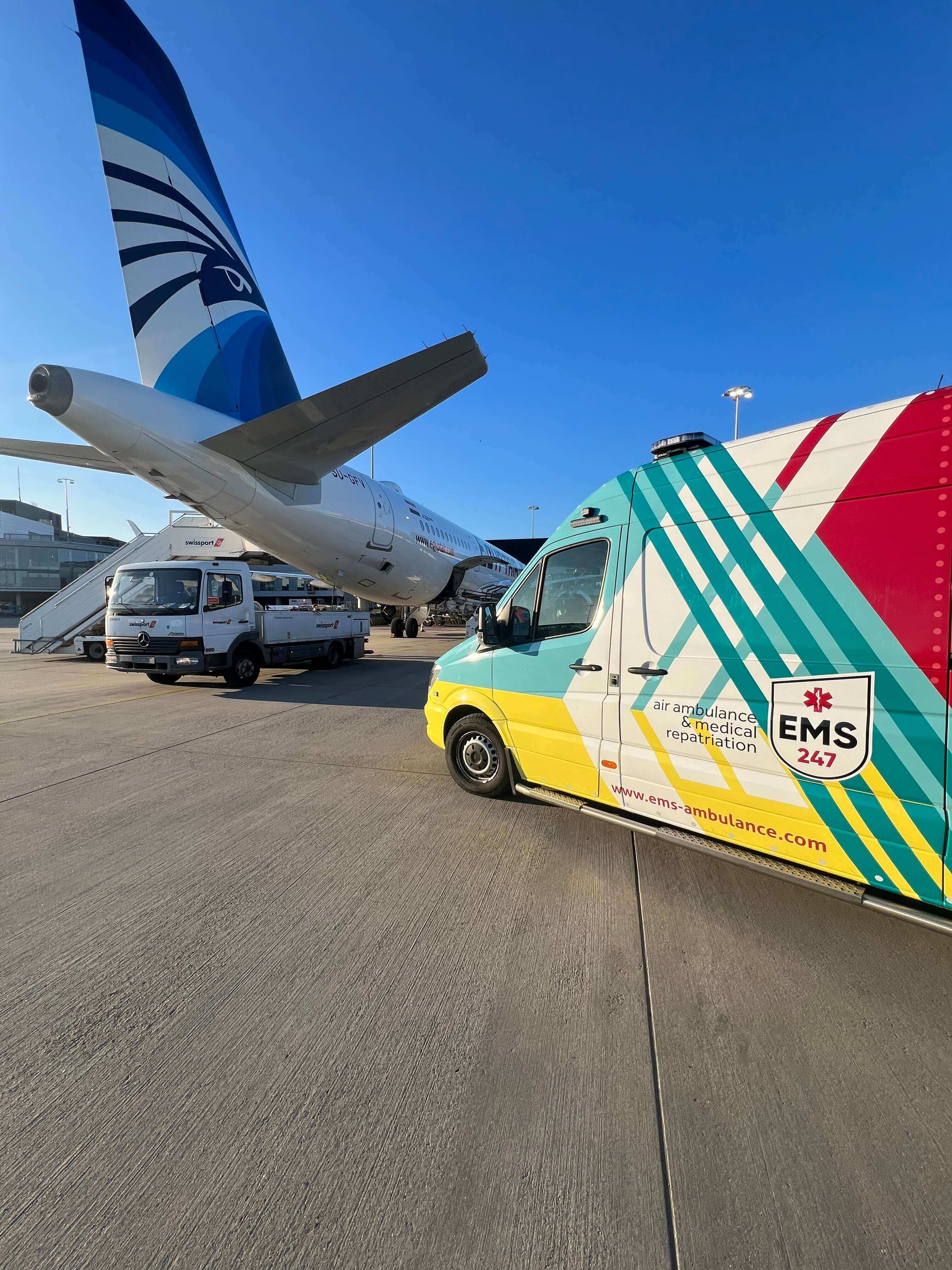
How medical air transport works
Clear steps ensure safe and well‑coordinated medical transport.
From request to arrival
Intake
Collection of medical details, patient location, and urgency.
Medical assessment
Doctors determine the safest transport method.
Planning
Aircraft allocation, medical team selection, and logistics.
Transport
Care and monitoring throughout the entire journey.
Handover
Transfer to the hospital or home care team at the destination.

Costs and insurance
Prices vary depending on aircraft type, distance, medical needs, and urgency.
Air ambulances are more expensive than commercial flights due to the medical crew, specialised equipment, and private aircraft operation. A commercial flight with medical escort is usually more affordable but depends on airline approval.
EMS does not work with insurance companies, but many clients successfully claim reimbursement afterwards if their policy includes medical repatriation and necessity is proven.
Factors influencing cost
- Flight distance and route
- Aircraft size and medical configuration
- Urgency (same-day flights cost more)
- Required medical team and equipment
- Airport fees and ground ambulances
What you need to prepare
Providing accurate information ensures faster planning and approval.
Checklist
Medical summary
Diagnosis, current status, and recent updates.
Medication list
Including dosages and allergies.
Doctor contact details
For coordination and medical approval.
Travel documents
Passports, insurance policy, and local contacts.