Air Ambulance Cost from Europe to the USA: Complete Guide
What determines the cost of an air ambulance from Europe to the USA
The price for a transatlantic medical flight depends on distance, aircraft type, medical needs and logistical factors.
Air ambulance flights between Europe and the United States usually range between 55,000 and 180,000 EUR depending on the medical situation and aircraft required. Long distances and complex care needs often require mid-size or long-range jets, which increases operational costs.
The medical team, equipment, ground ambulance transport and airport arrangements are also part of the total price. Each mission is calculated individually to ensure safety and efficiency.
Main factors affecting cost
- Flight distance and aircraft range requirements
- Type of aircraft (Learjet, Challenger, Global Express, etc.)
- Size of medical team (nurse, doctor, specialist)
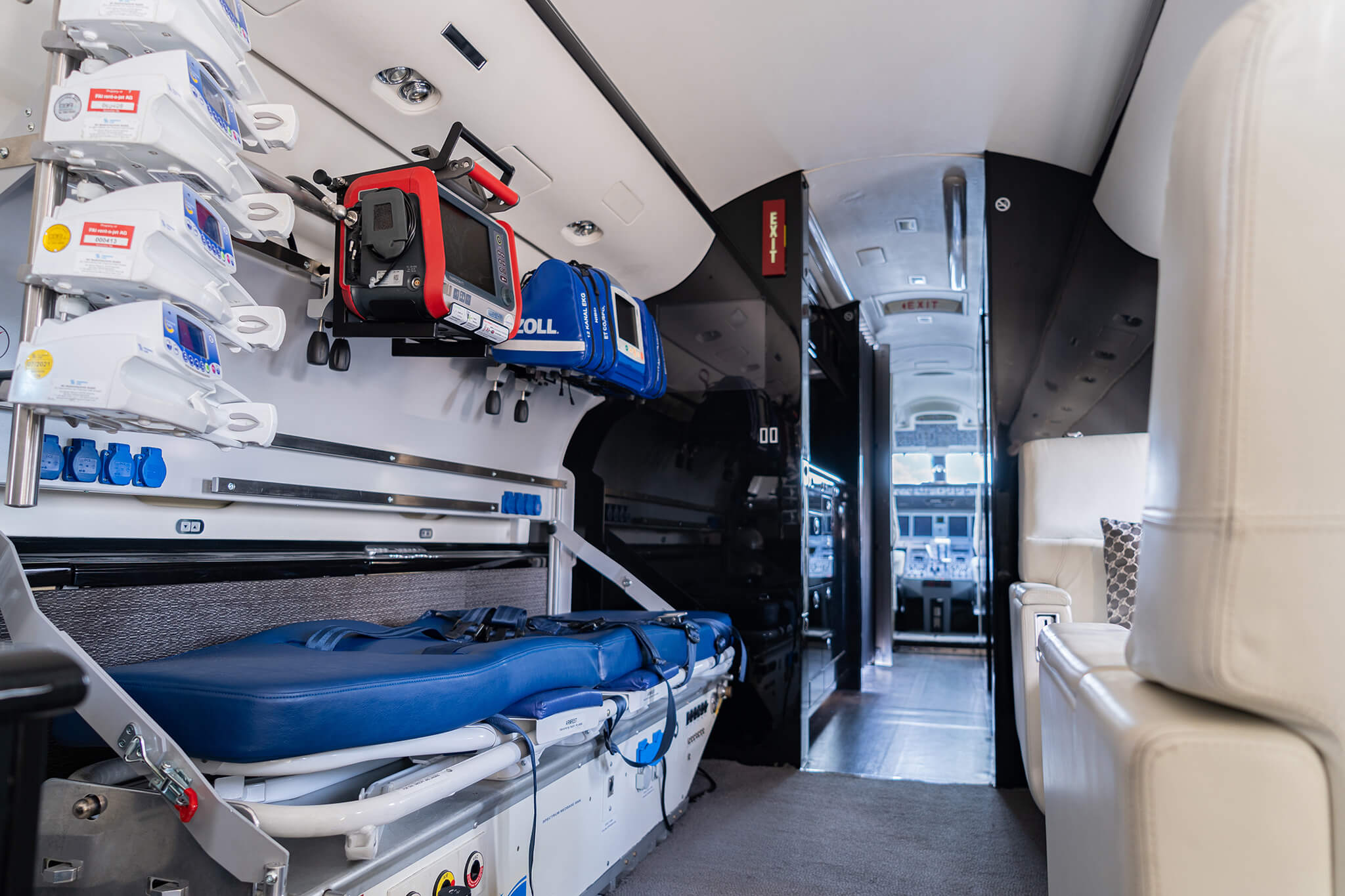
- Required onboard equipment (ventilator, ICU setup, oxygen)
- Ground ambulance transfers at both ends
- Time of day, airport fees and availability
- Urgency and last-minute planning
Typical price range

Example flight routes and cost indications
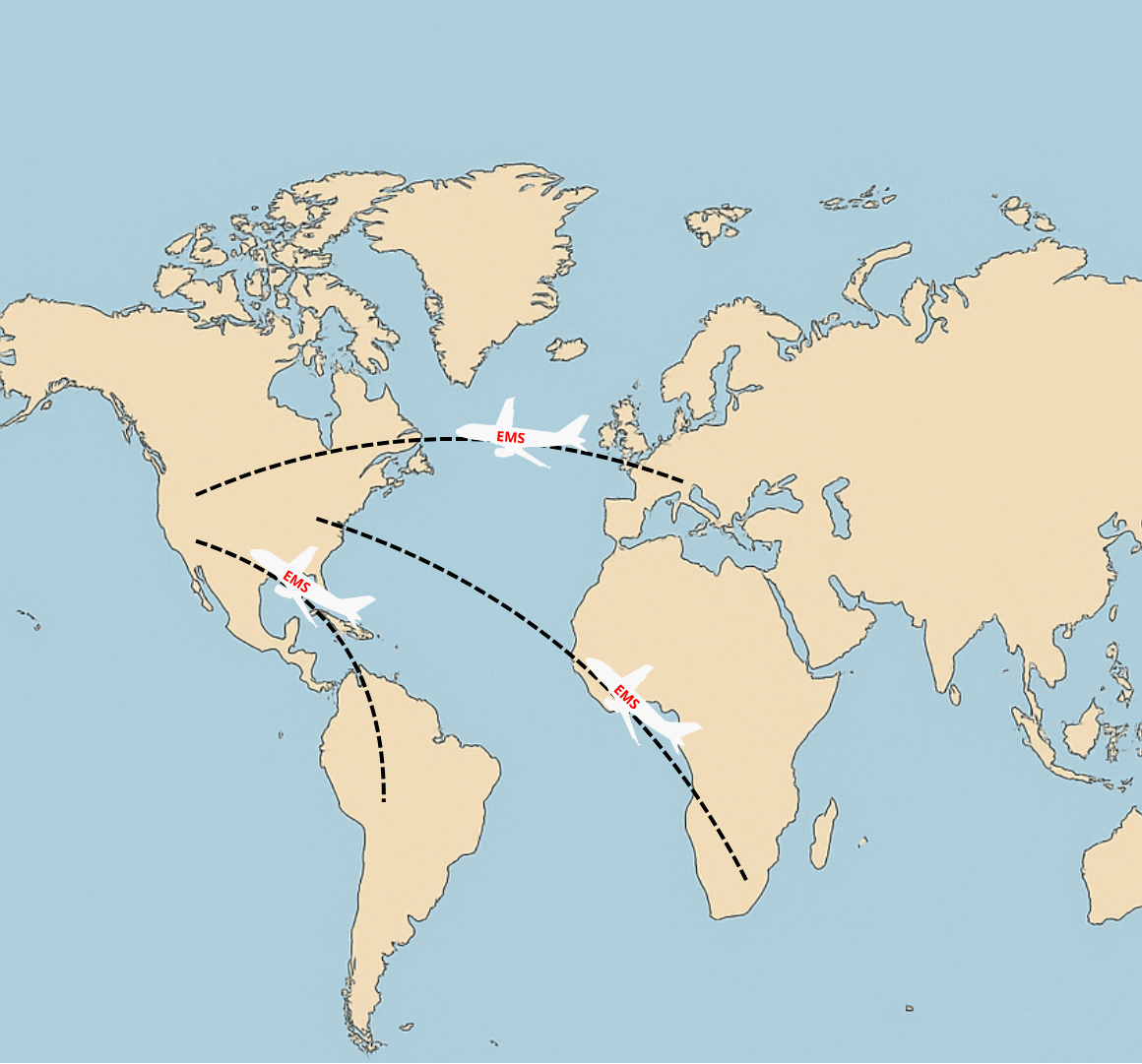
Distances vary greatly across Europe, and some routes require larger aircraft capable of long-range, non-stop flights.
Common Europe–USA routes
- London to New York: approx. 7–10 hours
- Paris to Miami: approx. 10–12 hours
- Rome to Chicago: approx. 11–12 hours
- Berlin to Boston: approx. 8–10 hours
- Madrid to Los Angeles: approx. 13–14 hours
These long-haul missions often require aircraft such as the Challenger 604, Global 6000 or Gulfstream G650. The need for a non-stop flight, especially for ICU patients, can significantly influence the choice of aircraft and thus the total cost.
How an international air ambulance transfer works
A structured and coordinated process ensures safe and efficient repatriation across continents.
Typical steps for a transatlantic medical flight
Assessment
Medical evaluation to confirm if the patient is fit for transatlantic flight.
Planning
Selection of the right aircraft, medical team and equipment.
Logistics
Ground ambulances, airport clearances, and international documentation.
Flight
Continuous medical monitoring and treatment during the flight.
Arrival & handover
Ground transfer and handover to the receiving U.S. hospital.

Insurance and financial considerations
Whether costs are covered depends heavily on the policy and medical necessity.
Insurance companies sometimes reimburse medical repatriation if it is medically necessary and pre-approved. Coverage varies widely between travel insurance, private health plans, and international medical policies. Documentation from the treating doctor is crucial.
What influences insurance approval
- Proof of medical necessity
- Distance to appropriate care
- Type of insurance policy
- Pre-approval from the insurer
- Patient’s stability and treatment requirements
Preparation checklist for long-distance medical flights
Good preparation ensures rapid coordination and prevents delays.
Checklist
Medical file
Recent reports, diagnosis and stability assessment.
Medication list
Including dosages and special requirements.
Doctor contact
For continuous coordination and updates.
Travel documents
Passports, insurance details and hospital contacts.